
Before Memmo my notes were scattered across PDFs. Now a workspace pulls everything into one place — I see exactly what's still left to study.
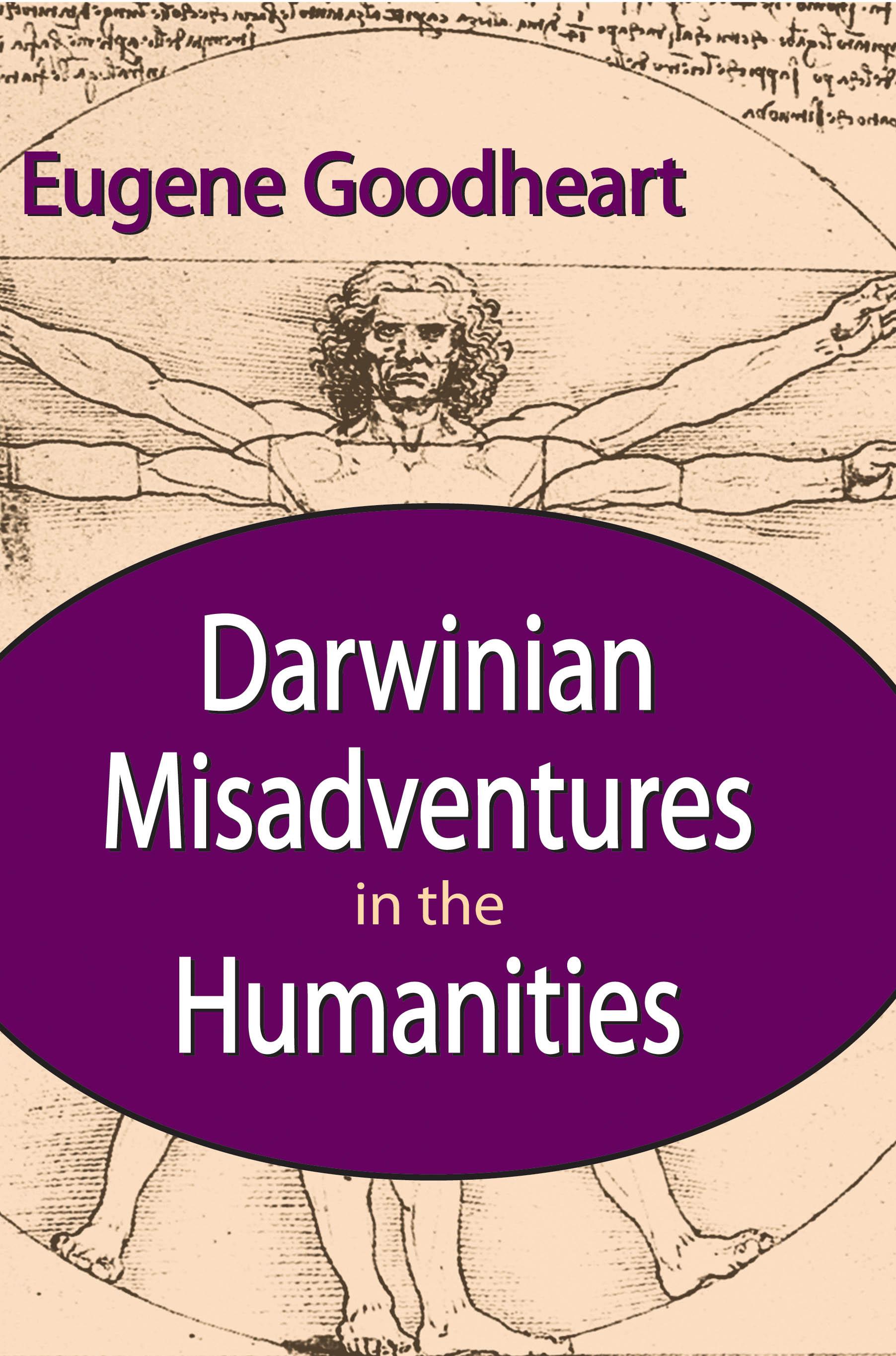
In recent decades the humanities have been in thrall to postmodern skepticism, while Darwinists, brimming with confidence in the genuine progress they have made in the sciences of biology and psychology, have set their sights on rescuing the humanities from the ravages of postmodernism. In this volume, Eugene Goodheart attacks the neo-Darwinist approach to the arts and articulates a powerful defense of humanist criticism.
E. O. Wilson, the distinguished Harvard biologist, has spoken of converting philosophy into science, substituting science for religion, and formulating a biological theory of literature and the arts in Consilence: The Unity of Knowledge. Goodheart demonstrates that Wilson's efforts, and those of his colleagues Richard Dawkins, Steven Pinker, and Daniel Dennett among others, have resulted in scientism rather than science. If, for example, Dawkins had contented himself in The Selfish Gene with the claim that Darwinism had made worthless other answers to the question of how we have evolved, he would have given offense only to creationists, but questions of meaning and purpose are of another order.
Contemporary Darwinist critiques err in assuming that art and traditional criticism aspire to truths that can be codified in terms of scientific laws. If this were so, we would have to regard the speculations of Plato, Aristotle, Augustine, Montaigne, Shakespeare, and Rousseau as worthless. Goodheart exposes the philistinism of literary Darwinism, the bad faith and inverted fundamentalism of the Darwinian approach to religion, and the dangers of the eff ort to create a Darwinian ethical system. Taken together, Goodheart's arguments show that in moving beyond their area of competence, the neo -Darwinists commit an ideology, not a science.
Before Memmo my notes were scattered across PDFs. Now a workspace pulls everything into one place — I see exactly what's still left to study.
Memmo's summaries are gold before exams. I don't have to re-read 800 pages two weeks before — just the important parts.
The AI chat has saved me the night before an exam more than once. I just keep asking until I get it — no waiting on a study group to reply.
The quizzes hit exactly what I need to know. Memmo tracks what I get stuck on — so I only practice what's worth it.
Flashcards with spaced repetition are magic. Memmo knows when I'm about to forget something and brings it back.
The AI podcasts are my favorite. I listen on my way to school and get a recap without sitting at a computer.

Handbok i kvalitativa metoder
281 kr

Hållbar utveckling: en introduktion för ingenjörer och andra problemlösare
334 kr

Brymans Samhällsvetenskapliga metoder
390 kr

Projektledning
491 kr

Den orättvisa hälsan: om socioekonomiska skillnader i hälsa och livslängd
326 kr

Vetenskapsteori för nybörjare
196 kr

Organizational Leadership
429 kr

På väg mot läraryrket
172 kr

Det sociala livet i skolan: Socialpsykologiska perspektiv
253 kr

Betygsättningens didaktik
151 kr

Personality
402 kr

Studying Leadership
404 kr

Managing Innovation
477 kr

Introduktion till samhällsvetenskaplig metod
347 kr

The Psychology of Sex and Gender
698 kr

Evidens och kunskap för socialt arbete
207 kr

Introduction to Leadership
605 kr