
Before Memmo my notes were scattered across PDFs. Now a workspace pulls everything into one place — I see exactly what's still left to study.
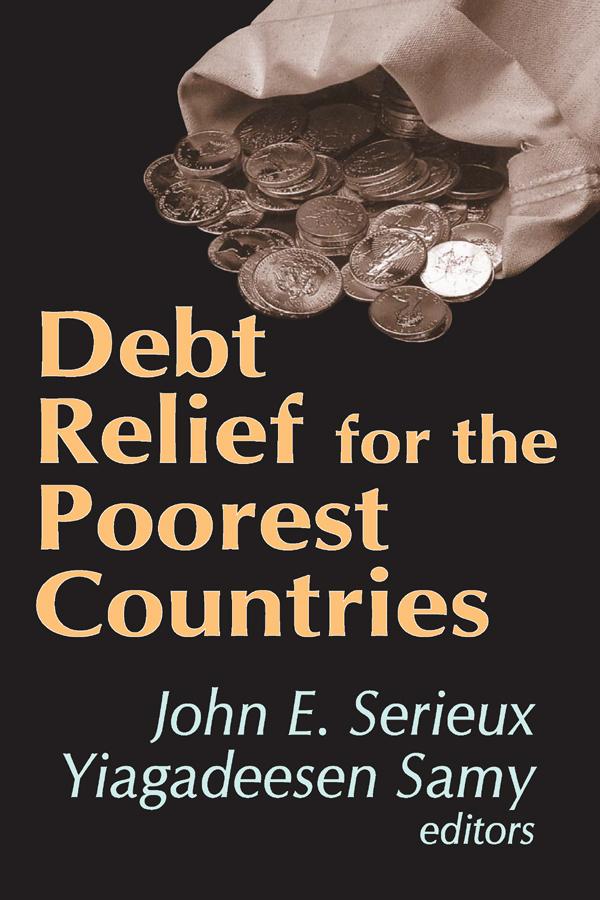
The debt problems of poor countries are receiving unprecedented attention. Both federal and non-governmental organizations alike have been campaigning for debt forgiveness for poor countries. The governments of creditor nations responded to that challenge at a meeting sponsored by the G-7, International Monetary Fund, and World Bank, all of which upgraded debt relief as a policy priority. Their initiatives provided for generous interpretations of these nations' abilities to sustain debt, gave them opportunities to qualify for debt relief more rapidly, and linked debt relief to broader policies of poverty reduction. Despite this, the crisis has only deepened in the first years of the new millennium. This brilliant group of contributions assesses why this has occurred. In plain language, it considers why debt relief has been so long in coming for poor countries. It evaluates the cost of a persistent overhang in debt for those countries. It also examines, head on, whether enhanced debt relief initiatives offer a permanent exit from over-indebtedness, or are merely a short-term respite. Above all, this volume for the first time addresses the issues on the ground: that is, the views and opinions about debt relief on the part of leaders in advanced nations, and the probability of further support for the most impoverished lands. In this approach, the editors and contributors have made an explicit and successful attempt to be inclusive and relevant at all stages of the analysis. This volume covers the full range of the poorest countries, with contributions by John Serieux, Lykke Anderson and Osvaldo Nina, Befekadu Degefe, Ligia Maria Castro-Monge, and Peter B. Mijumbi. Collectively, they offer a sobering scenario: unless measures are put in place now, in anticipation of further crises, the future of the very poorest nations will remain bleak and troublesome.
Before Memmo my notes were scattered across PDFs. Now a workspace pulls everything into one place — I see exactly what's still left to study.
Memmo's summaries are gold before exams. I don't have to re-read 800 pages two weeks before — just the important parts.
The AI chat has saved me the night before an exam more than once. I just keep asking until I get it — no waiting on a study group to reply.
The quizzes hit exactly what I need to know. Memmo tracks what I get stuck on — so I only practice what's worth it.
Flashcards with spaced repetition are magic. Memmo knows when I'm about to forget something and brings it back.
The AI podcasts are my favorite. I listen on my way to school and get a recap without sitting at a computer.

Handbok i kvalitativa metoder
281 kr

Hållbar utveckling: en introduktion för ingenjörer och andra problemlösare
334 kr

Brymans Samhällsvetenskapliga metoder
390 kr

Projektledning
491 kr

Den orättvisa hälsan: om socioekonomiska skillnader i hälsa och livslängd
326 kr

Organizational Leadership
429 kr

Vetenskapsteori för nybörjare
196 kr

På väg mot läraryrket
172 kr

Det sociala livet i skolan: Socialpsykologiska perspektiv
253 kr

Betygsättningens didaktik
151 kr

Personality
402 kr

Studying Leadership
404 kr

Managing Innovation
477 kr

Introduktion till samhällsvetenskaplig metod
347 kr

The Psychology of Sex and Gender
698 kr

Evidens och kunskap för socialt arbete
207 kr

Introduction to Leadership
605 kr