
Before Memmo my notes were scattered across PDFs. Now a workspace pulls everything into one place — I see exactly what's still left to study.
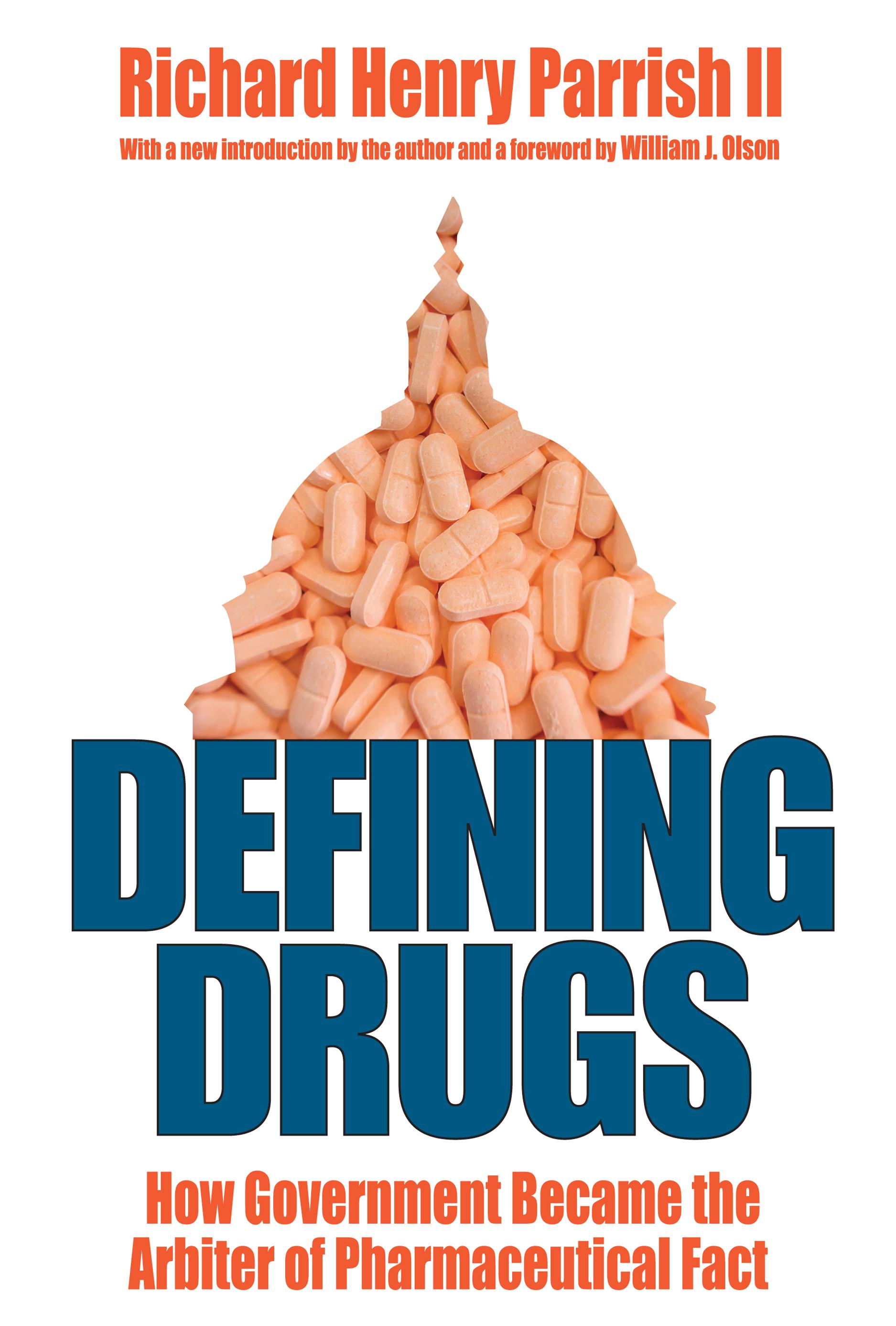
Drug-related morbidity and mortality is rampant in contemporary industrial society, despite or perhaps because, government has assumed a critical role in the process by which drugs are developed and approved. Parrish asserts that, as a people, Americans need to understand how it is that government became the arbiter of pharmaceutical fact. The consequences of our failure to understand, he argues, may threaten individual choice and forestall the development of responsible therapeutics. Moreover, if current standards and control continues unabated, the next therapeutic reformation might well make possible the sanctioned commercial exploitation of patients. In Defining Drugs, Parrish argues that the federal government became arbiter of pharmaceutical fact because the professions of pharmacy and medicine, as well as the pharmaceutical industry, could enforce these definitions and standards only through police powers reserved to government. Parrish begins his provocative study by examining the development of the social system for regulating drug therapy in the United States. He reviews the standards that were negotiated, and the tensions of the period between Progressivism and the New Deal that gave cultural context and historical meaning to drug use in American society. Parrish describes issues related to the development of narcotics policy through education and legislation facilitated by James Beal and Edward Kremers, and documents the federal government's evolving role as arbiter of market tensions between pharmaceutical producers, government officials, and private citizens in professional groups, illustrating the influence of government in writing enforceable standards for pharmaceutical therapies. He shows how the expansion of political rights for practitioners and producers has shifted responsibility for therapeutic consequences from individual practitioners and patients to government. This timely and controversial volume is written for the scholar and the compassionate practitioner alike, and a general public concerned with pharmacy regulation in a free society.
Before Memmo my notes were scattered across PDFs. Now a workspace pulls everything into one place — I see exactly what's still left to study.
Memmo's summaries are gold before exams. I don't have to re-read 800 pages two weeks before — just the important parts.
The AI chat has saved me the night before an exam more than once. I just keep asking until I get it — no waiting on a study group to reply.
The quizzes hit exactly what I need to know. Memmo tracks what I get stuck on — so I only practice what's worth it.
Flashcards with spaced repetition are magic. Memmo knows when I'm about to forget something and brings it back.
The AI podcasts are my favorite. I listen on my way to school and get a recap without sitting at a computer.

Handbok i kvalitativa metoder
281 kr

Hållbar utveckling: en introduktion för ingenjörer och andra problemlösare
334 kr

Brymans Samhällsvetenskapliga metoder
390 kr

Projektledning
491 kr

Den orättvisa hälsan: om socioekonomiska skillnader i hälsa och livslängd
326 kr

Organizational Leadership
429 kr

Vetenskapsteori för nybörjare
196 kr

På väg mot läraryrket
172 kr

Det sociala livet i skolan: Socialpsykologiska perspektiv
253 kr

Betygsättningens didaktik
151 kr

Personality
402 kr

Studying Leadership
404 kr

Managing Innovation
477 kr

Introduktion till samhällsvetenskaplig metod
347 kr

The Psychology of Sex and Gender
698 kr

Evidens och kunskap för socialt arbete
207 kr

Introduction to Leadership
605 kr