
Before Memmo my notes were scattered across PDFs. Now a workspace pulls everything into one place — I see exactly what's still left to study.
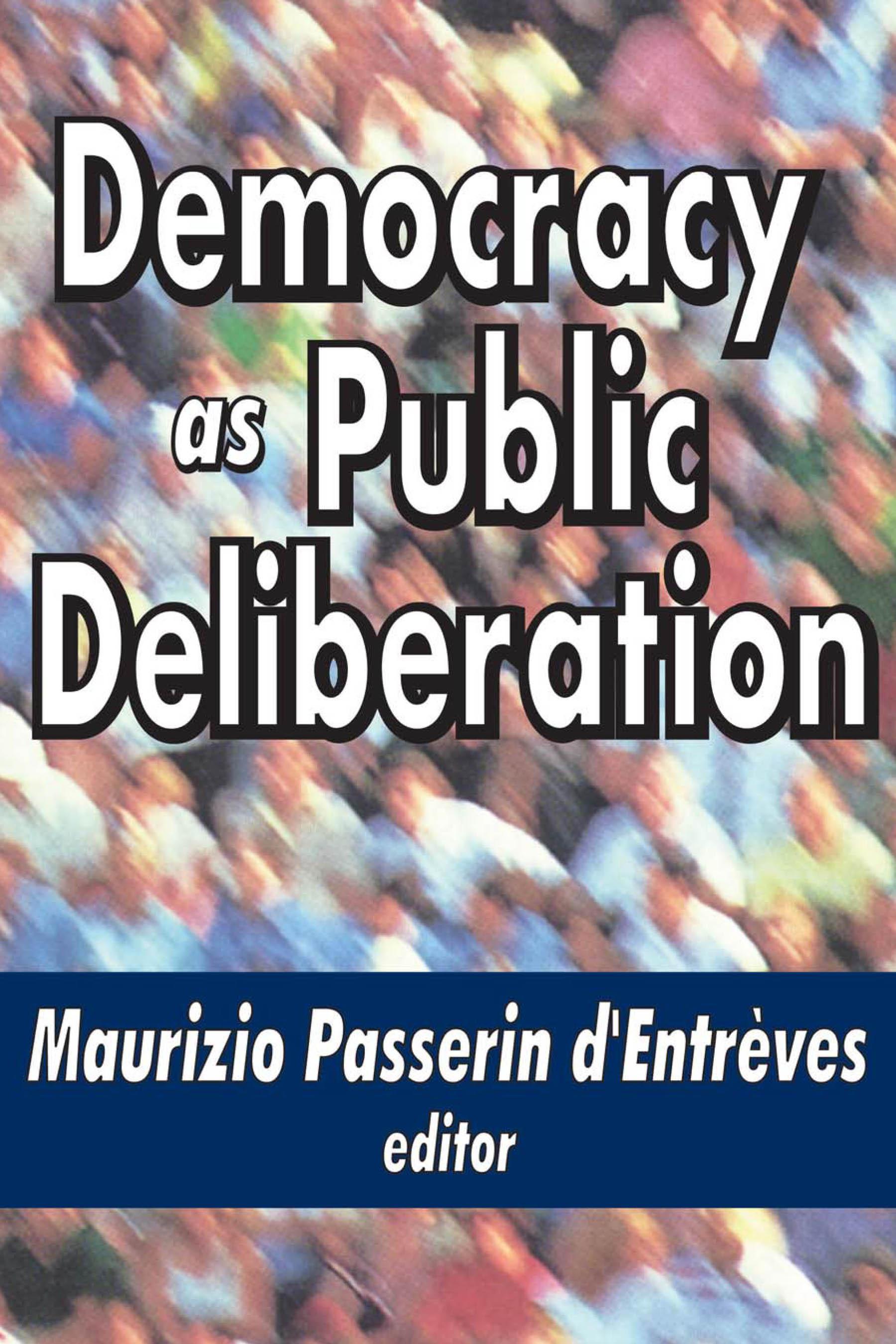
One of the most remarkable developments in the last twenty years has been the revival of the idea of deliberative democracy. Set against aggregative models of democracy derived from economics, such as the theory of rational choice, the idea of deliberative democracy, or decision-making based on public deliberations among free and equal citizens, represents a highly significant development in democratic theory. Exploring this development, this book provides a fresh and original perspective on a theme at the center of current debates in democratic theory and practice.
The essays collected in this volume offer a series of powerful arguments in support of the view that fair and equal treatment of groups is best defended on the basis of a theory of public deliberation. Such a theory has both a normative and institutional dimension. It provides a framework for the normative justification of state policies toward socially or culturally disadvantaged groups, and suggests several institutional mechanisms, such as deliberative forums and citizen's juries, where the voices of disadvantaged groups can be articulated under fair conditions and become effective in shaping' public policy. Democracy as Public Deliberation reminds us that the issue of democracy is not simply one of top-down management and control, but bottom-up considerations that are often located in ethnic, religious and linguistic groups. The great virtue of this volume is to identify statist systems that claim to be democratic, but only in terms of the dominant culture.
Democracy as Public Deliberation indicates that democracy often comes in small packages--and in that very fact, it tests the actual ambitions and standards of the macro-state. This is an especially powerful volume for those interested in the strengths and weaknesses of third world structures.
Before Memmo my notes were scattered across PDFs. Now a workspace pulls everything into one place — I see exactly what's still left to study.
Memmo's summaries are gold before exams. I don't have to re-read 800 pages two weeks before — just the important parts.
The AI chat has saved me the night before an exam more than once. I just keep asking until I get it — no waiting on a study group to reply.
The quizzes hit exactly what I need to know. Memmo tracks what I get stuck on — so I only practice what's worth it.
Flashcards with spaced repetition are magic. Memmo knows when I'm about to forget something and brings it back.
The AI podcasts are my favorite. I listen on my way to school and get a recap without sitting at a computer.

Handbok i kvalitativa metoder
281 kr

Hållbar utveckling: en introduktion för ingenjörer och andra problemlösare
334 kr

Brymans Samhällsvetenskapliga metoder
390 kr

Projektledning
491 kr

Den orättvisa hälsan: om socioekonomiska skillnader i hälsa och livslängd
326 kr

Vetenskapsteori för nybörjare
196 kr

Organizational Leadership
429 kr

På väg mot läraryrket
172 kr

Det sociala livet i skolan: Socialpsykologiska perspektiv
253 kr

Betygsättningens didaktik
151 kr

Personality
402 kr

Studying Leadership
404 kr

Managing Innovation
477 kr

Introduktion till samhällsvetenskaplig metod
347 kr

The Psychology of Sex and Gender
698 kr

Evidens och kunskap för socialt arbete
207 kr

Introduction to Leadership
605 kr