
Before Memmo my notes were scattered across PDFs. Now a workspace pulls everything into one place — I see exactly what's still left to study.
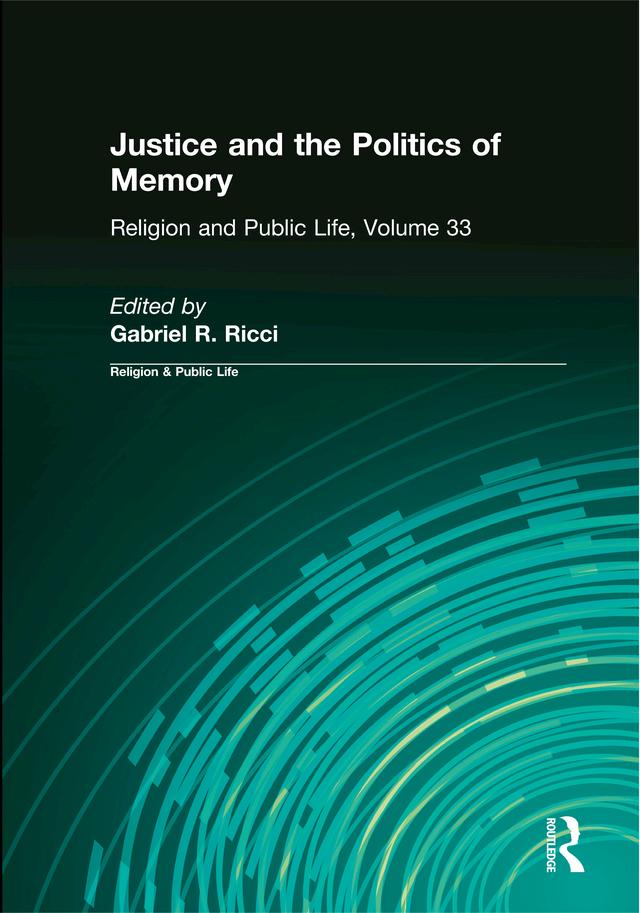
Memory is not a mere repository for past events. This was Henri Bergson's fundamental claim about consciousness. In distinguishing our psychic constitution by its sense of the past, Bergson differentiates our perception of time from a process in which one instant merely replaces another. While Bergson cast his ideas in terms of the biological sciences, his analysis did not neglect the moral impulse that accompanies the condensation of history with which we continuously live. Classifying human existence in this way bears on ethical and political questions. How such questions can plague the memory of a people and the entire human community is addressed in Justice and the Politics of Memory. The contributors explore the manner in which cultural and psychic violation undermine collective identity, and destroy traditions. They raise troubling questions on how recompense and reconciliation is possible after abominable wrongs have been systematically perpetrated against a community. Faced with the burden of memory, those committed to the righting of wrongs are faced with pursuing an elusive justice that sometimes includes levying reparations and memorializing horrific historical episodes. Guided by the muse of forgiveness, restoration and a more harmonious future are likely to be rooted in the sources of spirituality that had been previously eclipsed by the conquering and homogenizing historical processes. This volume includes Heribert Adam's "Collective Reckoning with a Criminal Regime," Jeffrey Olick's "Lessons from and for Germany," James Hatley's "Levinas, Witness and Politics," James E. Young's "Germany's Holocaust Memorial Problem--and Mine," Tim Giago's "Killing the Indian to Save the Child: The Near Death of Spirituality," Jordan B. Peterson's and Maja Djikic's "Running Ahead: You Can Neither Remember Nor Forget What You Do Not Understand," Derick Wilson's "Where Religion Confuses yet Faith Gives Hope: Conflict Resolution in Northern Ireland," and Leonard Kaplan's "Justice Perfected: Cinematic Exemplifications," and an introduction, "Morality and Memory," by the editor.
Before Memmo my notes were scattered across PDFs. Now a workspace pulls everything into one place — I see exactly what's still left to study.
Memmo's summaries are gold before exams. I don't have to re-read 800 pages two weeks before — just the important parts.
The AI chat has saved me the night before an exam more than once. I just keep asking until I get it — no waiting on a study group to reply.
The quizzes hit exactly what I need to know. Memmo tracks what I get stuck on — so I only practice what's worth it.
Flashcards with spaced repetition are magic. Memmo knows when I'm about to forget something and brings it back.
The AI podcasts are my favorite. I listen on my way to school and get a recap without sitting at a computer.

Handbok i kvalitativa metoder
281 kr

Hållbar utveckling: en introduktion för ingenjörer och andra problemlösare
334 kr

Brymans Samhällsvetenskapliga metoder
390 kr

Projektledning
491 kr

Den orättvisa hälsan: om socioekonomiska skillnader i hälsa och livslängd
326 kr

Vetenskapsteori för nybörjare
196 kr

Organizational Leadership
429 kr

På väg mot läraryrket
172 kr

Det sociala livet i skolan: Socialpsykologiska perspektiv
253 kr

Betygsättningens didaktik
151 kr

Personality
402 kr

Studying Leadership
404 kr

Managing Innovation
477 kr

Introduktion till samhällsvetenskaplig metod
347 kr

The Psychology of Sex and Gender
698 kr

Evidens och kunskap för socialt arbete
207 kr

Introduction to Leadership
605 kr