
Before Memmo my notes were scattered across PDFs. Now a workspace pulls everything into one place — I see exactly what's still left to study.
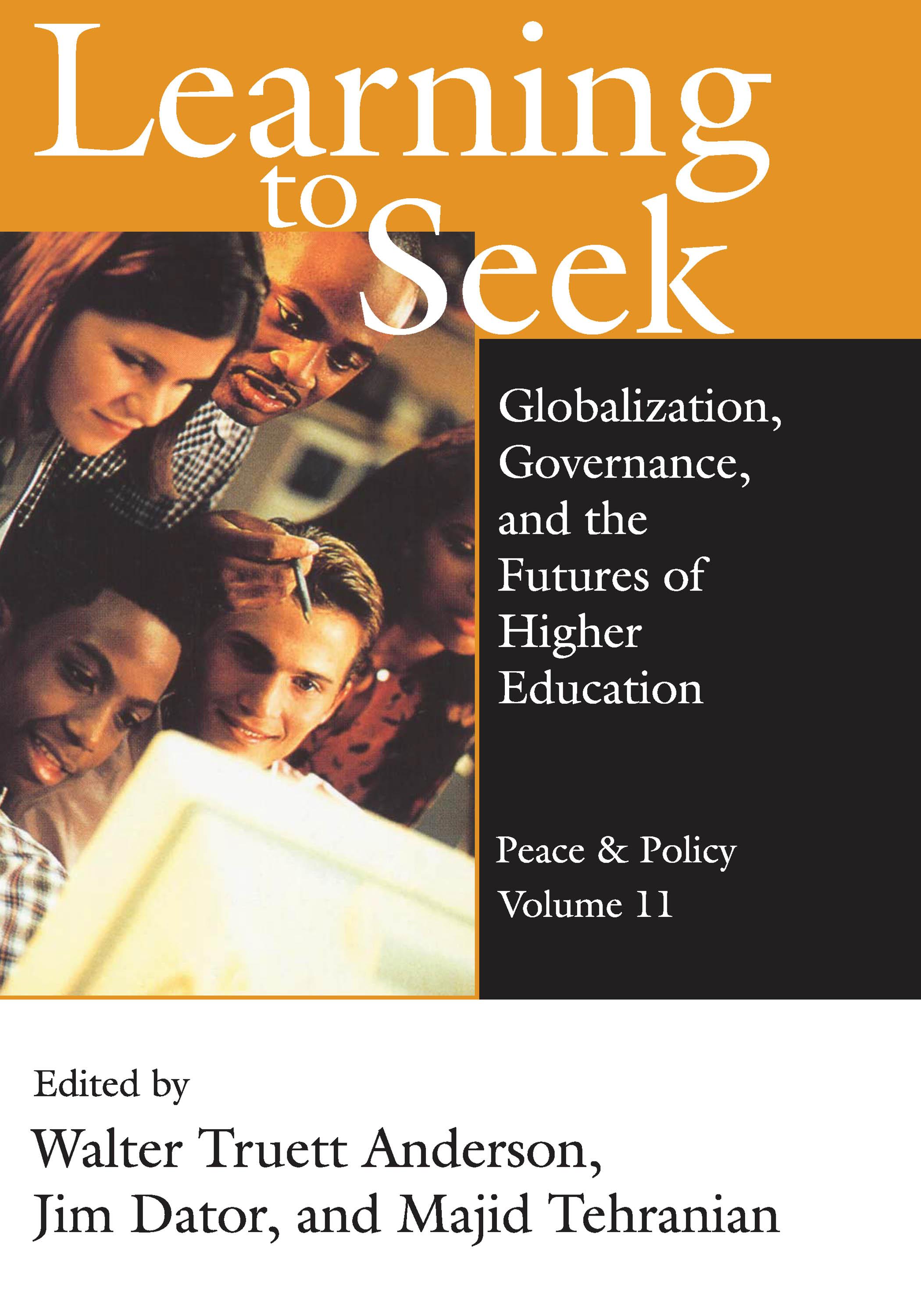
The accelerating technological transformation in learn- ing has necessitated an ability to search and differentiate among the one billion web pages, libraries, databases, books, newspapers, magazines, radio and television stations, and opinion columns available online. This volume focuses on the normative challenges that the current technological transformation presents to all professionals engaged in higher education. Part I concentrates on the current social and technological trends. David Snyder presents an outline of technologies that have made open knowledge systems possible. Majid Tehranian argues that the new technological environment has made learning to seek out information more possible than ever before. Robert Fuller calls for an egalitarian rather than hierarchical approach to communication systems. Harlan Cleveland proposes integrative learning, broad thinking, and globally aware citizenship through "education for wisdom." Part II focuses on problems of governance and finance in the new technological environment. John Hinchcliff takes up the problem of values and argues for the maintenance of traditional altruistic rather than Promethean goals. Karou Yamaguchi comes to the problem of the futures with the tools of system dynamics. William Bergquist calls for a reorganization of higher education to meet the needs for creation, transfer, and inculcation of knowledge and skills. Hamid Shirvani calls for the core values of transparency, integrity, open communication, and dignitarian approach as the guideposts in educational leadership. Walter Truett Anderson concludes by attempting to bring the complex technological, social, economic, and political variables into a holistic approach for the management of higher education. In 2005, at the Universities of the Future Conference, participants were asked to envision the future of higher education. Part III, presents their visions.
Before Memmo my notes were scattered across PDFs. Now a workspace pulls everything into one place — I see exactly what's still left to study.
Memmo's summaries are gold before exams. I don't have to re-read 800 pages two weeks before — just the important parts.
The AI chat has saved me the night before an exam more than once. I just keep asking until I get it — no waiting on a study group to reply.
The quizzes hit exactly what I need to know. Memmo tracks what I get stuck on — so I only practice what's worth it.
Flashcards with spaced repetition are magic. Memmo knows when I'm about to forget something and brings it back.
The AI podcasts are my favorite. I listen on my way to school and get a recap without sitting at a computer.

Handbok i kvalitativa metoder
281 kr

Hållbar utveckling: en introduktion för ingenjörer och andra problemlösare
334 kr

Brymans Samhällsvetenskapliga metoder
390 kr

Projektledning
491 kr

Den orättvisa hälsan: om socioekonomiska skillnader i hälsa och livslängd
326 kr

Organizational Leadership
429 kr

Vetenskapsteori för nybörjare
196 kr

På väg mot läraryrket
172 kr

Det sociala livet i skolan: Socialpsykologiska perspektiv
253 kr

Betygsättningens didaktik
151 kr

Personality
402 kr

Studying Leadership
404 kr

Managing Innovation
477 kr

Introduktion till samhällsvetenskaplig metod
347 kr

The Psychology of Sex and Gender
698 kr

Evidens och kunskap för socialt arbete
207 kr

Introduction to Leadership
605 kr