
Before Memmo my notes were scattered across PDFs. Now a workspace pulls everything into one place — I see exactly what's still left to study.
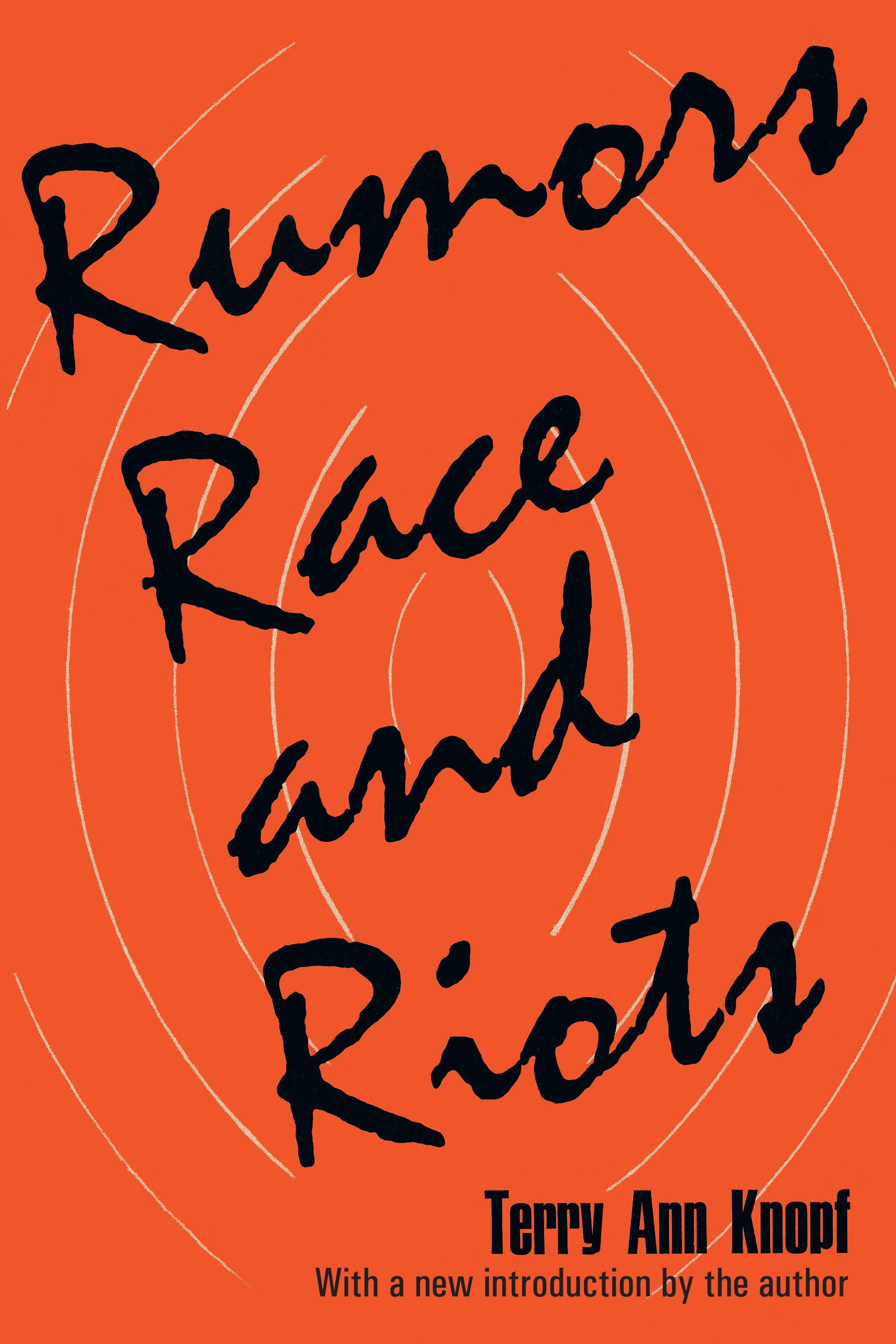
Are race-related rumors rooted in the personality traits of the individual? Are they a kind of "improvised news" for a community? Do they come and go at random or form definite, recognizable patterns? What role do the news media play in spreading rumors? These and other questions are treated in this classic study, now available in paperback with a new introduction by the author, of how and why rumors emerge in connection with racial disorders.
Included is an examination and critique of the three major models of rumor formation: the psychological approach, emphasizing the emotional needs and drives of the individual; the functional approach, which views rumors as a form of "improvised news"; and the conspiratorial approach, which sees rumors as deliberately planted and not spontaneous.
The author's "process model" of rumor formation is based on the premise that rumors cannot "cause" violence and that violence cannot "cause" rumors. Both are viewed as parts of the same process. Rumors are seen as just one of a series of determinants, each of which increases the likelihood of a collective outburst. Among the determinants examined are: conditions of stress; a rigid social structure supported by a racist ideology; and a hostile belief system (or negative set of generalized perceptions) held separately by different groups. Race-related rumors are functionally tied to the latter point and crystallize, confirm, and intensify these beliefs by linking them to actual events.
Hundreds of pertinent rumors are documented from local newspapers and investigative accounts. An exhaustive, systematic inquiry is made into the series of disorders that occurred between 1967 and 1970. The role played by rumors during these disturbing times is examined and compared to earlier periods of unrest. Implications for public policy are explored along with a hard look at rumor-control centers. The influence of the police and other public officials as well as the news media are
Before Memmo my notes were scattered across PDFs. Now a workspace pulls everything into one place — I see exactly what's still left to study.
Memmo's summaries are gold before exams. I don't have to re-read 800 pages two weeks before — just the important parts.
The AI chat has saved me the night before an exam more than once. I just keep asking until I get it — no waiting on a study group to reply.
The quizzes hit exactly what I need to know. Memmo tracks what I get stuck on — so I only practice what's worth it.
Flashcards with spaced repetition are magic. Memmo knows when I'm about to forget something and brings it back.
The AI podcasts are my favorite. I listen on my way to school and get a recap without sitting at a computer.

Handbok i kvalitativa metoder
281 kr

Hållbar utveckling: en introduktion för ingenjörer och andra problemlösare
334 kr

Brymans Samhällsvetenskapliga metoder
390 kr

Projektledning
491 kr

Den orättvisa hälsan: om socioekonomiska skillnader i hälsa och livslängd
326 kr

Vetenskapsteori för nybörjare
196 kr

Organizational Leadership
429 kr

På väg mot läraryrket
172 kr

Det sociala livet i skolan: Socialpsykologiska perspektiv
253 kr

Betygsättningens didaktik
151 kr

Personality
402 kr

Studying Leadership
404 kr

Managing Innovation
477 kr

Introduktion till samhällsvetenskaplig metod
347 kr

The Psychology of Sex and Gender
698 kr

Evidens och kunskap för socialt arbete
207 kr

Introduction to Leadership
605 kr