
Before Memmo my notes were scattered across PDFs. Now a workspace pulls everything into one place — I see exactly what's still left to study.
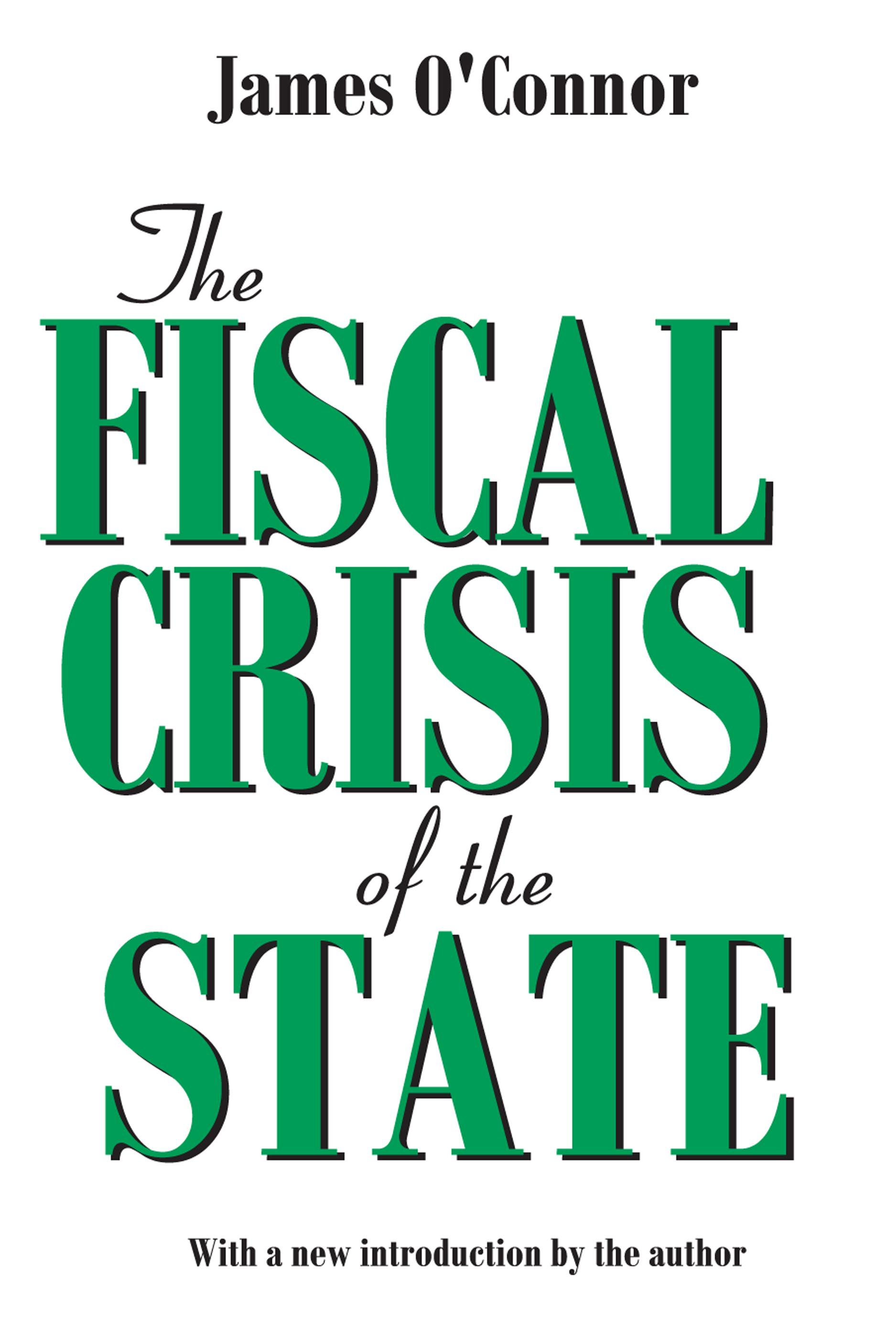
Fiscal Crisis of the State refers to the tendency of government expenditures to outpace revenues in the U.S. in the late 1960s and early 1970s, but its relevance to other countries of the period and also in today's global economy is evident. When government expenditure constitutes a larger and larger share of total economy theorists who ignore the impact of the state budget do so at their own (and capitalism's) peril. This volume examines how changes in tax rates and tax structure used to regulate private economic activity. O'Connor theorizes that particular expenditures and programs and the budget as a whole can be understood only in terms of power relationships within the private economy. O'Connor's analysis includes an anatomy of American state capitalism, political power and budgetary control in the United States, social capital expenditures, social expenses of production, financing the budget, and the scope and limits of reform. He shows that the simultaneous growth of monopoly power and the state itself generate an increasingly severe social crisis. State monopolies indirectly determine the state budget by generating needs that the state must satisfy. The state administration organizes production as a result of a series of political decisions. Over time, there is a tendency for what O'Connor calls the social expenses of production to rise, and the state is increasingly compelled to socialize these expenses. The state has three ways to finance increased budgetary outlays: create state enterprises that produce social expenditures; issue debt and borrowing against further tax revenues; raise tax rates and introduce new taxes. None of these mechanisms are satisfactory. Neither the development of state enterprise nor the growth of state debt liberates the state from fiscal concerns. Similarly, tax finance is a form of economic exploitation and thus a problem for class analysis. O'Connor contends that the fiscal crisis of the capitalist state is the inev
Before Memmo my notes were scattered across PDFs. Now a workspace pulls everything into one place — I see exactly what's still left to study.
Memmo's summaries are gold before exams. I don't have to re-read 800 pages two weeks before — just the important parts.
The AI chat has saved me the night before an exam more than once. I just keep asking until I get it — no waiting on a study group to reply.
The quizzes hit exactly what I need to know. Memmo tracks what I get stuck on — so I only practice what's worth it.
Flashcards with spaced repetition are magic. Memmo knows when I'm about to forget something and brings it back.
The AI podcasts are my favorite. I listen on my way to school and get a recap without sitting at a computer.

Handbok i kvalitativa metoder
281 kr

Hållbar utveckling: en introduktion för ingenjörer och andra problemlösare
334 kr

Brymans Samhällsvetenskapliga metoder
390 kr

Projektledning
491 kr

Den orättvisa hälsan: om socioekonomiska skillnader i hälsa och livslängd
326 kr

Vetenskapsteori för nybörjare
196 kr

Organizational Leadership
429 kr

På väg mot läraryrket
172 kr

Det sociala livet i skolan: Socialpsykologiska perspektiv
253 kr

Betygsättningens didaktik
151 kr

Personality
402 kr

Studying Leadership
404 kr

Managing Innovation
477 kr

Introduktion till samhällsvetenskaplig metod
347 kr

The Psychology of Sex and Gender
698 kr

Evidens och kunskap för socialt arbete
207 kr

Introduction to Leadership
605 kr