
Before Memmo my notes were scattered across PDFs. Now a workspace pulls everything into one place — I see exactly what's still left to study.
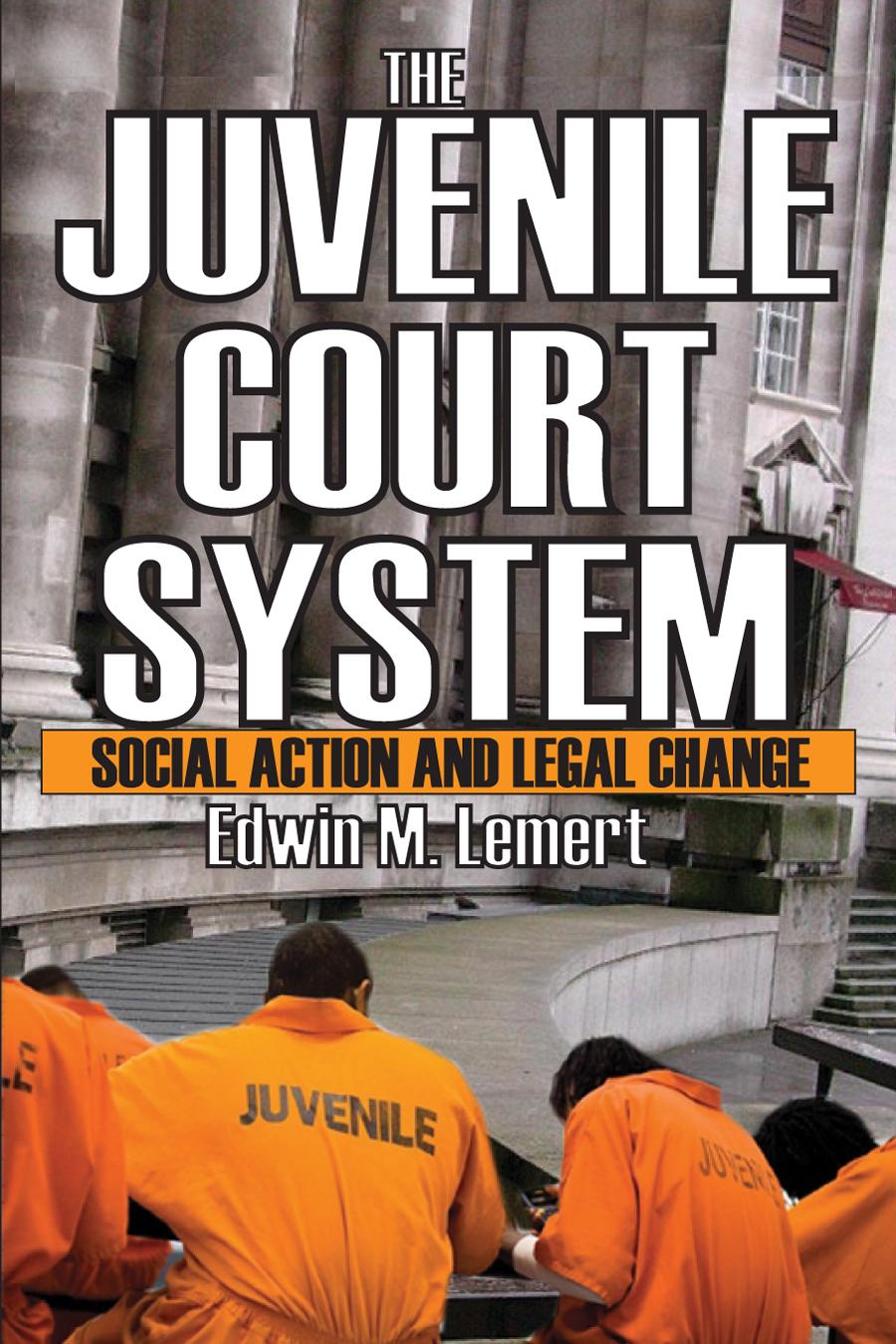
This volume is based on a detailed analysis of change in the law and in the administration of justice affecting juvenile off enders in California in the fifties and sixties. It addresses how procedural law develops on a long-term basis and under what conditions. It also examines the processes by which revolutionary changes occur in law and the extent to which social change can be directed or controlled by legislation.
Social action to revise California's juvenile court law, which had remained little changed since 1915, began in 1958. Subsequently a small group of legal reformers who perceived anomalies in the law and in the underlying philosophy of the court overcame substantial resistance to effect revolutionary revisions of the law. Lemert examines their experience to determine how changes of such magnitude could take place after decades of gradual adaptations in the juvenile courts. His study also looks into the consequences of this change on the court and related agencies of law enforcement.
The author sets forth a socio-legal theory of change-a conception of paradigms, normal evolution, and revolution in law. He applies this theory to data, with special attention to the resistance to legal change and the processes by which it gives way to the adaptive process of normal law. Lemert discusses the substantive aspects of juvenile law as it relates to human affect and meaning, touching on the existential elements of justice. Professionals dealing with juveniles, legal scholars, sociologists, and political scientists will find this book, with its emphasis on how to achieve more equitable administration of juvenile justice, has much to contribute to our understanding of the dynamics of social change.
Before Memmo my notes were scattered across PDFs. Now a workspace pulls everything into one place — I see exactly what's still left to study.
Memmo's summaries are gold before exams. I don't have to re-read 800 pages two weeks before — just the important parts.
The AI chat has saved me the night before an exam more than once. I just keep asking until I get it — no waiting on a study group to reply.
The quizzes hit exactly what I need to know. Memmo tracks what I get stuck on — so I only practice what's worth it.
Flashcards with spaced repetition are magic. Memmo knows when I'm about to forget something and brings it back.
The AI podcasts are my favorite. I listen on my way to school and get a recap without sitting at a computer.

Handbok i kvalitativa metoder
281 kr

Hållbar utveckling: en introduktion för ingenjörer och andra problemlösare
334 kr

Brymans Samhällsvetenskapliga metoder
390 kr

Projektledning
491 kr

Den orättvisa hälsan: om socioekonomiska skillnader i hälsa och livslängd
326 kr

Organizational Leadership
429 kr

Vetenskapsteori för nybörjare
196 kr

På väg mot läraryrket
172 kr

Det sociala livet i skolan: Socialpsykologiska perspektiv
253 kr

Betygsättningens didaktik
151 kr

Personality
402 kr

Studying Leadership
404 kr

Managing Innovation
477 kr

Introduktion till samhällsvetenskaplig metod
347 kr

The Psychology of Sex and Gender
698 kr

Evidens och kunskap för socialt arbete
207 kr

Introduction to Leadership
605 kr