
Before Memmo my notes were scattered across PDFs. Now a workspace pulls everything into one place — I see exactly what's still left to study.
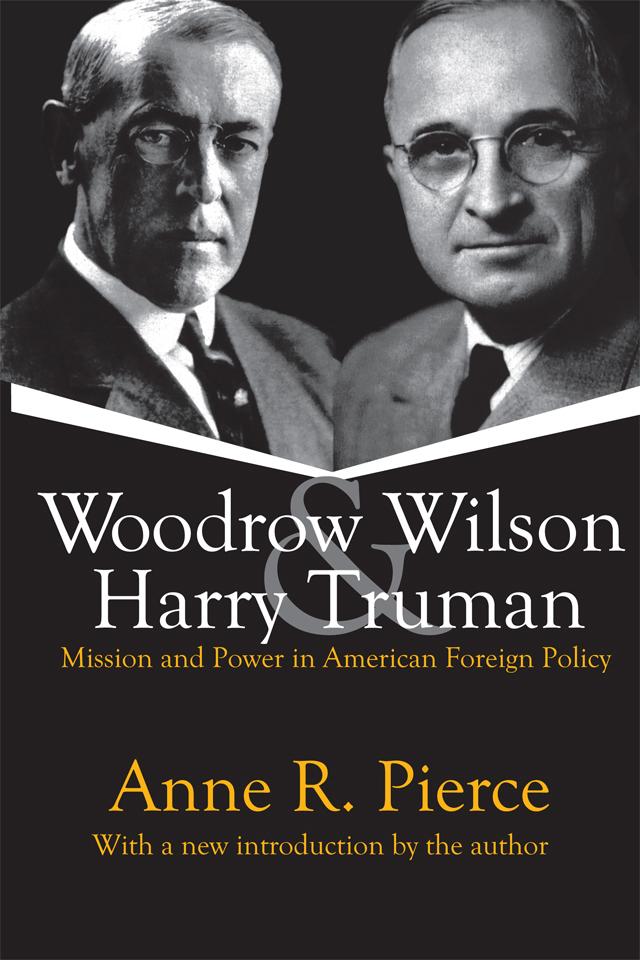
The modern world derives part of its meaning and definition from the foreign policy formulations of Woodrow Wilson and Harry Truman. These presidents viewed the enhancement of American power and the invigoration of American principles as the only response to modem problems such as imperialism, bolshevism, fascism and "total war." The fact that Europe and Asia had submitted to the disastrous consequences of their ideas meant that we had to project and promote our democratic alternative. If we were to live up to our mission and our character, we had to accept radically new responsibilities. This work reveals the important relationship between these presidents and explores the reverential, yet revolutionary relationship each had with broader American traditions.
Wilson came to power at a time when both need and the means for change were apparent. In the face of looming war and global turmoil, Wilson took full advantage of America's emerging world-power status. While he held to the traditional American ideal of setting a democratic example, he reconceived it as an obligation to actively promote democracy and self-determination abroad. Indeed, he construed our increased involvement in the world as the logical fulfillment of our democratic purpose. In the heated aftermath of World War II, Truman echoed Wilson's assertion that only the fortification of democracy and the "influence" of America could ease European tensions and prevent future wars.
While Truman's early foreign policy is often said to exhibit Wilsonian internationalism, his later "power politics," Pierce shows that all of his foreign policy was underlain by his determination never to let what had happened during and between two world wars happen again. Pierce demonstrates that even Truman's most avid departure from Wilsonianism, his plunge into geopolitics and his build-up of the military power of the free world, was saturated with Wilsonian ideals. "Containment" was underlain by the conviction that, even though it faced fascism and bolshevism, freedom was on the march, and by the surety that democracy is lasting, peaceful and beneficial.
As Pierce studies these presidents within the synergistic interplay of ideas and policies, she compels us toward a fruitful dialogue with the American past. Truman's brilliantly construed version of Wilsonianism, this book argues, holds great promise for us today.
Before Memmo my notes were scattered across PDFs. Now a workspace pulls everything into one place — I see exactly what's still left to study.
Memmo's summaries are gold before exams. I don't have to re-read 800 pages two weeks before — just the important parts.
The AI chat has saved me the night before an exam more than once. I just keep asking until I get it — no waiting on a study group to reply.
The quizzes hit exactly what I need to know. Memmo tracks what I get stuck on — so I only practice what's worth it.
Flashcards with spaced repetition are magic. Memmo knows when I'm about to forget something and brings it back.
The AI podcasts are my favorite. I listen on my way to school and get a recap without sitting at a computer.

Handbok i kvalitativa metoder
281 kr

Hållbar utveckling: en introduktion för ingenjörer och andra problemlösare
334 kr

Brymans Samhällsvetenskapliga metoder
390 kr

Projektledning
491 kr

Den orättvisa hälsan: om socioekonomiska skillnader i hälsa och livslängd
326 kr

Vetenskapsteori för nybörjare
196 kr

Organizational Leadership
429 kr

På väg mot läraryrket
172 kr

Det sociala livet i skolan: Socialpsykologiska perspektiv
253 kr

Betygsättningens didaktik
151 kr

Personality
402 kr

Studying Leadership
404 kr

Managing Innovation
477 kr

Introduktion till samhällsvetenskaplig metod
347 kr

The Psychology of Sex and Gender
698 kr

Evidens och kunskap för socialt arbete
207 kr

Introduction to Leadership
605 kr