
Before Memmo my notes were scattered across PDFs. Now a workspace pulls everything into one place — I see exactly what's still left to study.
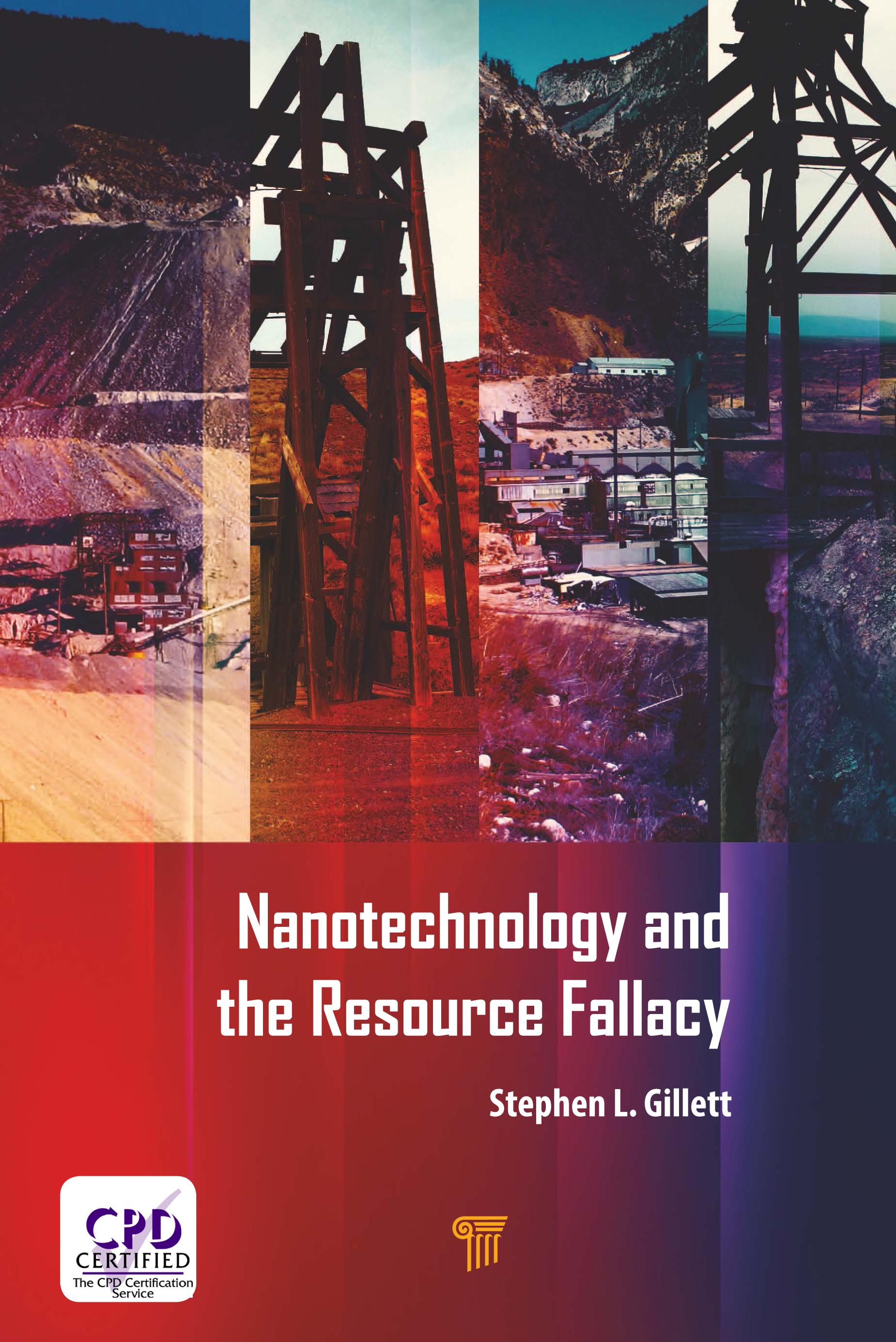
Dwindling global supplies of conventional energy and materials resources are widely thought to severely constrain, or even render impossible, a "first-world" lifestyle for the bulk of Earth’s inhabitants. This bleak prospect, however, is wrong. Current energy resources are used grotesquely inefficiently as heat ("fuels," after all, are "burned"), so that well over half of the energy is simply dissipated into the environment. In turn, conventional materials resources, particularly of metals, are geologically anomalous deposits that also are typically processed by the prodigious application of raw heat. Simultaneously, rising levels of pollution worldwide are a challenge to remediate as they require the extraction of pollutants at low concentration.
Nanotechnology, the structuring of matter at near-molecular scales, offers the prospect of solving all these problems at a stroke. Non-thermal use of energy, in broad emulation of what organisms do already, will not only lead to more efficient use but make practical diffuse sources such as sunlight. Pollution control and resource extraction become two aspects of the same fundamental problem, the low-energy extraction of particular substances from an arbitrary background of other substances, and this also is in emulation of what biosystems carry out already.
This book sketches out approaches both for the efficient, non-thermal use of energy and the molecular extraction of solutes, primarily from aqueous solution, for purification, pollution control, and resource extraction. Some long-term implications for resource demand are also noted. In particular, defect-free fabrication at the molecular level is ultimately likely to make structural metals obsolete.
Before Memmo my notes were scattered across PDFs. Now a workspace pulls everything into one place — I see exactly what's still left to study.
Memmo's summaries are gold before exams. I don't have to re-read 800 pages two weeks before — just the important parts.
The AI chat has saved me the night before an exam more than once. I just keep asking until I get it — no waiting on a study group to reply.
The quizzes hit exactly what I need to know. Memmo tracks what I get stuck on — so I only practice what's worth it.
Flashcards with spaced repetition are magic. Memmo knows when I'm about to forget something and brings it back.
The AI podcasts are my favorite. I listen on my way to school and get a recap without sitting at a computer.

Handbok i kvalitativa metoder
281 kr

Hållbar utveckling: en introduktion för ingenjörer och andra problemlösare
334 kr

Brymans Samhällsvetenskapliga metoder
390 kr

Projektledning
491 kr

Den orättvisa hälsan: om socioekonomiska skillnader i hälsa och livslängd
326 kr

Vetenskapsteori för nybörjare
196 kr

Organizational Leadership
429 kr

På väg mot läraryrket
172 kr

Det sociala livet i skolan: Socialpsykologiska perspektiv
253 kr

Betygsättningens didaktik
151 kr

Personality
402 kr

Studying Leadership
404 kr

Managing Innovation
477 kr

Introduktion till samhällsvetenskaplig metod
347 kr

The Psychology of Sex and Gender
698 kr

Evidens och kunskap för socialt arbete
207 kr

Introduction to Leadership
605 kr