
Before Memmo my notes were scattered across PDFs. Now a workspace pulls everything into one place — I see exactly what's still left to study.
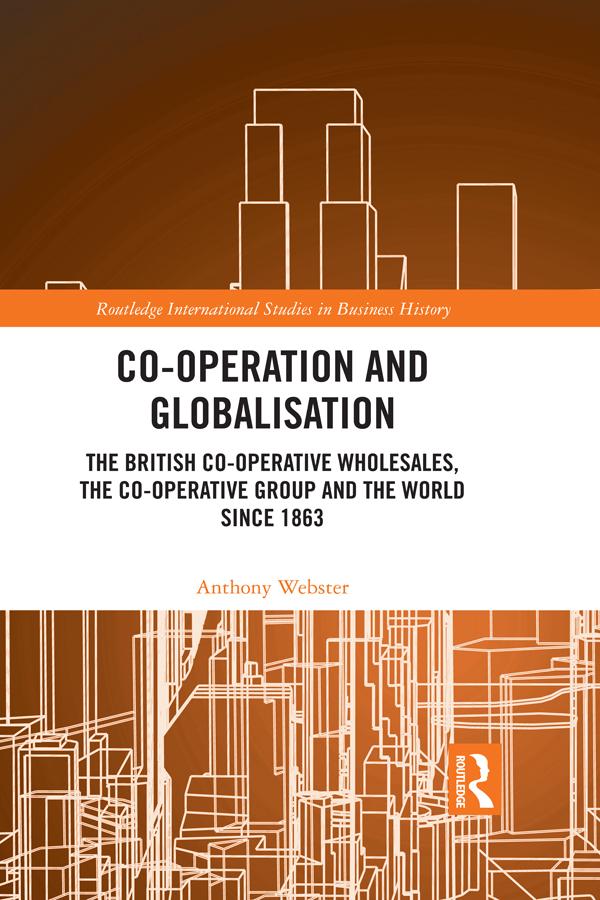
Globalisation is associated with capitalist multinationals dedicated to the enrichment of wealthy, corporate shareholders. However, less well known is that the English and Scottish Co-operative Wholesale Societies, owned by the growing number of local co-operative societies across the country, were early leaders in global commerce.
Owned by their working-class members, by 1900 there were over 1,000 societies and millions of individual members. Spreading profits widely through the ‘divi’ which rewarded members shopping at the co-op store, and selling safe and wholesome food, the co-operative movement was a successful part of the emerging labour movement.
This success depended on the wholesale societies supplying societies with commodities from all over the world. Because local societies were free to source produce from whoever they chose, competitive pressures required the wholesale societies to develop the world’s most formidable network of international supply chains, with branches, depots, plantations and factories in the USA, Canada, Denmark, Sweden, Spain, Greece, France, Germany, India, Ceylon, Australia, New Zealand, colonial West Africa and Argentina.
This book explains how the wholesales developed and managed these networks, giving them a competitive advantage in their dealings with the local societies. It will explore why and how this ‘People’s Global Colossus’ declined in the later 20th century, and how its focus in international commerce moved onto ethical sourcing, investment and Fair Trade.
Integral to these global networks were the UK movement’s relations with foreign co-operative movements, especially through involvement in the International Co-operative Alliance, and promotion of co-operatives in the Empire by successive British governments as a tool for economic development. The ‘People’s Colossus’ was thus a political as well as a commercial player in the increasingly complex world of the late 19th and 20th centuries.
Before Memmo my notes were scattered across PDFs. Now a workspace pulls everything into one place — I see exactly what's still left to study.
Memmo's summaries are gold before exams. I don't have to re-read 800 pages two weeks before — just the important parts.
The AI chat has saved me the night before an exam more than once. I just keep asking until I get it — no waiting on a study group to reply.
The quizzes hit exactly what I need to know. Memmo tracks what I get stuck on — so I only practice what's worth it.
Flashcards with spaced repetition are magic. Memmo knows when I'm about to forget something and brings it back.
The AI podcasts are my favorite. I listen on my way to school and get a recap without sitting at a computer.

Handbok i kvalitativa metoder
281 kr

Hållbar utveckling: en introduktion för ingenjörer och andra problemlösare
334 kr

Brymans Samhällsvetenskapliga metoder
390 kr

Projektledning
491 kr

Den orättvisa hälsan: om socioekonomiska skillnader i hälsa och livslängd
326 kr

Organizational Leadership
429 kr

Vetenskapsteori för nybörjare
196 kr

På väg mot läraryrket
172 kr

Det sociala livet i skolan: Socialpsykologiska perspektiv
253 kr

Betygsättningens didaktik
151 kr

Personality
402 kr

Studying Leadership
404 kr

Managing Innovation
477 kr

Introduktion till samhällsvetenskaplig metod
347 kr

The Psychology of Sex and Gender
698 kr

Evidens och kunskap för socialt arbete
207 kr

Introduction to Leadership
605 kr