
Before Memmo my notes were scattered across PDFs. Now a workspace pulls everything into one place — I see exactly what's still left to study.
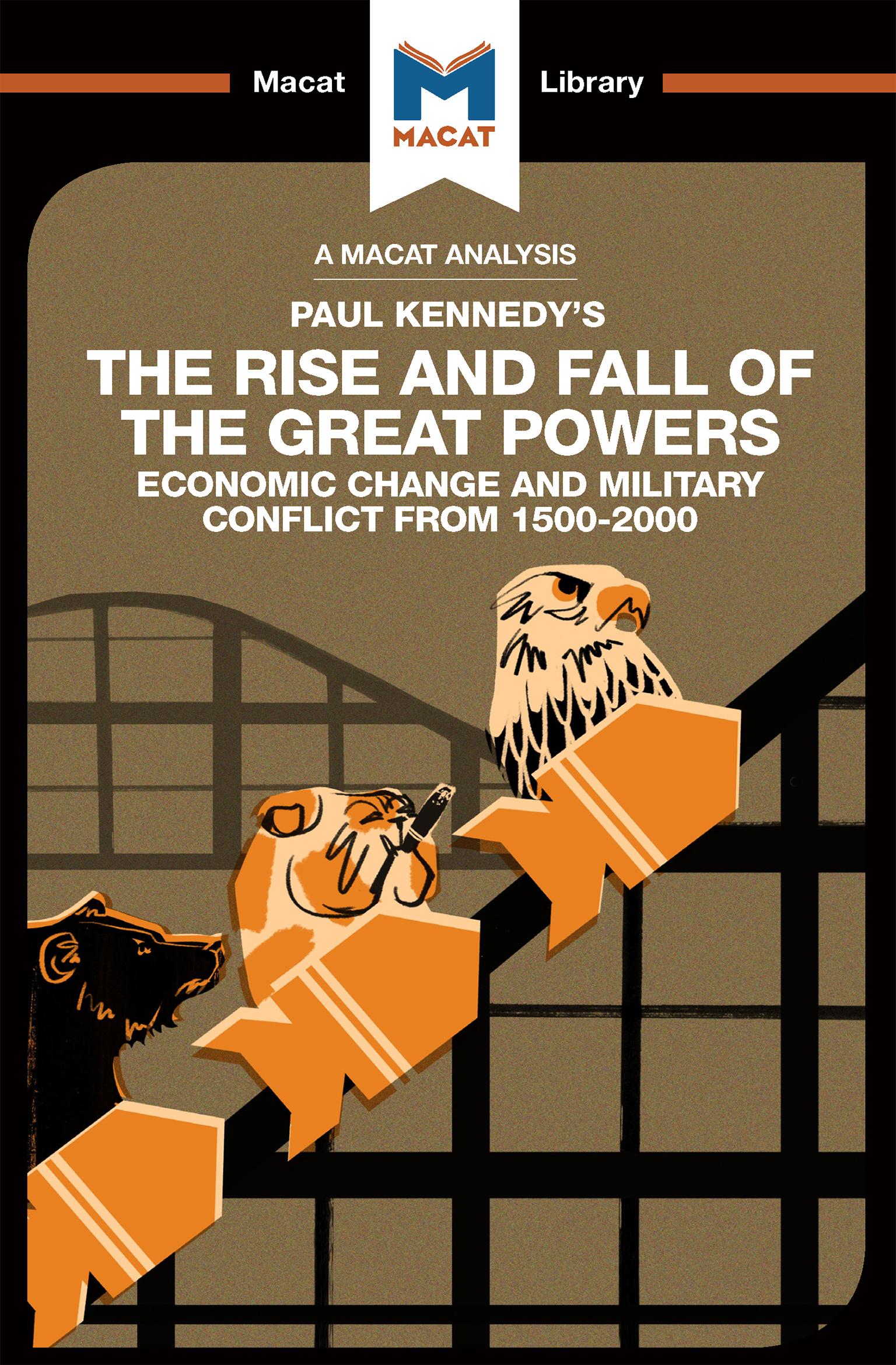
Paul Kennedy owes a great deal to the editor who persuaded him to add a final chapter to this study of the factors that contributed to the rise and fall of European powers since the age of Spain’s Philip II. This tailpiece indulged in what was, for an historian, a most unusual activity: it looked into the future. Pondering whether the United States would ultimately suffer the same decline as every imperium that preceded it, it was this chapter that made The Rise and Fall of the Great Powers a dinner party talking point in Washington government circles. In so doing, it elevated Kennedy to the ranks of public intellectuals whose opinions were canvassed on matters of state policy.
From a strictly academic point of view, the virtues of Kennedy's work lie elsewhere, and specifically in his flair for asking the sort of productive questions that characterize a great problem-solver. Kennedy's work is an example of an increasingly rare genre – a work of comparative history that transcends the narrow confines of state– and era–specific studies to identify the common factors that underpin the successes and failures of highly disparate states.
Kennedy's prime contribution is the now-famous concept of ‘imperial overstretch,’ the idea that empires fall largely because the military commitments they acquire during the period of their rise ultimately become too much to sustain once they lose the economic competitive edge that had projected them to dominance in the first place. Earlier historians may have glimpsed this central truth, and even applied it in studies of specific polities, but it took a problem-solver of Kennedy's ability to extend the analysis convincingly across half a millennium.
Before Memmo my notes were scattered across PDFs. Now a workspace pulls everything into one place — I see exactly what's still left to study.
Memmo's summaries are gold before exams. I don't have to re-read 800 pages two weeks before — just the important parts.
The AI chat has saved me the night before an exam more than once. I just keep asking until I get it — no waiting on a study group to reply.
The quizzes hit exactly what I need to know. Memmo tracks what I get stuck on — so I only practice what's worth it.
Flashcards with spaced repetition are magic. Memmo knows when I'm about to forget something and brings it back.
The AI podcasts are my favorite. I listen on my way to school and get a recap without sitting at a computer.

Handbok i kvalitativa metoder
281 kr

Hållbar utveckling: en introduktion för ingenjörer och andra problemlösare
334 kr

Brymans Samhällsvetenskapliga metoder
390 kr

Projektledning
491 kr

Den orättvisa hälsan: om socioekonomiska skillnader i hälsa och livslängd
326 kr

Vetenskapsteori för nybörjare
196 kr

Organizational Leadership
429 kr

På väg mot läraryrket
172 kr

Det sociala livet i skolan: Socialpsykologiska perspektiv
253 kr

Betygsättningens didaktik
151 kr

Personality
402 kr

Studying Leadership
404 kr

Managing Innovation
477 kr

Introduktion till samhällsvetenskaplig metod
347 kr

The Psychology of Sex and Gender
698 kr

Evidens och kunskap för socialt arbete
207 kr

Introduction to Leadership
605 kr