
Before Memmo my notes were scattered across PDFs. Now a workspace pulls everything into one place — I see exactly what's still left to study.
What makes good people capable of committing bad – even evil – acts? Few psychologists are as well-qualified to answer that question as Philip Zimbardo, a psychology professor who was not only the author of the classic Stanford Prison Experiment – which asked two groups of students to assume the roles of prisoners and guards in a makeshift jail, to dramatic effect – but also an active participant in the trial of a US serviceman who took part in the violent abuse of Iraqi prisoners in the wake of the second Gulf War.
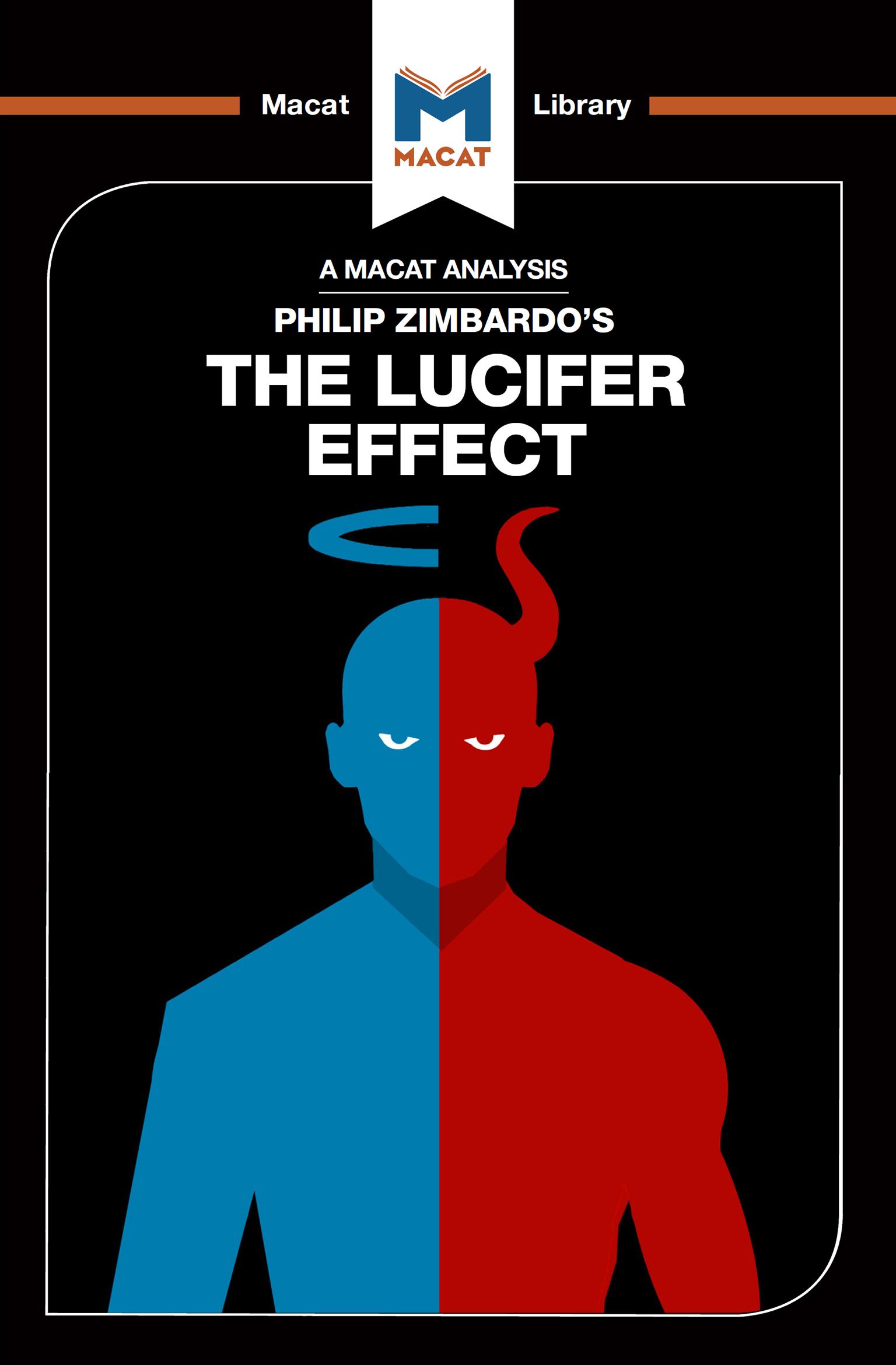
Zimbardo’s book The Lucifer Effect is an extended analysis that aims to find solutions to the problem of how good people can commit evil acts. Zimbardo used his problem-solving skills to locate the solution to this question in an understanding of two conditions. Firstly, he writes, situational factors (circumstances and setting) must override dispositional ones, meaning that decent and well-meaning people can behave uncharacteristically when placed in unusual or stressful environments. Secondly, good and evil are not alternatives; they are interchangeable. Most people are capable of being both angels and devils, depending on the circumstances.
In making this observation, Zimbardo also built on the work of Stanley Milgram, whose own psychological experiments had shown the impact that authority figures can have on determining the actions of their subordinates. Zimbardo's book is a fine example of the importance of asking productive questions that go beyond the theoretical to consider real-world events.
Before Memmo my notes were scattered across PDFs. Now a workspace pulls everything into one place — I see exactly what's still left to study.
Memmo's summaries are gold before exams. I don't have to re-read 800 pages two weeks before — just the important parts.
The AI chat has saved me the night before an exam more than once. I just keep asking until I get it — no waiting on a study group to reply.
The quizzes hit exactly what I need to know. Memmo tracks what I get stuck on — so I only practice what's worth it.
Flashcards with spaced repetition are magic. Memmo knows when I'm about to forget something and brings it back.
The AI podcasts are my favorite. I listen on my way to school and get a recap without sitting at a computer.

Handbok i kvalitativa metoder
281 kr

Hållbar utveckling: en introduktion för ingenjörer och andra problemlösare
334 kr

Brymans Samhällsvetenskapliga metoder
390 kr

Projektledning
491 kr

Den orättvisa hälsan: om socioekonomiska skillnader i hälsa och livslängd
326 kr

Vetenskapsteori för nybörjare
196 kr

Organizational Leadership
429 kr

På väg mot läraryrket
172 kr

Det sociala livet i skolan: Socialpsykologiska perspektiv
253 kr

Betygsättningens didaktik
151 kr

Personality
402 kr

Studying Leadership
404 kr

Managing Innovation
477 kr

Introduktion till samhällsvetenskaplig metod
347 kr

The Psychology of Sex and Gender
698 kr

Evidens och kunskap för socialt arbete
207 kr

Introduction to Leadership
605 kr