
Before Memmo my notes were scattered across PDFs. Now a workspace pulls everything into one place — I see exactly what's still left to study.
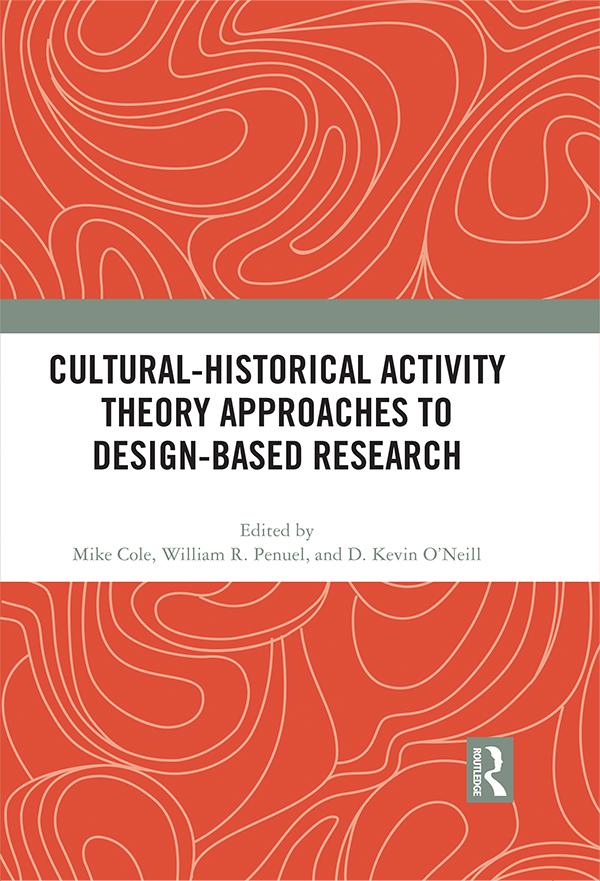
Most intervention research in education aims to demonstrate the efficacy of specific programs and practices. The assumption is that if researchers can produce evidence-based programs that work in a variety of settings, educators will take them up on a large scale. Unfortunately, this approach largely neglects the role that out-of-school experiences can and do play in learning, and assumes that contexts are peripheral to intervention success. However, we know from decades of research that contexts profoundly shape the nature and effects of interventions. Further, researchers may produce interventions that are not usable or sustainable when they do so without incorporating the voices of educators, community members, and families.
Design-based research offers a more collaborative approach to organizing for equitable educational change. This approach to developing and testing innovations in classrooms (and other settings) intertwines design and research closely. The essays in this volume draw on inspiration from the work of L.S. Vygotsky and his colleagues, highlighting ways that design research can foreground cultural, historical, and institutional processes as central constituents of learning.
Each essay considers concrete ways that institutional contexts shape interventions; how design can support the agency of local participants in developing new learning arrangements and resources; and how communities can organize both with and without researcher-interventionists to address historical inequities linked to race, language, and poverty. As an ensemble, these essays offer productive new approaches for expanding design research methodologies to encompass both issues and contexts that have often been absent in most learning sciences research.
This book was originally published as a special issue of The Journal of the Learning Sciences.
Before Memmo my notes were scattered across PDFs. Now a workspace pulls everything into one place — I see exactly what's still left to study.
Memmo's summaries are gold before exams. I don't have to re-read 800 pages two weeks before — just the important parts.
The AI chat has saved me the night before an exam more than once. I just keep asking until I get it — no waiting on a study group to reply.
The quizzes hit exactly what I need to know. Memmo tracks what I get stuck on — so I only practice what's worth it.
Flashcards with spaced repetition are magic. Memmo knows when I'm about to forget something and brings it back.
The AI podcasts are my favorite. I listen on my way to school and get a recap without sitting at a computer.

Handbok i kvalitativa metoder
281 kr

Hållbar utveckling: en introduktion för ingenjörer och andra problemlösare
334 kr

Brymans Samhällsvetenskapliga metoder
390 kr

Projektledning
491 kr

Den orättvisa hälsan: om socioekonomiska skillnader i hälsa och livslängd
326 kr

Vetenskapsteori för nybörjare
196 kr

Organizational Leadership
429 kr

På väg mot läraryrket
172 kr

Det sociala livet i skolan: Socialpsykologiska perspektiv
253 kr

Betygsättningens didaktik
151 kr

Personality
402 kr

Studying Leadership
404 kr

Managing Innovation
477 kr

Introduktion till samhällsvetenskaplig metod
347 kr

The Psychology of Sex and Gender
698 kr

Evidens och kunskap för socialt arbete
207 kr

Introduction to Leadership
605 kr