
Before Memmo my notes were scattered across PDFs. Now a workspace pulls everything into one place — I see exactly what's still left to study.
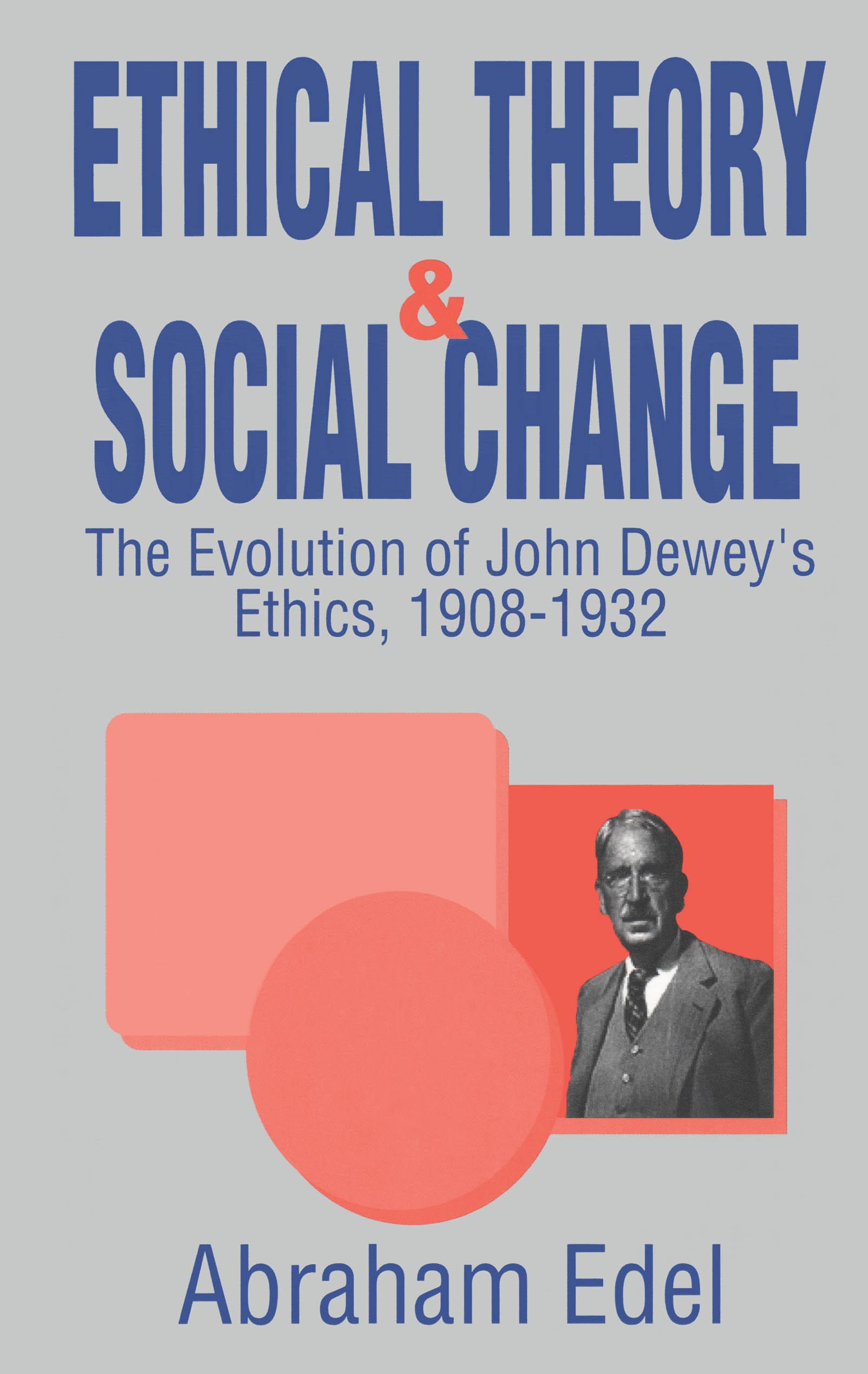
John Dewey was unique among American philosophers in his insistence that the events, the social structure, the beliefs and attitudes of a period, its models of science and human history, all have some constitutive role in its philosophical theory. This belief is amply demonstrated in Dewey's own writings. Dewey and James H. Tufts' Ethics was first published in 1908 with a revised edition appearing in 1932. Dewey's part in the latter was wholly rewritten, and in effect constituted a new work, showing that Dewey did not believe ethical beliefs were eternal and unchanging. In Ethical Theory and Social Change, Abraham Edel provides a comparative analysis of the two editions to show how Dewey conceived ethics as part of an ongoing culture, not intelligible if isolated.The years between the two editions of Dewey and Tufts' Ethics were momentous in America and across the world. In 1908 industrialism was in high gear, putting greater pressure on social institutions and raising expectations of technological progress and extended democratic growth. By 1932, the devastation of World War I, economic depression, and the rise of totalitarianisms of the left and right had shattered that earlier optimism. The shift toward secular philosophy and new perspectives in research and method in the social sciences was challenging established universalizing views of morality with perceptions of fundamental moral conflict and the threat of relativism in their resolution.Dewey, is an ideal case for comparing changes in ethical theory over a quarter century. Unlike many philosophers he appreciated change and many of his basic ideas are geared to the problem of human control over change. Moreover he is concerned with the relation of theory and practice, and much of his work in metaphysics and epistemology is devoted to discovering the role that doctrines in these fields play and how they reflect the movement of social life. He is constantly concerned with ethics, with the history of ethics, and with the presuppositions of ethical theories that are studied in the social sciences and applied in the normative disciplines of politics, education, and law.Dewey's project of comparison in ethics reveals how theory is crystallized in the processes of the growth of knowledge in all fields and the human vicissitudes of history. Ethical Theory and Social Change will be of interest to philosophers, sociologists, and intellectual historians.
Before Memmo my notes were scattered across PDFs. Now a workspace pulls everything into one place — I see exactly what's still left to study.
Memmo's summaries are gold before exams. I don't have to re-read 800 pages two weeks before — just the important parts.
The AI chat has saved me the night before an exam more than once. I just keep asking until I get it — no waiting on a study group to reply.
The quizzes hit exactly what I need to know. Memmo tracks what I get stuck on — so I only practice what's worth it.
Flashcards with spaced repetition are magic. Memmo knows when I'm about to forget something and brings it back.
The AI podcasts are my favorite. I listen on my way to school and get a recap without sitting at a computer.

Handbok i kvalitativa metoder
281 kr

Hållbar utveckling: en introduktion för ingenjörer och andra problemlösare
334 kr

Brymans Samhällsvetenskapliga metoder
390 kr

Projektledning
491 kr

Den orättvisa hälsan: om socioekonomiska skillnader i hälsa och livslängd
326 kr

Vetenskapsteori för nybörjare
196 kr

Organizational Leadership
429 kr

På väg mot läraryrket
172 kr

Det sociala livet i skolan: Socialpsykologiska perspektiv
253 kr

Betygsättningens didaktik
151 kr

Personality
402 kr

Studying Leadership
404 kr

Managing Innovation
477 kr

Introduktion till samhällsvetenskaplig metod
347 kr

The Psychology of Sex and Gender
698 kr

Evidens och kunskap för socialt arbete
207 kr

Introduction to Leadership
605 kr