
Before Memmo my notes were scattered across PDFs. Now a workspace pulls everything into one place — I see exactly what's still left to study.
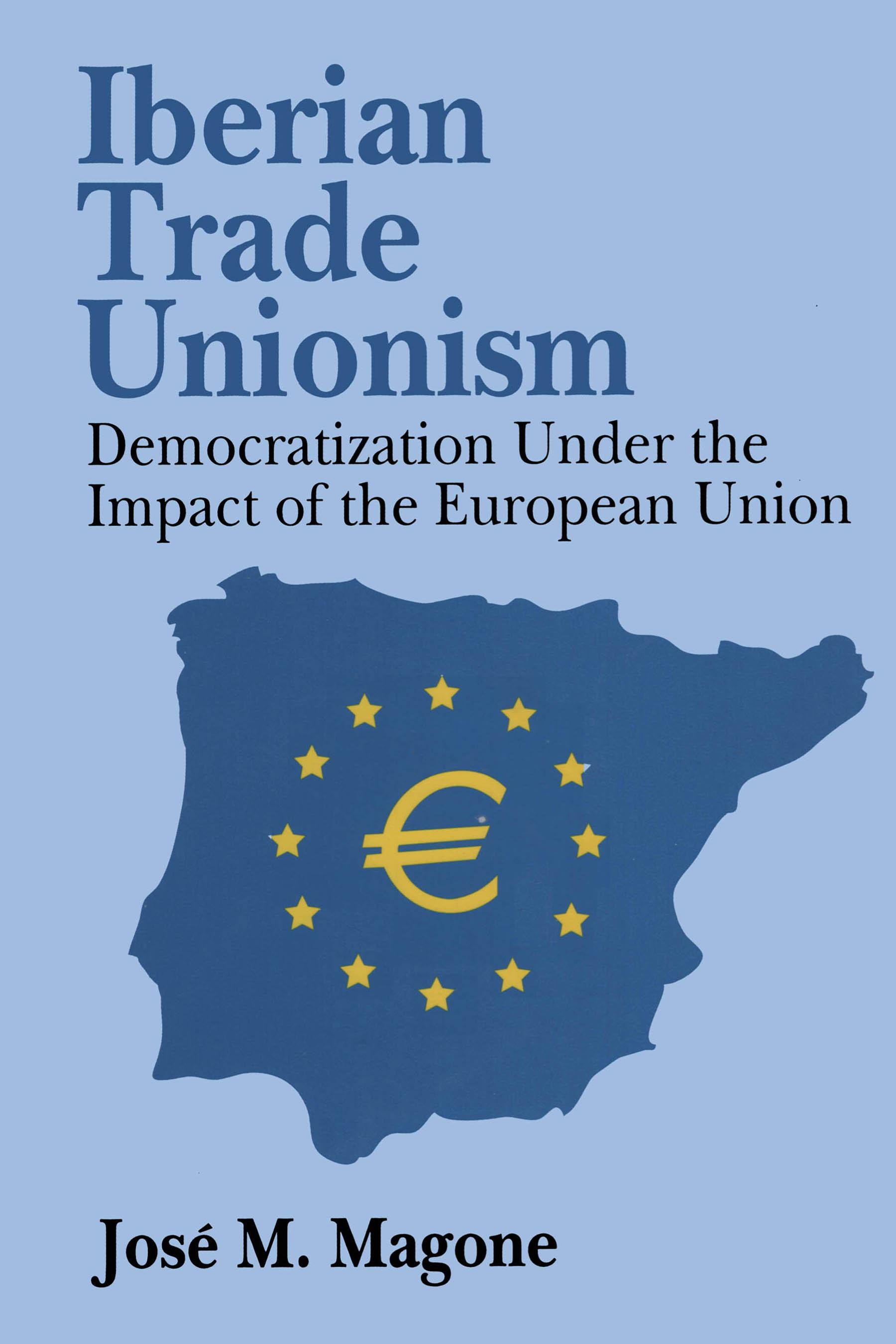
One of the most neglected areas of the European integration process is the role that trade union confederations may play after the full establishment of the Economic and Monetary Union. The gradual establishment of the four freedoms enshrined in the Single European Act would require a transformation of the present strategies of trade union confederations toward more flexibility and towards the ability to take part in different levels of the European integration process. Iberian Trade Unionism highlights the emerging patterns of cooperation between national, subnational, and supranational actors and the impact on these different levels.
Unlike most literature on the study of democratization and Europeanization, Iberian Trade Unionism aims to break the dominant focus on political parties and political institutions by raising awareness of the importance of interest groups such as trade union confederations in contributing to a strengthening of democratic governance.
The central thesis is that both Portuguese and Spanish trade unions are becoming increasingly part of a transnational European strategy which shapes the internal organizations toward professionalism and democratization. Part 1, "Gontextualizing Iberian Trade Union Strategies," deals with the operations of both Portuguese and Spanish trade union confederations. Part 2, "The National Systems of Interest Intermediation and Trade Union Confederation Strategies," analyzes the transformation of the national systems of intermediation in the 1990s which were affected by a decline in steering power of Spanish and Portuguese political systems vis-a-vis global and European political and economic processes. Part 3, "Subnational and Transnational Policies of Iberian Trade Union Confederations," deals with policies and strategies. The last chapter treats the integration of Iberian trade union confederations in the institutions of the European Union as well as the ITUCs and is based on original research done in Madrid, Lisbon, and Brussels.
This timely look at interest groups and lobbying in the European Union will appeal to scholars studying European integration and the role of interest groups in it, and to students of Spain, Portugal, or southern Europe.
Before Memmo my notes were scattered across PDFs. Now a workspace pulls everything into one place — I see exactly what's still left to study.
Memmo's summaries are gold before exams. I don't have to re-read 800 pages two weeks before — just the important parts.
The AI chat has saved me the night before an exam more than once. I just keep asking until I get it — no waiting on a study group to reply.
The quizzes hit exactly what I need to know. Memmo tracks what I get stuck on — so I only practice what's worth it.
Flashcards with spaced repetition are magic. Memmo knows when I'm about to forget something and brings it back.
The AI podcasts are my favorite. I listen on my way to school and get a recap without sitting at a computer.

Handbok i kvalitativa metoder
281 kr

Hållbar utveckling: en introduktion för ingenjörer och andra problemlösare
334 kr

Brymans Samhällsvetenskapliga metoder
390 kr

Projektledning
491 kr

Den orättvisa hälsan: om socioekonomiska skillnader i hälsa och livslängd
326 kr

Organizational Leadership
429 kr

Vetenskapsteori för nybörjare
196 kr

På väg mot läraryrket
172 kr

Det sociala livet i skolan: Socialpsykologiska perspektiv
253 kr

Betygsättningens didaktik
151 kr

Personality
402 kr

Studying Leadership
404 kr

Managing Innovation
477 kr

Introduktion till samhällsvetenskaplig metod
347 kr

The Psychology of Sex and Gender
698 kr

Evidens och kunskap för socialt arbete
207 kr

Introduction to Leadership
605 kr