
Before Memmo my notes were scattered across PDFs. Now a workspace pulls everything into one place — I see exactly what's still left to study.
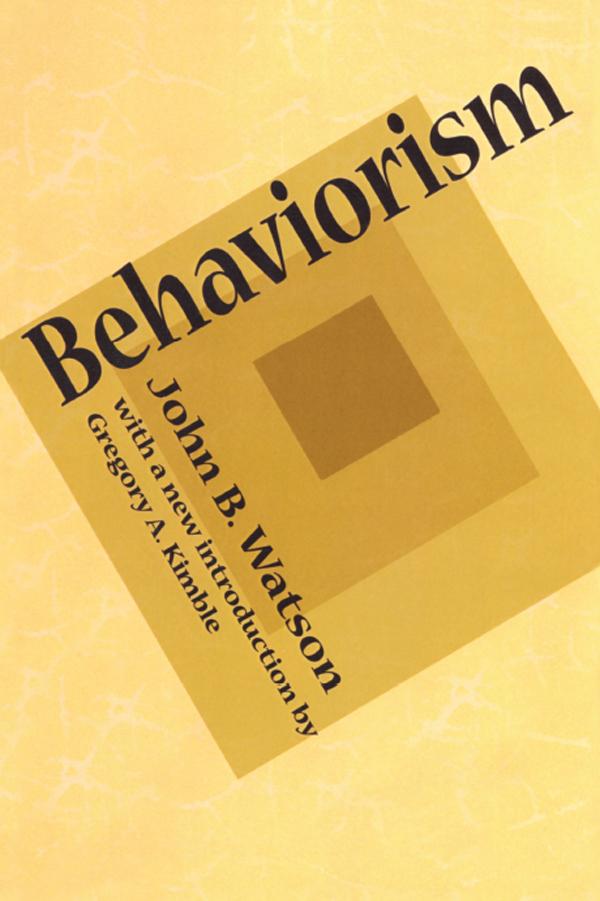
Watson was the father of behaviorism. His now-revered lectures on the subject defined behaviorism as a natural science that takes the whole field of human adjustment as its own. It is the business of behaviorist psychology to predict and control human activity. The field has as its aim to be able, given the stimulus, to predict the response, or seeing the reaction, to know the stimulus that produced it. Watson argued that psychology is as good as its observations: what the organism does or says in the general environment.
Watson identified "laws" of learning, including frequency and recency. Kimble makes it perfectly clear that Watson's behaviorism, while deeply indebted to Ivan Pavlov, went beyond the Russian master in his treatment of cognition, language, and emotion. It becomes clear that Behaviorism is anything but the reductionist caricature it is often made out to be in the critical literature. For that reason alone, the work merits a wide reading.
Behaviorism, as was typical of the psychology of the time, offered a wide array of applications all of which can be said to fall on the enlightened side of the ledger. At a time of mixed messages, Watson argued against child beating and abuse, for patterns of enlightened techniques of factory management, and for curing the sick and isolating the small cadre of criminals not subject to correction. And anticipating Thomas Szasz, he argued against a doctrine of strictly mental diseases, and for a close scrutiny of behavioral illness and disturbances. Kimble's brilliant introduction to Watson ends with a challenge to subjectivism to provide evidence that Watson's behaviorism cannot explain human actions without introspective notions of the mind. This genuine classic of social science hi our century remains relevant not just for the conduct of psychological research, but for studies in the philosophy of science and the sociology of knowledge.
Before Memmo my notes were scattered across PDFs. Now a workspace pulls everything into one place — I see exactly what's still left to study.
Memmo's summaries are gold before exams. I don't have to re-read 800 pages two weeks before — just the important parts.
The AI chat has saved me the night before an exam more than once. I just keep asking until I get it — no waiting on a study group to reply.
The quizzes hit exactly what I need to know. Memmo tracks what I get stuck on — so I only practice what's worth it.
Flashcards with spaced repetition are magic. Memmo knows when I'm about to forget something and brings it back.
The AI podcasts are my favorite. I listen on my way to school and get a recap without sitting at a computer.

Handbok i kvalitativa metoder
281 kr

Hållbar utveckling: en introduktion för ingenjörer och andra problemlösare
334 kr

Brymans Samhällsvetenskapliga metoder
390 kr

Projektledning
491 kr

Den orättvisa hälsan: om socioekonomiska skillnader i hälsa och livslängd
326 kr

Organizational Leadership
429 kr

Vetenskapsteori för nybörjare
196 kr

På väg mot läraryrket
172 kr

Det sociala livet i skolan: Socialpsykologiska perspektiv
253 kr

Betygsättningens didaktik
151 kr

Personality
402 kr

Studying Leadership
404 kr

Managing Innovation
477 kr

Introduktion till samhällsvetenskaplig metod
347 kr

The Psychology of Sex and Gender
698 kr

Evidens och kunskap för socialt arbete
207 kr

Introduction to Leadership
605 kr