
Before Memmo my notes were scattered across PDFs. Now a workspace pulls everything into one place — I see exactly what's still left to study.
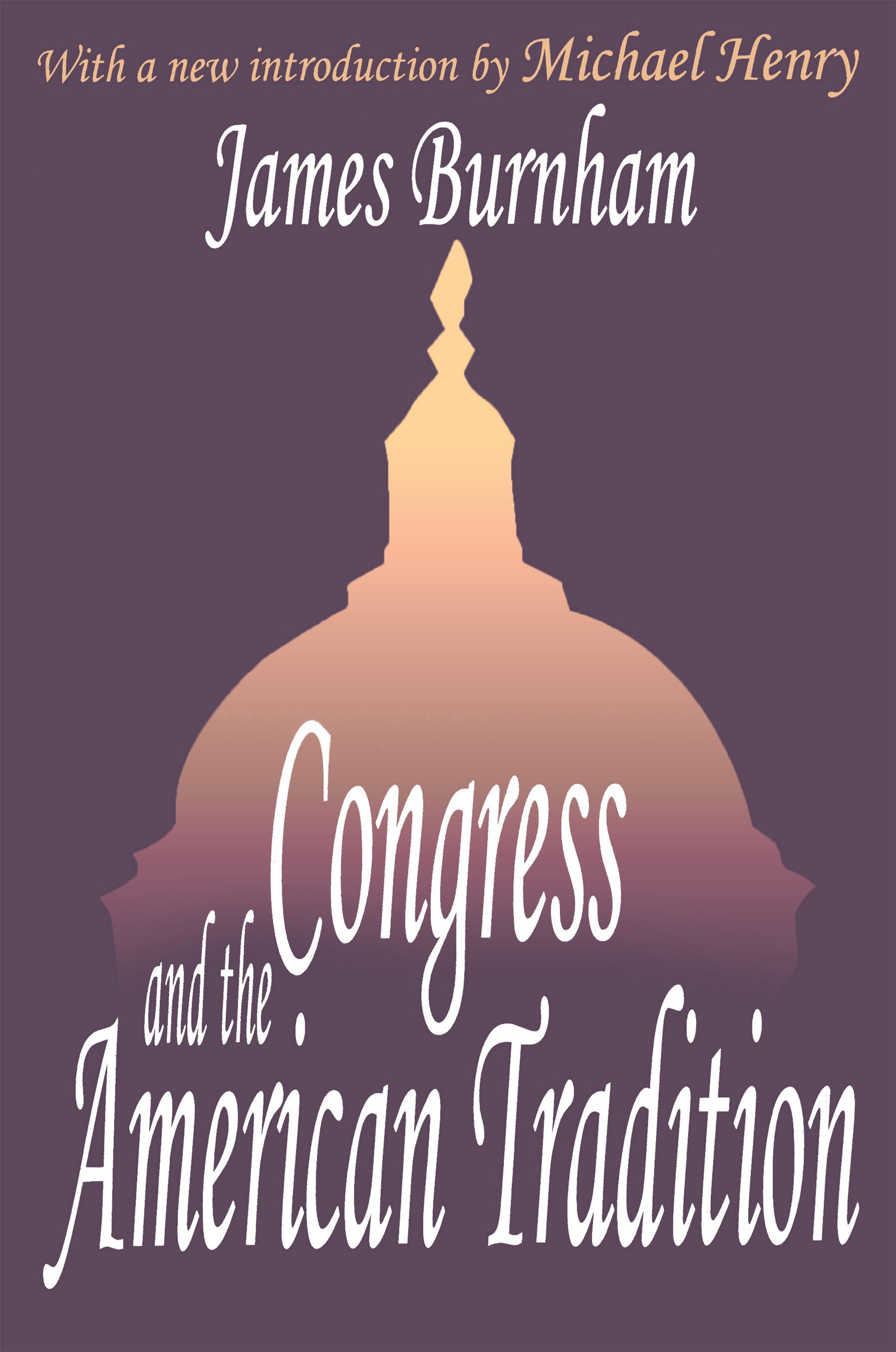
Most Americans would probably be surprised to hear that, in 1959, James Burnham, a leading political thinker questioned whether Congress would survive, and whether the Executive Branch of the American government would become a dictatorship. In the last decade, members of Congress have impeached a president, rejected or refused to consider presidential nominees, and appear in the media criticizing the chief executive. Congress does not exactly appear to be at risk of expiring. Regardless of how we perceive Congress today, more than forty years after Congress and the American Tradition was written, Burnham's questions, arguments, and political analysis still have much to tell us about freedom and political order.
Burnham originally intended Congress and the American Tradition as a response to liberal critics of Senator McCarthy's investigations of communist influence in the United States. He developed it into a detailed analysis of the history and functioning of Congress, its changing relationship with the Executive Branch, and the danger of despotism, even in a democratic society.
The book is organized into three distinct parts. "The American System of Government," analyzes the concept of government, ideology and tradition, power, and the place and function of Congress within the American government. "The Present Position of Congress," explores its law-making power, Congressional commissions, treaties, investigatory power, and proposals for Congressional reform. "The Future of Congress," discusses democracy and liberty, and ultimately asks, "Can Congress Survive?" Michael Henry's new introduction sheds much insight into Burnham's writings and worldview, combining biography and penetrating scholarly analysis. He makes it clear why this work is of continuing importance to political theoreticians, historians, philosophers, and those interested in American government.
James Burnham (1905-1987) began his career as a professor of philosophy at New York University. He co-founded, with William F. Buckley, Jr., The National Review. His books include The Managerial Revolution, The Machiavellians: Defenders of Freedom, and Suicide of the West.
Michael Henry received his advanced degree in political theory. He has been teaching philosophy at St. John's University in New York since 1977.
Before Memmo my notes were scattered across PDFs. Now a workspace pulls everything into one place — I see exactly what's still left to study.
Memmo's summaries are gold before exams. I don't have to re-read 800 pages two weeks before — just the important parts.
The AI chat has saved me the night before an exam more than once. I just keep asking until I get it — no waiting on a study group to reply.
The quizzes hit exactly what I need to know. Memmo tracks what I get stuck on — so I only practice what's worth it.
Flashcards with spaced repetition are magic. Memmo knows when I'm about to forget something and brings it back.
The AI podcasts are my favorite. I listen on my way to school and get a recap without sitting at a computer.

Handbok i kvalitativa metoder
281 kr

Hållbar utveckling: en introduktion för ingenjörer och andra problemlösare
334 kr

Brymans Samhällsvetenskapliga metoder
390 kr

Projektledning
491 kr

Den orättvisa hälsan: om socioekonomiska skillnader i hälsa och livslängd
326 kr

Vetenskapsteori för nybörjare
196 kr

Organizational Leadership
429 kr

På väg mot läraryrket
172 kr

Det sociala livet i skolan: Socialpsykologiska perspektiv
253 kr

Betygsättningens didaktik
151 kr

Personality
402 kr

Studying Leadership
404 kr

Managing Innovation
477 kr

Introduktion till samhällsvetenskaplig metod
347 kr

The Psychology of Sex and Gender
698 kr

Evidens och kunskap för socialt arbete
207 kr

Introduction to Leadership
605 kr