
Before Memmo my notes were scattered across PDFs. Now a workspace pulls everything into one place — I see exactly what's still left to study.
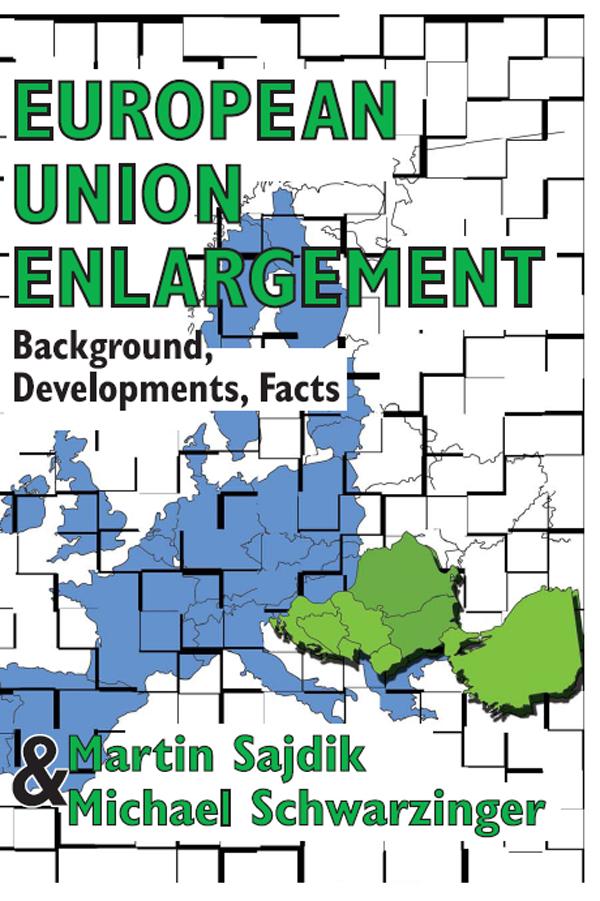
European Union Enlargement offers an intense and detailed analysis of the almost ten-year process of preparing and negotiating the accession of Eastern, Southeastern, and Central European countries, as well as Mediterranean countries to the European Union. In the end, ten joined in 2004, with two more to follow in 2007. European Union Enlargement was written by two diplomats who were directly involved in that process.
Sajdik and Schwarzinger relate their first-hand experience of proceedings that occurred behind closed doors. They detail how the vision of adding some countries gradually developed into the concrete policy intended to enlarge the European Union. A special chapter explains the Accession Process as well as the Union's strategy that prepared the candidate countries, in legal and economic terms, for membership.
The authors describe in detail the complex negotiations that occurred from 1998 to 2002. These include activities of EU member states as well as the European Commission with respect to the candidate countries. They further offer a brief analysis of future possibilities of EU-accession by Balkan nations and Turkey. A number of topical chapters deal with particular key issues involved in the process: free movement of workers, agriculture, financing of the enlargement, transport, and nuclear safety. Other chapters deal with the enclave of Kaliningrad as well as the Stability and Association Pact for South East Europe.
In addition to providing key information about the process, this volume is also a case study of European policies and diplomatic practice. The enlargement negotiations from 1998 to 2002 were the most complex ones the European Union had ever conducted. In consequence, this work gives insight into the working methods of both the institutions in Brussels and of the representatives of the member states that made them a success. It will be of interest to those concerned with European politics, international organizations, and area studies.
Before Memmo my notes were scattered across PDFs. Now a workspace pulls everything into one place — I see exactly what's still left to study.
Memmo's summaries are gold before exams. I don't have to re-read 800 pages two weeks before — just the important parts.
The AI chat has saved me the night before an exam more than once. I just keep asking until I get it — no waiting on a study group to reply.
The quizzes hit exactly what I need to know. Memmo tracks what I get stuck on — so I only practice what's worth it.
Flashcards with spaced repetition are magic. Memmo knows when I'm about to forget something and brings it back.
The AI podcasts are my favorite. I listen on my way to school and get a recap without sitting at a computer.

Handbok i kvalitativa metoder
281 kr

Hållbar utveckling: en introduktion för ingenjörer och andra problemlösare
334 kr

Brymans Samhällsvetenskapliga metoder
390 kr

Projektledning
491 kr

Den orättvisa hälsan: om socioekonomiska skillnader i hälsa och livslängd
326 kr

Vetenskapsteori för nybörjare
196 kr

Organizational Leadership
429 kr

På väg mot läraryrket
172 kr

Det sociala livet i skolan: Socialpsykologiska perspektiv
253 kr

Betygsättningens didaktik
151 kr

Personality
402 kr

Studying Leadership
404 kr

Managing Innovation
477 kr

Introduktion till samhällsvetenskaplig metod
347 kr

The Psychology of Sex and Gender
698 kr

Evidens och kunskap för socialt arbete
207 kr

Introduction to Leadership
605 kr