
Before Memmo my notes were scattered across PDFs. Now a workspace pulls everything into one place — I see exactly what's still left to study.
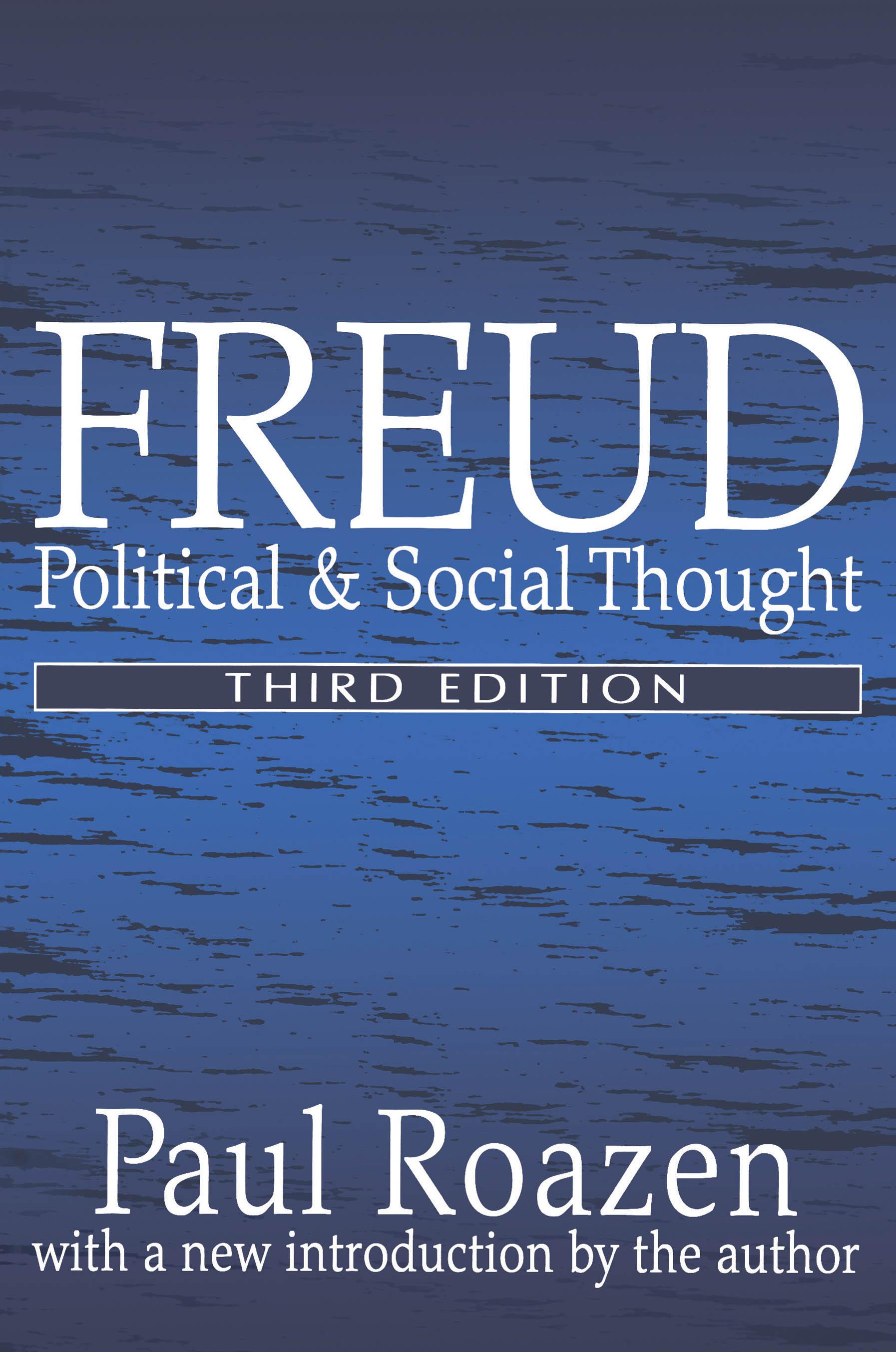
Sigmund Freud had broad ambitions about what psychoanalysis could add to human thought. But Freutfs own writings have rarely been assessed within the perspective of political philosophy. Political theorists will find in the school Freud established a rich storehouse of ideas. For us to link up with what Freud was saying means to join in the great conversation about what the ends of the just society should be, as well as what a fully developed person might be like. Written more than twenty years ago, the central interpretive theses found in Freud: Political and Social Thought still ring true.
In his new introduction to this classic text, Paul Roazen contends that today, from the point of view of intellectual history, Freud looms as a subject in an even larger way than he did back in the 1960s. His thinking has impinged, for good or ill, on how we think about character and the nature of human impulses. Privacy itself has been affected, so much so that political candidates now feel free to use intimate material from private life for manipulative public purposes. Yet after all this time political scientists remain reluctant to entertain the need to explore the psychological dimension of all political events.
Without reducing politics to psychoanalysis, or inflating psychological categories to embrace all of politics, Roazen provides an introductory look at the field of psychoanalysis. By bringing together the different disciplines of psychology and politics he breaks through parochialism. Roazen is no advocate for psychoanalysis, but believes that analysts have as much to learn from social science as the other way around. This volume is proof that at its best political theory has to be inherently interdisciplinary. As such, this volume will be of interest to intellectual historians, psychoanalysts, and political theorists.
Before Memmo my notes were scattered across PDFs. Now a workspace pulls everything into one place — I see exactly what's still left to study.
Memmo's summaries are gold before exams. I don't have to re-read 800 pages two weeks before — just the important parts.
The AI chat has saved me the night before an exam more than once. I just keep asking until I get it — no waiting on a study group to reply.
The quizzes hit exactly what I need to know. Memmo tracks what I get stuck on — so I only practice what's worth it.
Flashcards with spaced repetition are magic. Memmo knows when I'm about to forget something and brings it back.
The AI podcasts are my favorite. I listen on my way to school and get a recap without sitting at a computer.

Handbok i kvalitativa metoder
281 kr

Hållbar utveckling: en introduktion för ingenjörer och andra problemlösare
334 kr

Brymans Samhällsvetenskapliga metoder
390 kr

Projektledning
491 kr

Den orättvisa hälsan: om socioekonomiska skillnader i hälsa och livslängd
326 kr

Organizational Leadership
429 kr

Vetenskapsteori för nybörjare
196 kr

På väg mot läraryrket
172 kr

Det sociala livet i skolan: Socialpsykologiska perspektiv
253 kr

Betygsättningens didaktik
151 kr

Personality
402 kr

Studying Leadership
404 kr

Managing Innovation
477 kr

Introduktion till samhällsvetenskaplig metod
347 kr

The Psychology of Sex and Gender
698 kr

Evidens och kunskap för socialt arbete
207 kr

Introduction to Leadership
605 kr