
Before Memmo my notes were scattered across PDFs. Now a workspace pulls everything into one place — I see exactly what's still left to study.
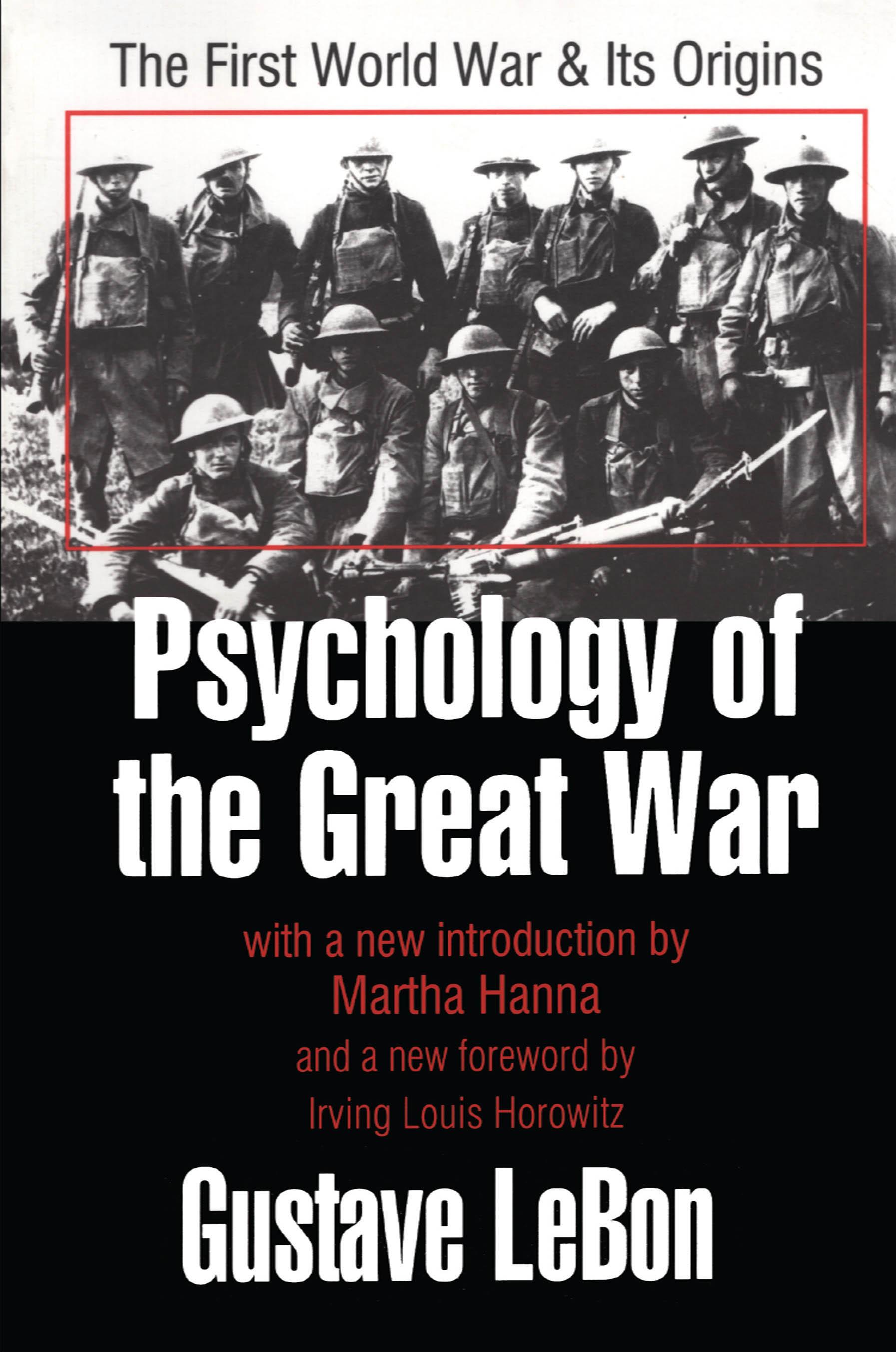
The outbreak of World War I saw the collapse of socialist notions of class solidarity and reaffirmed the enduring strength of nationalism. The workers of the world did not unite, but turned on one another and slaughtered their fellows in what was then the bloodiest war in history. There have been many efforts to explain the outbreak of war in 1914, but few from so intimate a perspective as LeBon's. He examines such questions as why German scholars tried to deny Germany's obvious guilt in the war, and what explained the remarkable resolve of the French army to persevere in the face of unprecedented adversity.
To such questions, LeBon proposes answers built upon principles well articulated in the larger body of his work. He transforms the character of the debate by demonstrating how psychological principles explain more persuasively both the causes of German academic ignominy and the origins of French valor. Convinced as he was that only psychology could illuminate collective behavior, LeBon dismisses purely economic or political interpretations as ill-conceived and inadequate precisely because they fail to appreciate the role of psychology in the collective behavior of national statesmen, prominent scholars, and ordinary soldiers.
The Psychology of the Great War provides a bridge to study both crowd behavior and battlefield behavior by illustrating how ordinary people are transformed into savages by great events. This element in LeBon's thinking influenced Georges Sorel's thinking, as he had seen the same phenomenon in those who participated in general strikes and revolutions. And in a later period and different context, Hannah Arendt gave this strange capacity of the ordinary to be transformed into the extraordinary the name "banality of evil." The book will be of interest to social theorists, psychologists concerned with group behavior, and historians of the period.
Before Memmo my notes were scattered across PDFs. Now a workspace pulls everything into one place — I see exactly what's still left to study.
Memmo's summaries are gold before exams. I don't have to re-read 800 pages two weeks before — just the important parts.
The AI chat has saved me the night before an exam more than once. I just keep asking until I get it — no waiting on a study group to reply.
The quizzes hit exactly what I need to know. Memmo tracks what I get stuck on — so I only practice what's worth it.
Flashcards with spaced repetition are magic. Memmo knows when I'm about to forget something and brings it back.
The AI podcasts are my favorite. I listen on my way to school and get a recap without sitting at a computer.

Handbok i kvalitativa metoder
281 kr

Hållbar utveckling: en introduktion för ingenjörer och andra problemlösare
334 kr

Brymans Samhällsvetenskapliga metoder
390 kr

Projektledning
491 kr

Den orättvisa hälsan: om socioekonomiska skillnader i hälsa och livslängd
326 kr

Organizational Leadership
429 kr

Vetenskapsteori för nybörjare
196 kr

På väg mot läraryrket
172 kr

Det sociala livet i skolan: Socialpsykologiska perspektiv
253 kr

Betygsättningens didaktik
151 kr

Personality
402 kr

Studying Leadership
404 kr

Managing Innovation
477 kr

Introduktion till samhällsvetenskaplig metod
347 kr

The Psychology of Sex and Gender
698 kr

Evidens och kunskap för socialt arbete
207 kr

Introduction to Leadership
605 kr