
Before Memmo my notes were scattered across PDFs. Now a workspace pulls everything into one place — I see exactly what's still left to study.
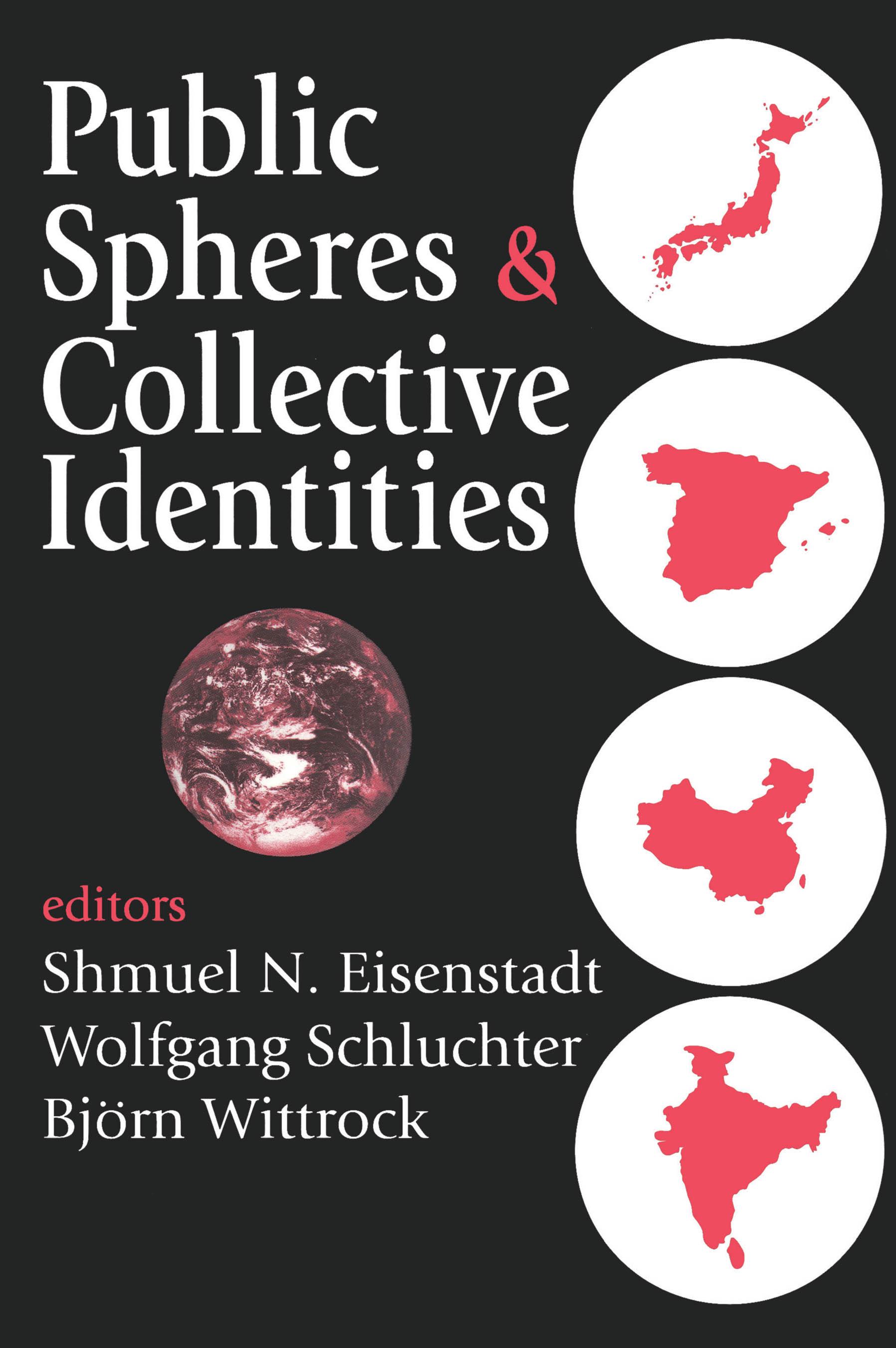
Today it is assumed that we understand contemporary nationalism and nation-building. Researchers rarely consider the very different traditions from which such state-building emerged. Instead, there is almost too much discussion of the "global village," with its supposed uniformity and inevitable trajectories. We need to view modernity as something other than a single condition with a preordained future. New visions of a modern civilization are emerging throughout the world, calliing for a far-reaching appraisal of the older visions of modernization.
Following Eisenstadt's and Schluchter's introduction, Bjorn Wittrock explores the varieties and transitions of early modern societies, noting that only by looking at societies' collective identities and their modes of mediating in the public sphere can the distinguishing factors between modernity be appreciated. Sheldon Pollock discusses the use of vernacular language in India through its literary culture and polity, 1000-1500. Sanjay Subrahmanyam, sums up major developments in the recent historiography of South Asia from 1400 to 1750. David L. Howell focuses on the boundaries of the early modern Japanese state, including its political boundaries and the boundaries of collective identity and social status. Mary Elizabeth Berry examines public life in authoritarian Japan. Frederic Wakeman, Jr. probes the boundaries of the political game and how they were affected by the increased political centralization that developed after the disorder of the Ming-Qing transition during the seventeenth century. Alexander Woodside discusses territorial order and collective-identity tensions in Confucian Asia. Bernhard Giesen argues that the French Enlightenment can be described as an extension of absolutist court culture. Finally essay, Victor Perez-Diaz examines the state and public sphere in Spain during the Ancient Regime contrasting two ideal types of states--a "nomocratic" model and a "teleocratic" model.
This volume addresses cultural and political practices not only from outside the European and American spheres but also over long periods of time in which the internal dynamics of other civilizations become visible. Its broad-ranging use of empirical materials enables us to think comparatively and historically about the ways in which different modernities took shape.
Before Memmo my notes were scattered across PDFs. Now a workspace pulls everything into one place — I see exactly what's still left to study.
Memmo's summaries are gold before exams. I don't have to re-read 800 pages two weeks before — just the important parts.
The AI chat has saved me the night before an exam more than once. I just keep asking until I get it — no waiting on a study group to reply.
The quizzes hit exactly what I need to know. Memmo tracks what I get stuck on — so I only practice what's worth it.
Flashcards with spaced repetition are magic. Memmo knows when I'm about to forget something and brings it back.
The AI podcasts are my favorite. I listen on my way to school and get a recap without sitting at a computer.

Handbok i kvalitativa metoder
281 kr

Hållbar utveckling: en introduktion för ingenjörer och andra problemlösare
334 kr

Brymans Samhällsvetenskapliga metoder
390 kr

Projektledning
491 kr

Den orättvisa hälsan: om socioekonomiska skillnader i hälsa och livslängd
326 kr

Vetenskapsteori för nybörjare
196 kr

Organizational Leadership
429 kr

På väg mot läraryrket
172 kr

Det sociala livet i skolan: Socialpsykologiska perspektiv
253 kr

Betygsättningens didaktik
151 kr

Personality
402 kr

Studying Leadership
404 kr

Managing Innovation
477 kr

Introduktion till samhällsvetenskaplig metod
347 kr

The Psychology of Sex and Gender
698 kr

Evidens och kunskap för socialt arbete
207 kr

Introduction to Leadership
605 kr