
Before Memmo my notes were scattered across PDFs. Now a workspace pulls everything into one place — I see exactly what's still left to study.
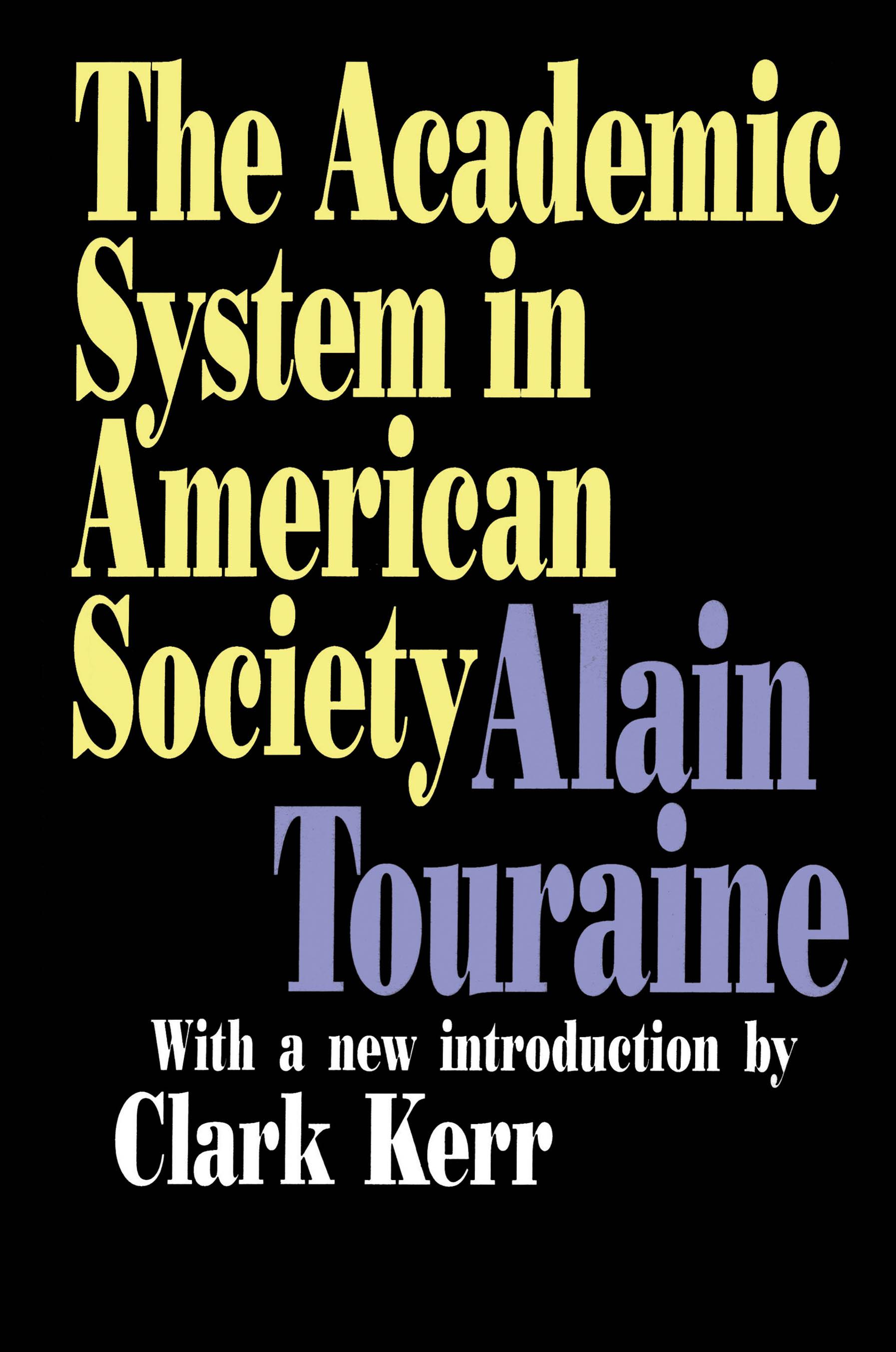
Although the period of student protests of the 1960s and 1970s has long passed, Alain Touraine argues, in this wide-ranging and vigorous essay, that the period's problems remain with us. Higher degrees have become less and less valuable on the labor market and the demand for academic reform has become more intense. Community colleges still try to provide equal educational opportunities for the poor and the minorities, without much success. And the university has not yet resolved the conflict between being the home of impartial inquiry and research and serving constituent interests.
Touraine views American higher education as a system within a definite, though changing, social context. He compares U.S. student movements with those of other countries. He is skeptical about the way Americans view the relationships between the university and what he regards as the ruling forces of the society, between knowledge and power, between production and education. He offers no facile solutions, but he presents an exciting, nontraditional analysis of the social and political forces that have shaped the modern history of higher education.
In the new introduction, Clark Kerr contrasts his own views as an American observer to those of Touraine as a French intellectual. He asserts that the family, not higher education, is the most important "school" in the process of reproducing society. Kerr places more emphasis than does Touraine on the labor market, on the production functions (training of skills and advancing technology) of the vast nonelite segments of American higher education, on the long-term impacts of science in changing society, and on scholarly criticism in affecting transformations, and places less emphasis on sporadic political protests by faculty and students.
He agrees with Touraine however, in his two great themes: (1) that you cannot understand the academic system unless you first understand society; and (2) that the rise of the university must be understood to understand modern society, where "knowledge is power." This volume will be important to all those interested in higher education, whether as participants or observers.
Before Memmo my notes were scattered across PDFs. Now a workspace pulls everything into one place — I see exactly what's still left to study.
Memmo's summaries are gold before exams. I don't have to re-read 800 pages two weeks before — just the important parts.
The AI chat has saved me the night before an exam more than once. I just keep asking until I get it — no waiting on a study group to reply.
The quizzes hit exactly what I need to know. Memmo tracks what I get stuck on — so I only practice what's worth it.
Flashcards with spaced repetition are magic. Memmo knows when I'm about to forget something and brings it back.
The AI podcasts are my favorite. I listen on my way to school and get a recap without sitting at a computer.

Handbok i kvalitativa metoder
281 kr

Hållbar utveckling: en introduktion för ingenjörer och andra problemlösare
334 kr

Brymans Samhällsvetenskapliga metoder
390 kr

Projektledning
491 kr

Den orättvisa hälsan: om socioekonomiska skillnader i hälsa och livslängd
326 kr

Vetenskapsteori för nybörjare
196 kr

Organizational Leadership
429 kr

På väg mot läraryrket
172 kr

Det sociala livet i skolan: Socialpsykologiska perspektiv
253 kr

Betygsättningens didaktik
151 kr

Personality
402 kr

Studying Leadership
404 kr

Managing Innovation
477 kr

Introduktion till samhällsvetenskaplig metod
347 kr

The Psychology of Sex and Gender
698 kr

Evidens och kunskap för socialt arbete
207 kr

Introduction to Leadership
605 kr