
Before Memmo my notes were scattered across PDFs. Now a workspace pulls everything into one place — I see exactly what's still left to study.
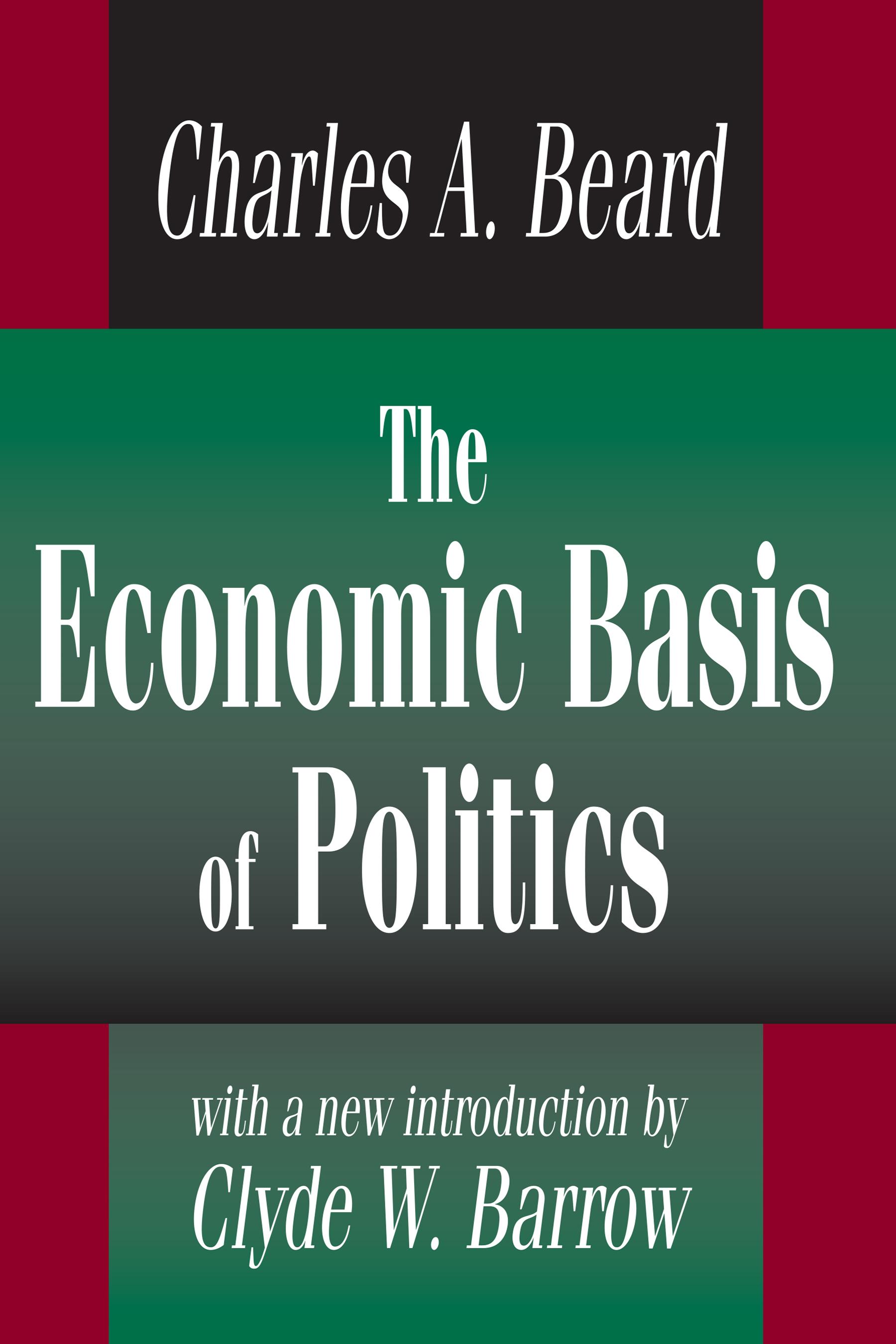
Economic interpretations of history are irrevocably identified with the name of Charles A. Beard. This is mainly due to his early book An Economic Interpretation of the Constitution of the United States (1913). Yet, in Beard's later work, The Economic Basis of Politics (1922), he articulates the main principles of his method and argues for its applicability to understanding of current events. In this brief survey of Western political philosophy and contemporary constitutional arrangements, Beard concludes that it is well established doctrine that "there is a vital relation between the forms of state and the distribution of property, revolutions in the state being usually the results of contests over property." In advancing this axiom, Beard responds to charges that he was a "Marxist" by constructing an interpretation of Western political philosophy and history that draws a firm distinction between his economic interpretation of history and Marx's historical materialism. Beard traces the origins of his own method to the works of Aristotle, Machiavelli, Harrington, Locke, and Montesquieu. This view of political theory and political theorists stands in sharp contrast to the view prevailing among many contemporary political philosophers, who insist that political theory must somehow transcend history and rise above ordinary politics to count as theory. Beard's observations on the nature and tradition of Western political philosophy provide an entrue into New World political thought, which many academic political philosophers have long regarded as something less than "political theory." In contrast, Beard regards the development and application of the method of economic interpretation to be the greatest contribution of American political thought to the tradition of Western political theory. In his surveys of thinkers such as Madison, Webster, and Calhoun, Beard links American political thought to the Western tradition of economic interpretation, which undergirds both "liberalism" and "republicanism." The present-day relevance of this important volume will be evident to all social scientists.
Before Memmo my notes were scattered across PDFs. Now a workspace pulls everything into one place — I see exactly what's still left to study.
Memmo's summaries are gold before exams. I don't have to re-read 800 pages two weeks before — just the important parts.
The AI chat has saved me the night before an exam more than once. I just keep asking until I get it — no waiting on a study group to reply.
The quizzes hit exactly what I need to know. Memmo tracks what I get stuck on — so I only practice what's worth it.
Flashcards with spaced repetition are magic. Memmo knows when I'm about to forget something and brings it back.
The AI podcasts are my favorite. I listen on my way to school and get a recap without sitting at a computer.

Handbok i kvalitativa metoder
281 kr

Hållbar utveckling: en introduktion för ingenjörer och andra problemlösare
334 kr

Brymans Samhällsvetenskapliga metoder
390 kr

Projektledning
491 kr

Den orättvisa hälsan: om socioekonomiska skillnader i hälsa och livslängd
326 kr

Vetenskapsteori för nybörjare
196 kr

Organizational Leadership
429 kr

På väg mot läraryrket
172 kr

Det sociala livet i skolan: Socialpsykologiska perspektiv
253 kr

Betygsättningens didaktik
151 kr

Personality
402 kr

Studying Leadership
404 kr

Managing Innovation
477 kr

Introduktion till samhällsvetenskaplig metod
347 kr

The Psychology of Sex and Gender
698 kr

Evidens och kunskap för socialt arbete
207 kr

Introduction to Leadership
605 kr