
Before Memmo my notes were scattered across PDFs. Now a workspace pulls everything into one place — I see exactly what's still left to study.
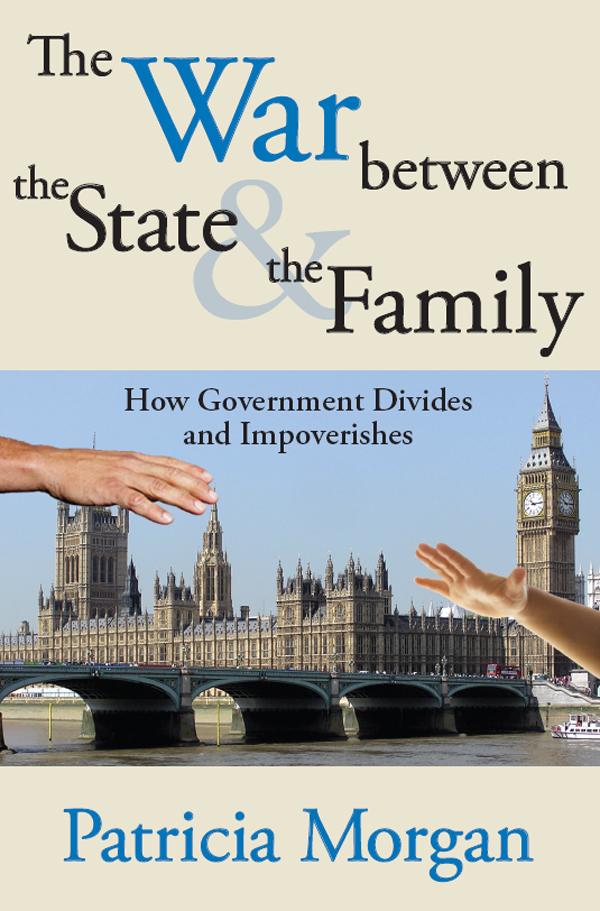
Patricia Morgan's core assumption is that the family is an extremely effective vehicle for raising the welfare of its members. If this is correct it is quite possible that the state can best support the family by doing very little--by not taxing the family heavily and by minimizing the subsidization of those who choose alternatives to financially self-sustaining family life.
At one level, Morgan argues, the family can be seen as a unit within which there occurs enormous transfer of economic resources between husband and wife, parents and children, and, on a wider scale, within extended families. The family is the most important vehicle of welfare and the welfare vehicle of first resort. Within the family many services are provided by family members to each other, rarely for direct personal benefit. Basic economic analysis, Morgan asserts, suggests that the family could be seriously undermined if the state provided significant support for dependents who are not brought up within self-sustaining family units, and if it also provided services, such as childcare, that are generally provided within families. This work shows that this is precisely what has happened in the last twenty-five years.
The driving force of significantly reduced family formation is not economic but social. Perhaps social changes have led to a desire by individuals to bring up children in family circumstances different from those of a generation or two ago, but evidence does not support this hypothesis. Rather, tax and benefit systems seem to be important determinants of family structure worldwide. Patricia Morgan does not simply analyze the problem, she also suggests policy solutions. The author argues that divorce laws should be reformed to ensure that those who make commitments are held financially responsible. The author's argument is compelling because it is backed up with strong evidence and is argued from an unemotional economic perspective--individuals within families are rational agents who respond to incentives.
Before Memmo my notes were scattered across PDFs. Now a workspace pulls everything into one place — I see exactly what's still left to study.
Memmo's summaries are gold before exams. I don't have to re-read 800 pages two weeks before — just the important parts.
The AI chat has saved me the night before an exam more than once. I just keep asking until I get it — no waiting on a study group to reply.
The quizzes hit exactly what I need to know. Memmo tracks what I get stuck on — so I only practice what's worth it.
Flashcards with spaced repetition are magic. Memmo knows when I'm about to forget something and brings it back.
The AI podcasts are my favorite. I listen on my way to school and get a recap without sitting at a computer.

Handbok i kvalitativa metoder
281 kr

Hållbar utveckling: en introduktion för ingenjörer och andra problemlösare
334 kr

Brymans Samhällsvetenskapliga metoder
390 kr

Projektledning
491 kr

Den orättvisa hälsan: om socioekonomiska skillnader i hälsa och livslängd
326 kr

Vetenskapsteori för nybörjare
196 kr

Organizational Leadership
429 kr

På väg mot läraryrket
172 kr

Det sociala livet i skolan: Socialpsykologiska perspektiv
253 kr

Betygsättningens didaktik
151 kr

Personality
402 kr

Studying Leadership
404 kr

Managing Innovation
477 kr

Introduktion till samhällsvetenskaplig metod
347 kr

The Psychology of Sex and Gender
698 kr

Evidens och kunskap för socialt arbete
207 kr

Introduction to Leadership
605 kr