
Before Memmo my notes were scattered across PDFs. Now a workspace pulls everything into one place — I see exactly what's still left to study.
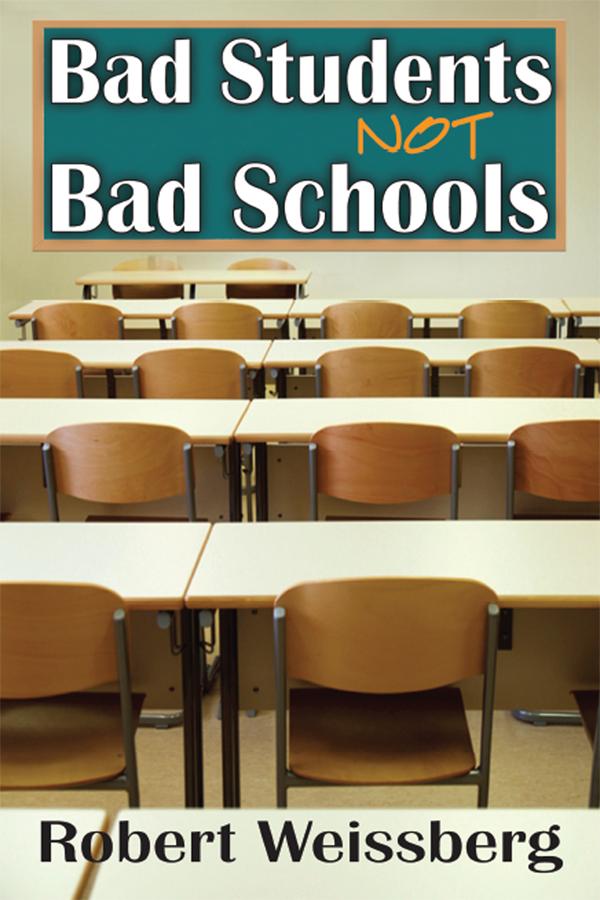
Americans are increasingly alarmed over our nation's educational deficiencies. Though anxieties about schooling are unending, especially with public institutions, these problems are more complex than institutional failure. Expenditures for education have exploded, and far exceed inflation and the rising costs of health care, but academic achievement remains flat. Many students are unable to graduate from high school, let alone obtain a college degree. And if they do make it to college, they are often forced into remedial courses. Why, despite this fiscal extravagance, are educational disappointments so widespread?
In Bad Students, Not Bad Schools, Robert Weissberg argues that the answer is something everybody knows to be true but is afraid to say in public America's educational woes too often reflect the demographic mix of students. Schools today are filled with millions of youngsters, too many of whom struggle with the English language or simply have mediocre intellectual ability. Their lackluster performances are probably impervious to the current reform prescriptions regardless of the remedy's ideological derivation. Making matters worse, retention of students in school is embraced as a philosophy even if it impedes the learning of other students. Weissberg argues that most of America's educational woes would vanish if indifferent, troublesome students were permitted to leave when they had absorbed as much as they could learn; they would quickly be replaced by learning-hungry students, including many new immigrants from other countries.
American education survives since we import highly intelligent, technically skillful foreigners just as we import oil, but this may not last forever. When educational establishments get serious about world-class mathematics and science, and permit serious students to learn, problems will dissolve. Rewarding the smartest, not spending fortunes in a futile quest to uplift the bottom, should become official policy. This book is a bracing reminder of the risks of political manipulation of education and argues that the measure of policy should be academic achievment.
Before Memmo my notes were scattered across PDFs. Now a workspace pulls everything into one place — I see exactly what's still left to study.
Memmo's summaries are gold before exams. I don't have to re-read 800 pages two weeks before — just the important parts.
The AI chat has saved me the night before an exam more than once. I just keep asking until I get it — no waiting on a study group to reply.
The quizzes hit exactly what I need to know. Memmo tracks what I get stuck on — so I only practice what's worth it.
Flashcards with spaced repetition are magic. Memmo knows when I'm about to forget something and brings it back.
The AI podcasts are my favorite. I listen on my way to school and get a recap without sitting at a computer.

Handbok i kvalitativa metoder
281 kr

Hållbar utveckling: en introduktion för ingenjörer och andra problemlösare
334 kr

Brymans Samhällsvetenskapliga metoder
390 kr

Projektledning
491 kr

Den orättvisa hälsan: om socioekonomiska skillnader i hälsa och livslängd
326 kr

Organizational Leadership
429 kr

Vetenskapsteori för nybörjare
196 kr

På väg mot läraryrket
172 kr

Det sociala livet i skolan: Socialpsykologiska perspektiv
253 kr

Betygsättningens didaktik
151 kr

Personality
402 kr

Studying Leadership
404 kr

Managing Innovation
477 kr

Introduktion till samhällsvetenskaplig metod
347 kr

The Psychology of Sex and Gender
698 kr

Evidens och kunskap för socialt arbete
207 kr

Introduction to Leadership
605 kr