
Before Memmo my notes were scattered across PDFs. Now a workspace pulls everything into one place — I see exactly what's still left to study.
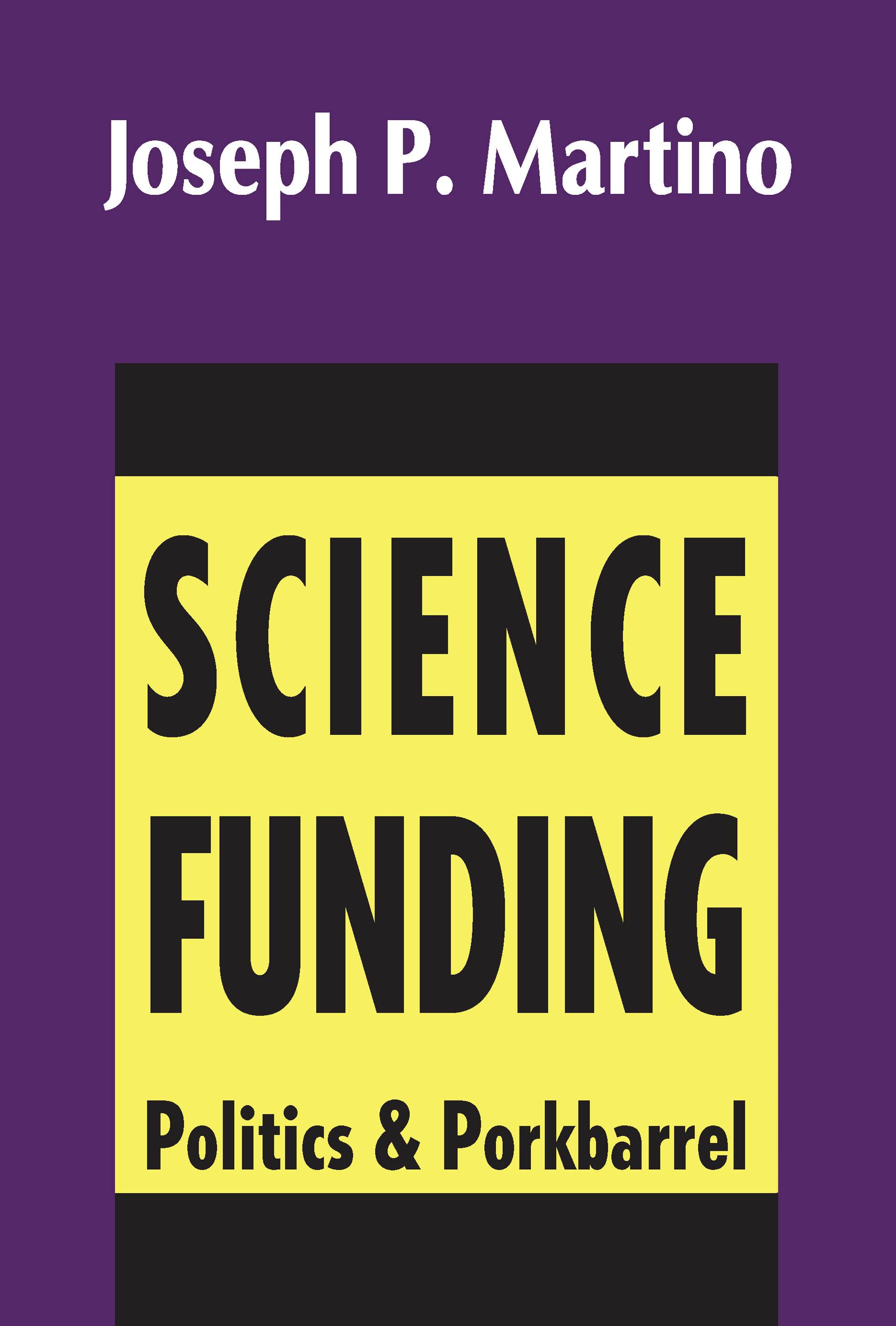
Americans have become resigned to seeing Congress vote money for porkbarrel projects of all kinds-roads, dams, post offices, military installations-in the districts of influential legislators. In recent years Congress has, almost without public notice, extended this form of vote-buying and pandering into a new domain: science. Where formerly scientific funding proposals were evaluated by outside experts on the basis of merit, there is now an increasing consideration of congressional districts and "fair" geographical distribution. In this ground-breaking volume, Joseph P. Martino offers a critical examination of special-interest funding and the danger it poses to the integrity of American society as a whole, as well as to its scientific component.
Science Funding is distinguished by its comprehensive approach to the structural and historical background of the current situation. It examines the history of science funding from the early twentieth century through present, public vs. to taxpayers, instances of fraud, and the effects of government funding for research in universities.
Martino's survey demonstrates conclusively that government has been inefficient in its funding capacity and that the shortcomings are inherent: political criteria for the support of science, congressional micromanagement, freezing out of innovative ideas, and the favoring of massive projects-Big Science-over small, but significant experimental programs. In his concluding chapter Martino provides an agenda for new thinking on the funding of science. He proposes alternatives that suggest a plurality of approaches is preferable to the current monolithic model, and shows how industrial support, philanthropy, and contributions from the public can be made more effective. Science Funding is a major work on the interaction of science, politics, and society. It will be of interest to sociologists, policymakers, and political scientist, and the research science community.
Before Memmo my notes were scattered across PDFs. Now a workspace pulls everything into one place — I see exactly what's still left to study.
Memmo's summaries are gold before exams. I don't have to re-read 800 pages two weeks before — just the important parts.
The AI chat has saved me the night before an exam more than once. I just keep asking until I get it — no waiting on a study group to reply.
The quizzes hit exactly what I need to know. Memmo tracks what I get stuck on — so I only practice what's worth it.
Flashcards with spaced repetition are magic. Memmo knows when I'm about to forget something and brings it back.
The AI podcasts are my favorite. I listen on my way to school and get a recap without sitting at a computer.

Handbok i kvalitativa metoder
281 kr

Hållbar utveckling: en introduktion för ingenjörer och andra problemlösare
334 kr

Brymans Samhällsvetenskapliga metoder
390 kr

Projektledning
491 kr

Den orättvisa hälsan: om socioekonomiska skillnader i hälsa och livslängd
326 kr

Vetenskapsteori för nybörjare
196 kr

Organizational Leadership
429 kr

På väg mot läraryrket
172 kr

Det sociala livet i skolan: Socialpsykologiska perspektiv
253 kr

Betygsättningens didaktik
151 kr

Personality
402 kr

Studying Leadership
404 kr

Managing Innovation
477 kr

Introduktion till samhällsvetenskaplig metod
347 kr

The Psychology of Sex and Gender
698 kr

Evidens och kunskap för socialt arbete
207 kr

Introduction to Leadership
605 kr