
Before Memmo my notes were scattered across PDFs. Now a workspace pulls everything into one place — I see exactly what's still left to study.
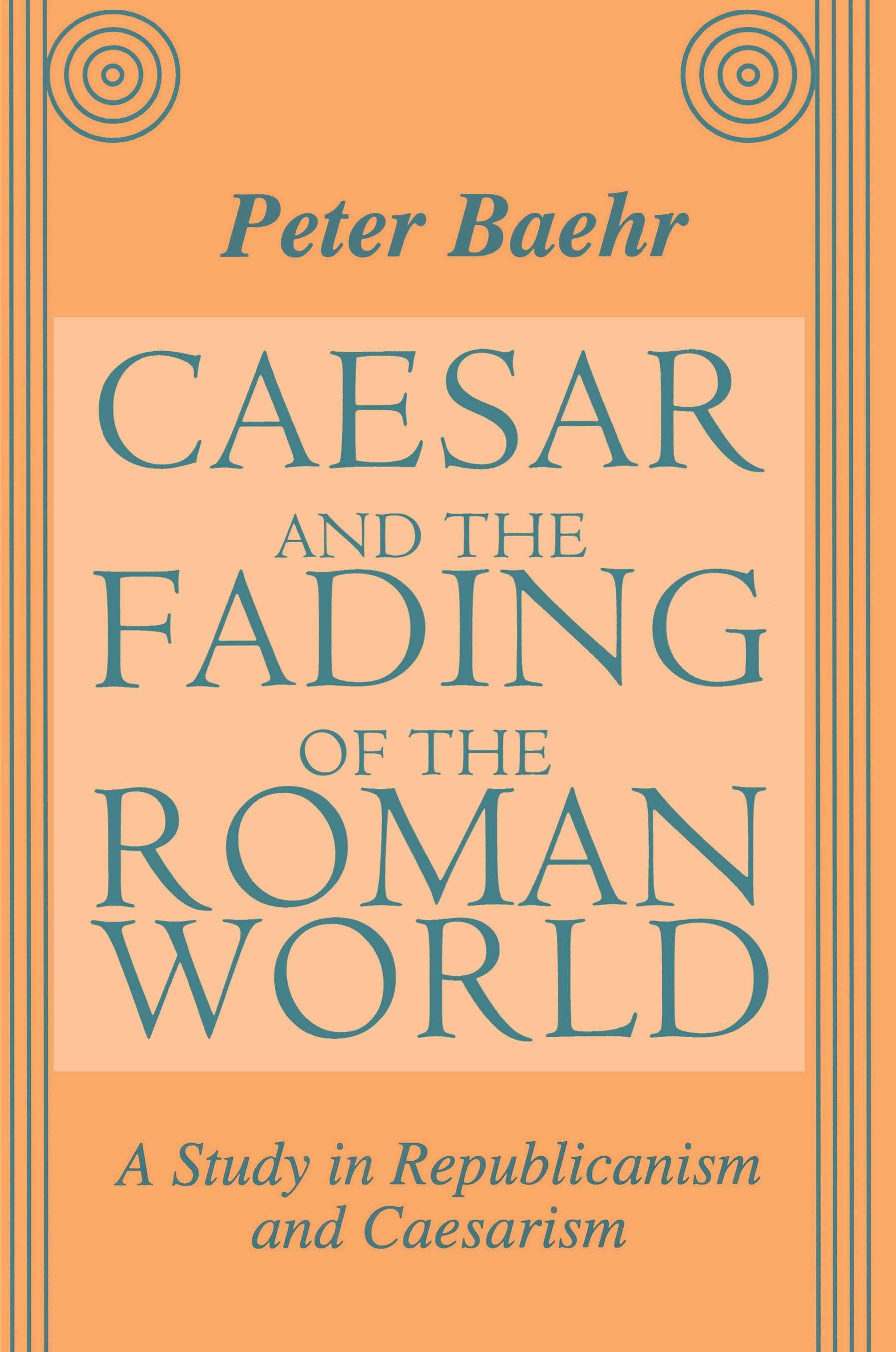
For many centuries, Julius Caesar was a name that evoked strong feelings among educated people. Some of these responses were complimentary, but others came from the point of view of "political republicanism"—which envisaged Caesar as a historical symbol for some of the most dangerous tendencies a polity could experience. Caesar represented everything that republicans detested—corruption, demagogy, usurpation—and as such, provided an antimodel against which genuine political virtue could be measured. Caesar and the Fading of the Roman World examines the reception of Caesar in republican thought until the late eighteenth century and his transformation in the nineteenth, when he enjoyed a major rehabilitation in the literary culture and historiography of the day.
Critical of hereditary monarchy and emphasizing the collective political obligations citizens owed to their city or commonwealth, republican thinkers sought to cultivate institutions and mores best adapted to self-governing liberty. The republican idiom became an integral element in the discourse of the American revolutionaries and constitution builders during the eighteenth century, and of their counterparts in France.
In the nineteenth century, Caesar enjoyed a major rehabilitation; from being a pariah, he was elevated in the writings of people like Byron, De Quincey, Mommsen, Froude, and Nietzsche to the greatest statesman of his age. Simultaneously, Caesar's name continued to function as a term of polemic in the emergence of a new debate on what came to be called "Caesarism." While the metamorphosis of Caesar's reputation is studied here as a process in its own right, it is also meant to highlight the increasing enfeeblement of the republican tradition. The transformation of Caesar's image is a sure sign of changes within the wider present-day political culture and evidence of the emergence of new problems and challenges.
Drawing on history, political theory, and sociology, Caesar and the Fading of the Roman World uses the image of Caesar as a way of interpreting broader political and cultural tendencies. Peter Baehr discusses the significance of living not in a postmodern society, but in a postclassical one in which ideas of political obligation have become increasingly emaciated and in which the theoretical resources for the care of our public world have become correspondingly scarce. This volume is an important study that will be of value to sociologists, political theorists, and historians.
Before Memmo my notes were scattered across PDFs. Now a workspace pulls everything into one place — I see exactly what's still left to study.
Memmo's summaries are gold before exams. I don't have to re-read 800 pages two weeks before — just the important parts.
The AI chat has saved me the night before an exam more than once. I just keep asking until I get it — no waiting on a study group to reply.
The quizzes hit exactly what I need to know. Memmo tracks what I get stuck on — so I only practice what's worth it.
Flashcards with spaced repetition are magic. Memmo knows when I'm about to forget something and brings it back.
The AI podcasts are my favorite. I listen on my way to school and get a recap without sitting at a computer.

Handbok i kvalitativa metoder
281 kr

Hållbar utveckling: en introduktion för ingenjörer och andra problemlösare
334 kr

Brymans Samhällsvetenskapliga metoder
390 kr

Projektledning
491 kr

Den orättvisa hälsan: om socioekonomiska skillnader i hälsa och livslängd
326 kr

Vetenskapsteori för nybörjare
196 kr

Organizational Leadership
429 kr

På väg mot läraryrket
172 kr

Det sociala livet i skolan: Socialpsykologiska perspektiv
253 kr

Betygsättningens didaktik
151 kr

Personality
402 kr

Studying Leadership
404 kr

Managing Innovation
477 kr

Introduktion till samhällsvetenskaplig metod
347 kr

The Psychology of Sex and Gender
698 kr

Evidens och kunskap för socialt arbete
207 kr

Introduction to Leadership
605 kr