
Before Memmo my notes were scattered across PDFs. Now a workspace pulls everything into one place — I see exactly what's still left to study.
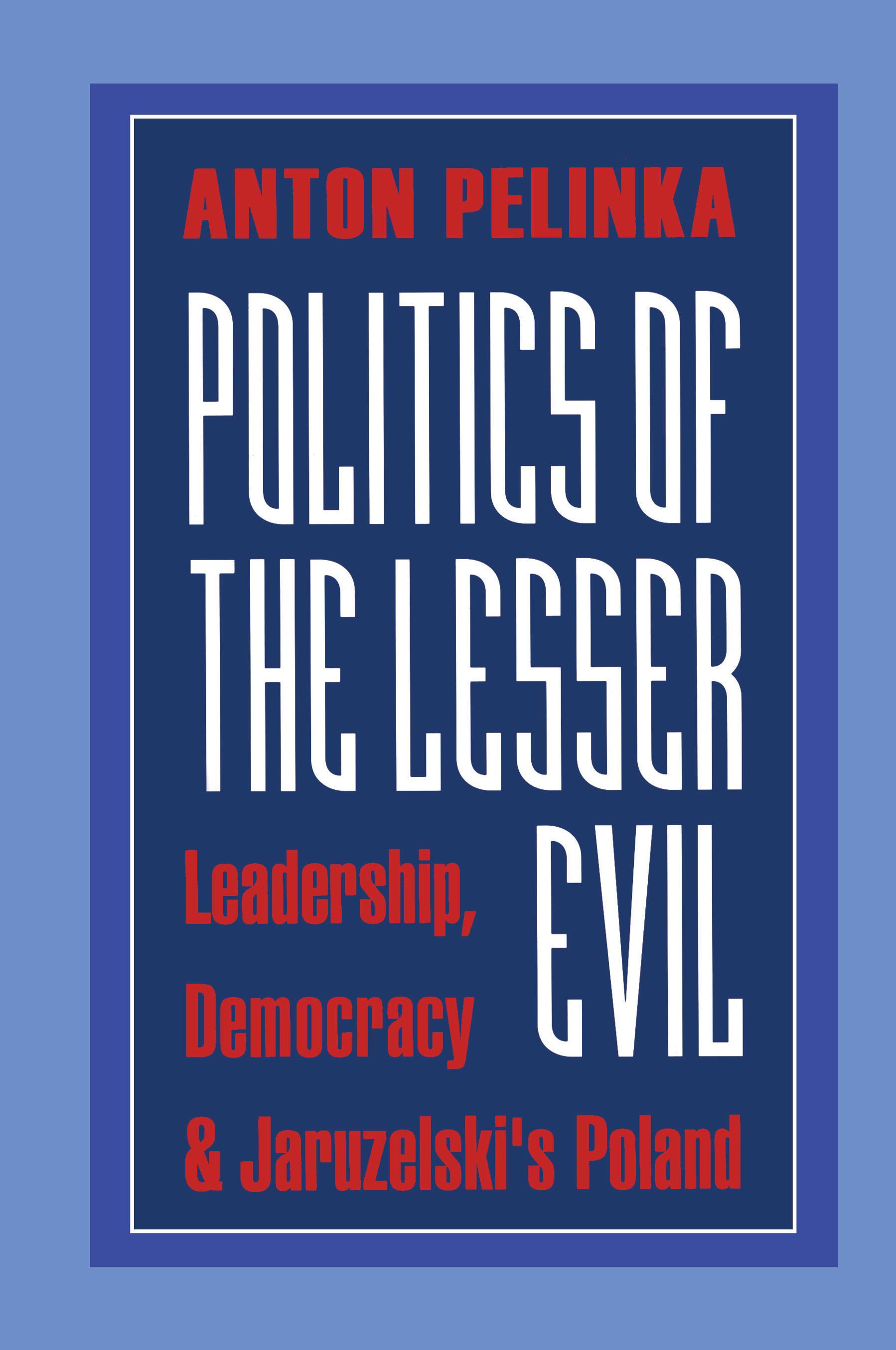
In his pathbreaking book, Leadership, James MacGregor Burns defines a kind of leadership with an indistinguishable personal impact on society. He calls this "transformal" leadership, and sees it as more than routine and calculable responses to demands. In fact, he argues, the more stable a liberal democracy, the less freedom of action for transformal leadership. Anton Pelinka uses a wellspring of historical fact to argue that politics always means having to choose between the lesser of two evils and that democracy reduces any possibility of personal leadership.According to Pelinka, Jaruzelski's politics of democratization in Poland in the 1980s (which led to the first free and competitive elections in a communist system) illustrate personal leadership hampered by democracy. Jaruzelski initiated the roundtable process that transformed Poland into a democracy; yet, this process ultimately ended with his abdication. Pelinka further emphasizes contradictions between transformal leadership and democracy by comparing the leadership styles of Hitler, Stalin, and Mao. He de-.scribes collaboration, resistance, and tensions between domestic and international leadership, using the American examples of Presidents Wilson, Roosevelt, Kennedy, Johnson, and Nixon and the European examples of Petain and Churchill. Pelinka then turns to the tragic fate of the Judenrate under the Nazi regime to illustrate the "lesser-evil" approach. He closes with a discussion of "moral leadership" and how abstaining from office, just as Gandhi and King did, may be particularly suited to stable democracies.Pelinka's unique use of rich empirical evidence from twentieth-century history is this volume's hallmark. He is critical of mainstream political theory and its neglect of deviant examples of democracies - such as Switzerland, Italy, and Japan, where there is traditionally much less emphasis placed on leadership. Pelinka's noteworthy study will be essential reading for political scientists and theorists, political philosophers and political sociologists with special interest in political ethics, and contemporary historians.
Before Memmo my notes were scattered across PDFs. Now a workspace pulls everything into one place — I see exactly what's still left to study.
Memmo's summaries are gold before exams. I don't have to re-read 800 pages two weeks before — just the important parts.
The AI chat has saved me the night before an exam more than once. I just keep asking until I get it — no waiting on a study group to reply.
The quizzes hit exactly what I need to know. Memmo tracks what I get stuck on — so I only practice what's worth it.
Flashcards with spaced repetition are magic. Memmo knows when I'm about to forget something and brings it back.
The AI podcasts are my favorite. I listen on my way to school and get a recap without sitting at a computer.

Handbok i kvalitativa metoder
281 kr

Hållbar utveckling: en introduktion för ingenjörer och andra problemlösare
334 kr

Brymans Samhällsvetenskapliga metoder
390 kr

Projektledning
491 kr

Den orättvisa hälsan: om socioekonomiska skillnader i hälsa och livslängd
326 kr

Organizational Leadership
429 kr

Vetenskapsteori för nybörjare
196 kr

På väg mot läraryrket
172 kr

Det sociala livet i skolan: Socialpsykologiska perspektiv
253 kr

Betygsättningens didaktik
151 kr

Personality
402 kr

Studying Leadership
404 kr

Managing Innovation
477 kr

Introduktion till samhällsvetenskaplig metod
347 kr

The Psychology of Sex and Gender
698 kr

Evidens och kunskap för socialt arbete
207 kr

Introduction to Leadership
605 kr