
Before Memmo my notes were scattered across PDFs. Now a workspace pulls everything into one place — I see exactly what's still left to study.
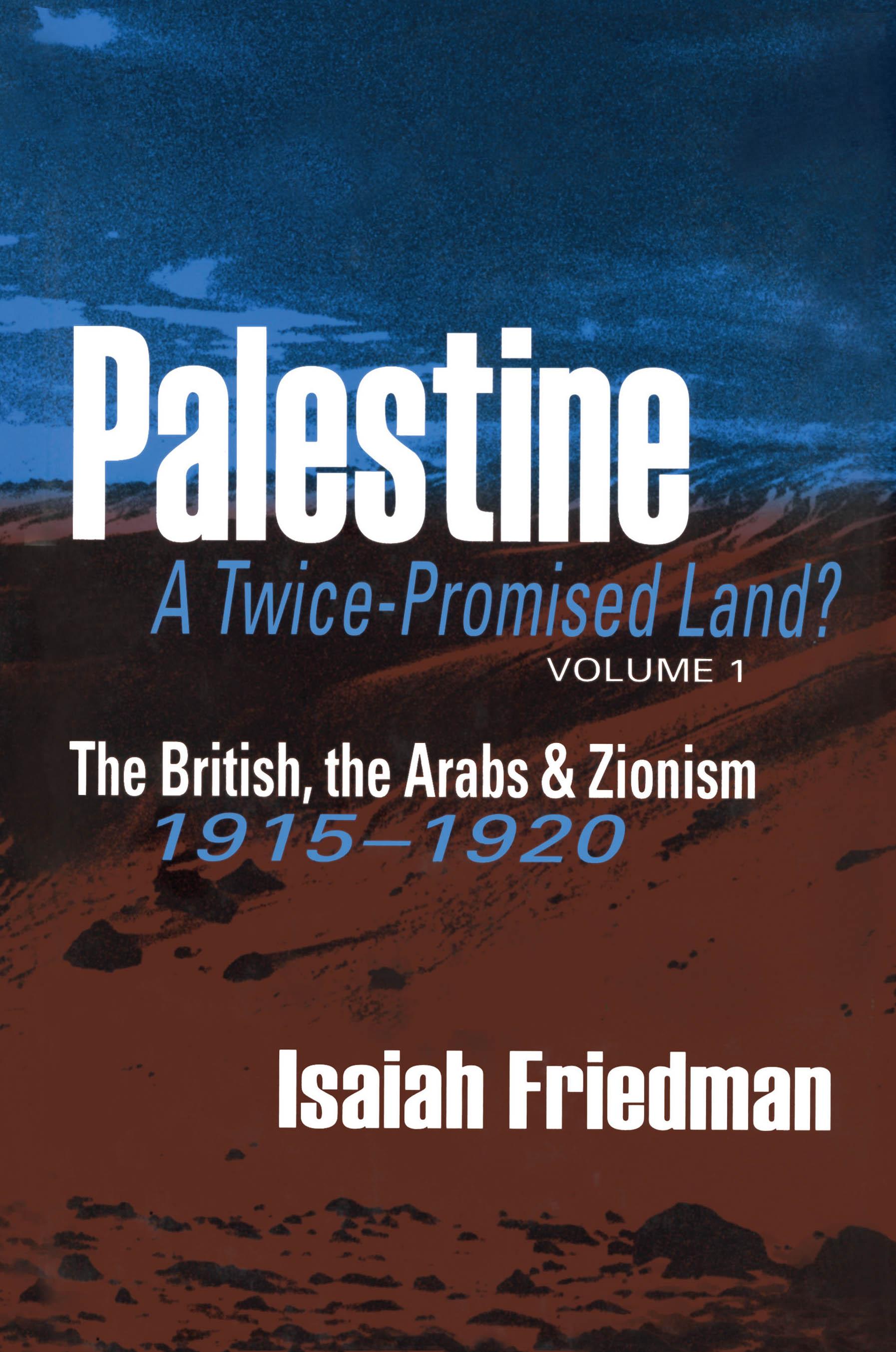
In this book, Isaiah Friedman examines one of the most complex problems that bedeviled Middle East politics in the interwar period, one that still remains controversial. The prevailing view is that during World War I the British government made conflicting commitments to the Arabs, to the French, and to the Jews. Through a rigorous examination of the documentary evidence, Friedman demolishes the myth that Palestine was a "twice-promised land" and shows that the charges of fraudulence and deception leveled against the British are groundless.
Central to Arab claims on Palestine was a letter dated 24 October 1915, from Sir Henry McMahon, the British High Commissioner in Egypt, to King Hussein, the Sharif of Mecca, pledging Arab independence. Friedman shows that this letter was conditional on a general Arab uprising against the Turks. Predicated on reciprocal action, the letter committed the British to recognize and uphold Arab independence in the areas of the Fertile Crescent once it was liberated by the Arabs themselves. As all evidence shows, few tribes rebelled against the Turks. The Arabs in Palestine, Syria, and Mesopotamia fought for the Ottoman Empire against the British. In addition to its non-binding nature, McMahon's letter has been misinterpreted with respect to the territories it covers. Friedman's archival discovery of the Arabic version actually read by Hussein indisputably shows that Palestine was not included in the British pledge. Indeed, Hussein welcomed the return of the Jews just as his son Emir Feisal believed that Arab-Jewish cooperation would be a means to build Arab independence without the interference of the European powers.
Myth-shattering and meticulously documented, Palestine: A Twice-Promised Land? is revisionist history in the truest sense of the word.
Before Memmo my notes were scattered across PDFs. Now a workspace pulls everything into one place — I see exactly what's still left to study.
Memmo's summaries are gold before exams. I don't have to re-read 800 pages two weeks before — just the important parts.
The AI chat has saved me the night before an exam more than once. I just keep asking until I get it — no waiting on a study group to reply.
The quizzes hit exactly what I need to know. Memmo tracks what I get stuck on — so I only practice what's worth it.
Flashcards with spaced repetition are magic. Memmo knows when I'm about to forget something and brings it back.
The AI podcasts are my favorite. I listen on my way to school and get a recap without sitting at a computer.

Handbok i kvalitativa metoder
281 kr

Hållbar utveckling: en introduktion för ingenjörer och andra problemlösare
334 kr

Brymans Samhällsvetenskapliga metoder
390 kr

Projektledning
491 kr

Den orättvisa hälsan: om socioekonomiska skillnader i hälsa och livslängd
326 kr

Organizational Leadership
429 kr

Vetenskapsteori för nybörjare
196 kr

På väg mot läraryrket
172 kr

Det sociala livet i skolan: Socialpsykologiska perspektiv
253 kr

Betygsättningens didaktik
151 kr

Personality
402 kr

Studying Leadership
404 kr

Managing Innovation
477 kr

Introduktion till samhällsvetenskaplig metod
347 kr

The Psychology of Sex and Gender
698 kr

Evidens och kunskap för socialt arbete
207 kr

Introduction to Leadership
605 kr