
Before Memmo my notes were scattered across PDFs. Now a workspace pulls everything into one place — I see exactly what's still left to study.
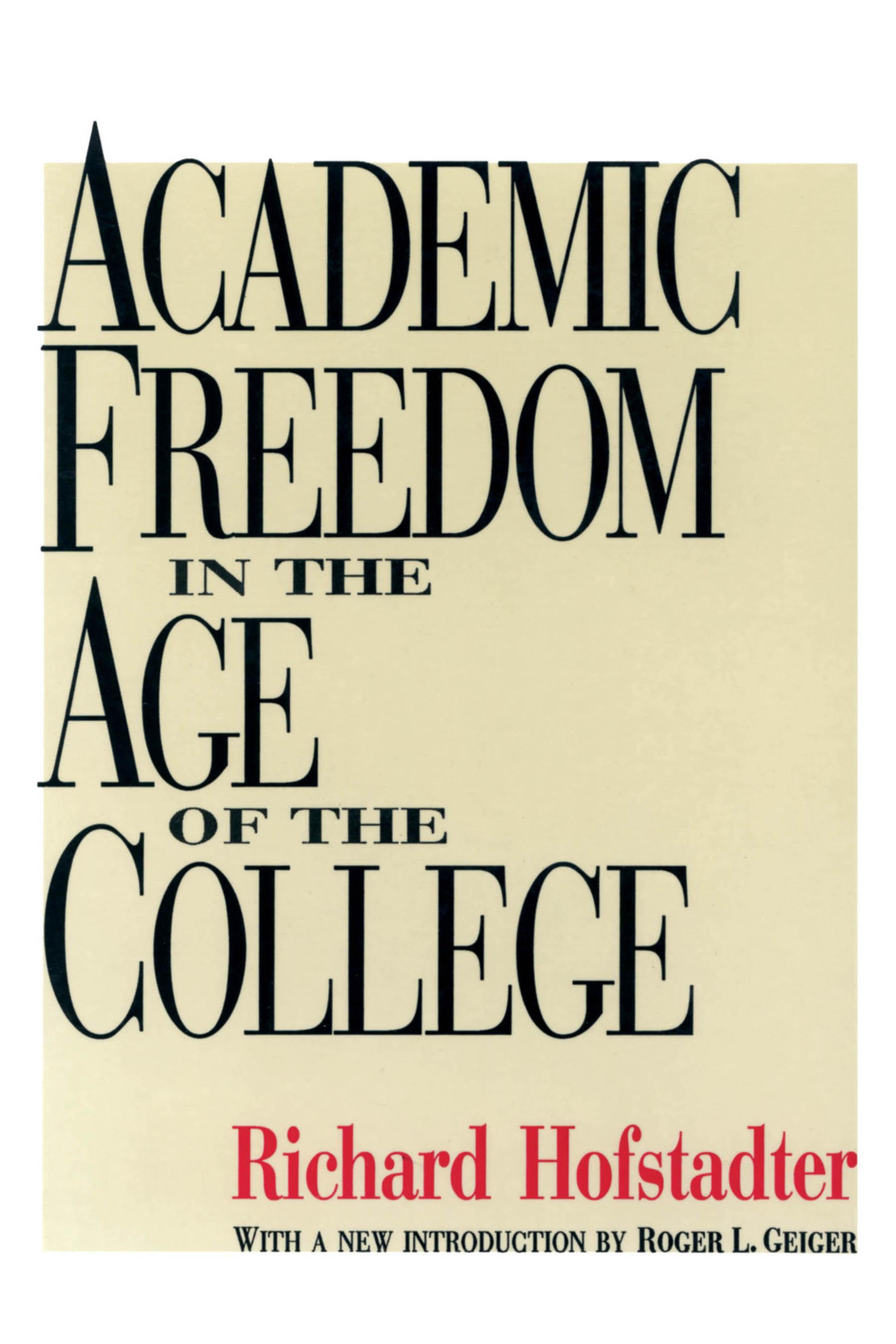
When this classic volume first appeared, academic freedom was a crucially important issue. It is equally so today. Hofstadter approaches the topic historically, showing how events from various historical epochs expose the degree of freedom in academic institutions. The volume exemplifies Richard Hofstader's qualities as a historian as well as his characteristic narrative ability. Hofstadter first describes the medieval university and how its political independence evolved from its status as a corporate body, establishing a precedent for intellectual freedom that has been a measuring rod ever since. He shows how all intellectual discourse became polarized with the onset of the Reformation. The gradual spread of the Moderate Enlightenment in the colonies led to a major advance for intellectual freedom. But with the beginning of the nineteenth century the rise of denominationalism in both new and established colleges reversed the progress, and the secularization of learning became engulfed by a tidal wave of intensifying piety. Roger L. Geiger's extensive new introduction evaluates Hofstadter's career as a historian and political theorist, his interest in academic freedom, and the continuing significance of Academic Freedom in the Age of the College. While most works about higher education treat the subject only as an agent of social economic mobility, Academic Freedom in the Age of the College is an enduring counterweight to such histories as it examines a more pressing issue: the fact that colleges and universities, at their best, should foster ideas at the frontiers of knowledge and understanding. This classic text will be invaluable to educators, university administrators, sociologist, and historians.
Before Memmo my notes were scattered across PDFs. Now a workspace pulls everything into one place — I see exactly what's still left to study.
Memmo's summaries are gold before exams. I don't have to re-read 800 pages two weeks before — just the important parts.
The AI chat has saved me the night before an exam more than once. I just keep asking until I get it — no waiting on a study group to reply.
The quizzes hit exactly what I need to know. Memmo tracks what I get stuck on — so I only practice what's worth it.
Flashcards with spaced repetition are magic. Memmo knows when I'm about to forget something and brings it back.
The AI podcasts are my favorite. I listen on my way to school and get a recap without sitting at a computer.

Handbok i kvalitativa metoder
281 kr

Hållbar utveckling: en introduktion för ingenjörer och andra problemlösare
334 kr

Brymans Samhällsvetenskapliga metoder
390 kr

Projektledning
491 kr

Den orättvisa hälsan: om socioekonomiska skillnader i hälsa och livslängd
326 kr

Vetenskapsteori för nybörjare
196 kr

Organizational Leadership
429 kr

På väg mot läraryrket
172 kr

Det sociala livet i skolan: Socialpsykologiska perspektiv
253 kr

Betygsättningens didaktik
151 kr

Personality
402 kr

Studying Leadership
404 kr

Managing Innovation
477 kr

Introduktion till samhällsvetenskaplig metod
347 kr

The Psychology of Sex and Gender
698 kr

Evidens och kunskap för socialt arbete
207 kr

Introduction to Leadership
605 kr