
Before Memmo my notes were scattered across PDFs. Now a workspace pulls everything into one place — I see exactly what's still left to study.
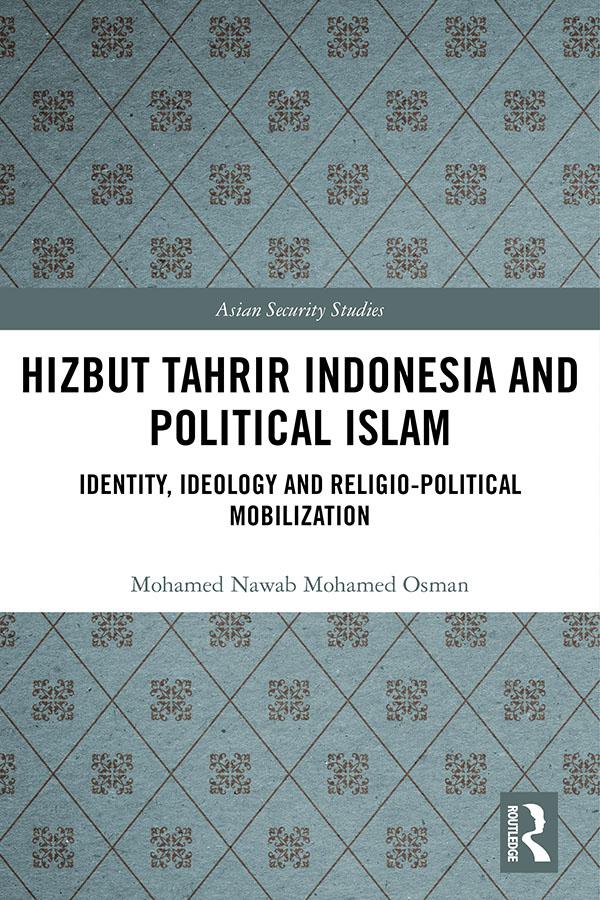
This book offers a timely examination of Hizbut Tahrir Indonesia (HTI), a chapter of the transnational movement Hizb ut-Tahrir (HT), whose key aim is the revival of the caliphate.
It cautions against an overly simplistic read of a group like HTI and political Islam in Indonesia. While there is much to laud, particularly with regard to how leaders in Indonesia have attempted to counteract Islamist extremism, insofar as the trajectory of non-violent Islamism in Indonesia is concerned there are clear reasons for apprehension. Groups like the HTI have been adept at using the democratic space in Indonesia to propound their illiberal objectives, including encouraging the curtailment of Indonesian art forms deemed un-Islamic, and more importantly pushing for certain Islamic sects, such as the Ahmadiyahs, to be banned. Yet, despite its extreme posturing, HTI is
accepted as a mainstream Muslim organization. As such, the Indonesian chapter of Hizb ut-Tahrir represents a unique case: unlike other chapters, which are deemed extreme and fringe, HTI, though radical, still exists within the space provided by the Indonesian religio-political landscape.
This book offers new insights into HTI’s history, organizational structure and ideology, adding considerable new details about HTI and correcting errors in existing literature, while directing its primary focus on explaining HTI’s rapid growth in Indonesia. The central argument is that the key to understanding HTI’s growth lies in the role collective identity plays in attracting new members and retaining its existing members within the party. Factors such as institutional and non-institutional opportunities within the Indonesian political system, HTI’s resource mobilization strategies and the anti-systemic ideology of HTI serve as political, organizational and religious incentives for individuals to join the party and launch collective action. This goes on to emphasize and show that collective identity remains the most crucial factor in the party’s growth. Analysing this process of collective identity formation and its impact on recruitment and membership retention is central to this book.
This book will be of much interest to students of Southeast Asian politics, regional security, political Islam, and International Relations in general.
Before Memmo my notes were scattered across PDFs. Now a workspace pulls everything into one place — I see exactly what's still left to study.
Memmo's summaries are gold before exams. I don't have to re-read 800 pages two weeks before — just the important parts.
The AI chat has saved me the night before an exam more than once. I just keep asking until I get it — no waiting on a study group to reply.
The quizzes hit exactly what I need to know. Memmo tracks what I get stuck on — so I only practice what's worth it.
Flashcards with spaced repetition are magic. Memmo knows when I'm about to forget something and brings it back.
The AI podcasts are my favorite. I listen on my way to school and get a recap without sitting at a computer.

Handbok i kvalitativa metoder
281 kr

Hållbar utveckling: en introduktion för ingenjörer och andra problemlösare
334 kr

Brymans Samhällsvetenskapliga metoder
390 kr

Projektledning
491 kr

Den orättvisa hälsan: om socioekonomiska skillnader i hälsa och livslängd
326 kr

Vetenskapsteori för nybörjare
196 kr

Organizational Leadership
429 kr

På väg mot läraryrket
172 kr

Det sociala livet i skolan: Socialpsykologiska perspektiv
253 kr

Betygsättningens didaktik
151 kr

Personality
402 kr

Studying Leadership
404 kr

Managing Innovation
477 kr

Introduktion till samhällsvetenskaplig metod
347 kr

The Psychology of Sex and Gender
698 kr

Evidens och kunskap för socialt arbete
207 kr

Introduction to Leadership
605 kr