
Before Memmo my notes were scattered across PDFs. Now a workspace pulls everything into one place — I see exactly what's still left to study.
How Do Japanese Citizens Participate Politically?
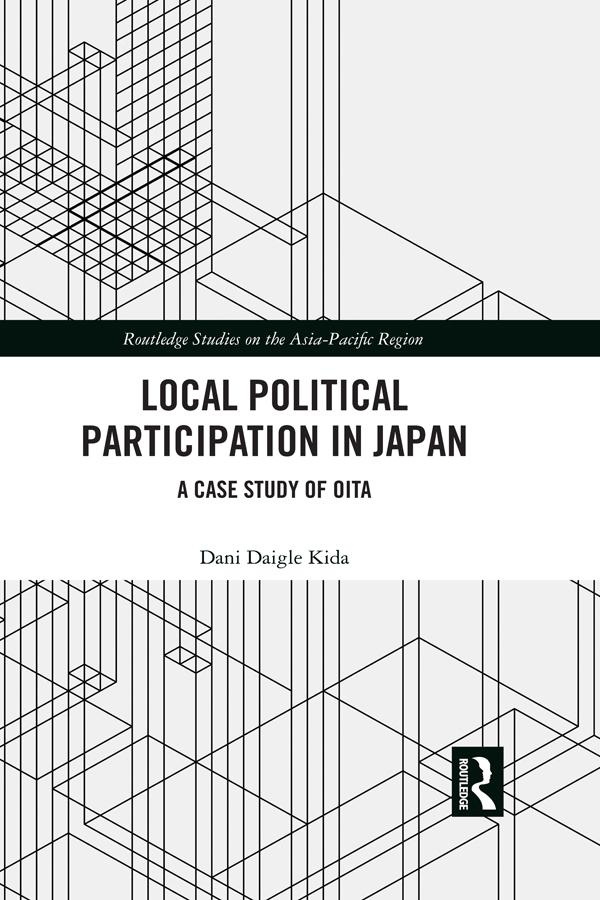
Most Japanese citizens, perhaps with a bit of a chuckle, would answer that ‘average’ Japanese do not participate in politics. While political attitudes in other countries have fluctuated corresponding to social, political, and economic climates of the times; in Japan, a consistently negative view of politics has persisted since the late 1960s. Japanese citizens perceive their government much more critically than citizens of neighboring countries. While many Japanese citizens participate in specific political acts such as signing candidate support cards, attending political rallies, or directly contacting politicians, they largely do not view these activities as political participation. Kida examines why this is the case; whether there is a connection between negative views of politics and how Japanese people self-identify their political participation; how Japanese citizens attempt to exact change or influence policy; how the government engages citizens in political participation; and the relationship between citizens’ attitudes towards government and levels of political participation.
Kida explores political participation on the local level, to better understand the sources of political attitudes. While participation studies have been conducted in Japan, most are centered in large urban areas, focusing on either extreme forms of participation such as protests, or concentrated on single issue participation such as the environmental or women’s movements. This book, in contrast, explores what every day ‘regular’ in the system political participation looks like in a small traditional Japanese city – using Oita, a small city in Kyushu, as a case study. It focuses especially on the role local institutions and politicians play in influencing the kinds of participation available and subsequently, the attitudes created about participation.
Before Memmo my notes were scattered across PDFs. Now a workspace pulls everything into one place — I see exactly what's still left to study.
Memmo's summaries are gold before exams. I don't have to re-read 800 pages two weeks before — just the important parts.
The AI chat has saved me the night before an exam more than once. I just keep asking until I get it — no waiting on a study group to reply.
The quizzes hit exactly what I need to know. Memmo tracks what I get stuck on — so I only practice what's worth it.
Flashcards with spaced repetition are magic. Memmo knows when I'm about to forget something and brings it back.
The AI podcasts are my favorite. I listen on my way to school and get a recap without sitting at a computer.

Handbok i kvalitativa metoder
281 kr

Hållbar utveckling: en introduktion för ingenjörer och andra problemlösare
334 kr

Brymans Samhällsvetenskapliga metoder
390 kr

Projektledning
491 kr

Den orättvisa hälsan: om socioekonomiska skillnader i hälsa och livslängd
326 kr

Vetenskapsteori för nybörjare
196 kr

Organizational Leadership
429 kr

På väg mot läraryrket
172 kr

Det sociala livet i skolan: Socialpsykologiska perspektiv
253 kr

Betygsättningens didaktik
151 kr

Personality
402 kr

Studying Leadership
404 kr

Managing Innovation
477 kr

Introduktion till samhällsvetenskaplig metod
347 kr

The Psychology of Sex and Gender
698 kr

Evidens och kunskap för socialt arbete
207 kr

Introduction to Leadership
605 kr