
Before Memmo my notes were scattered across PDFs. Now a workspace pulls everything into one place — I see exactly what's still left to study.
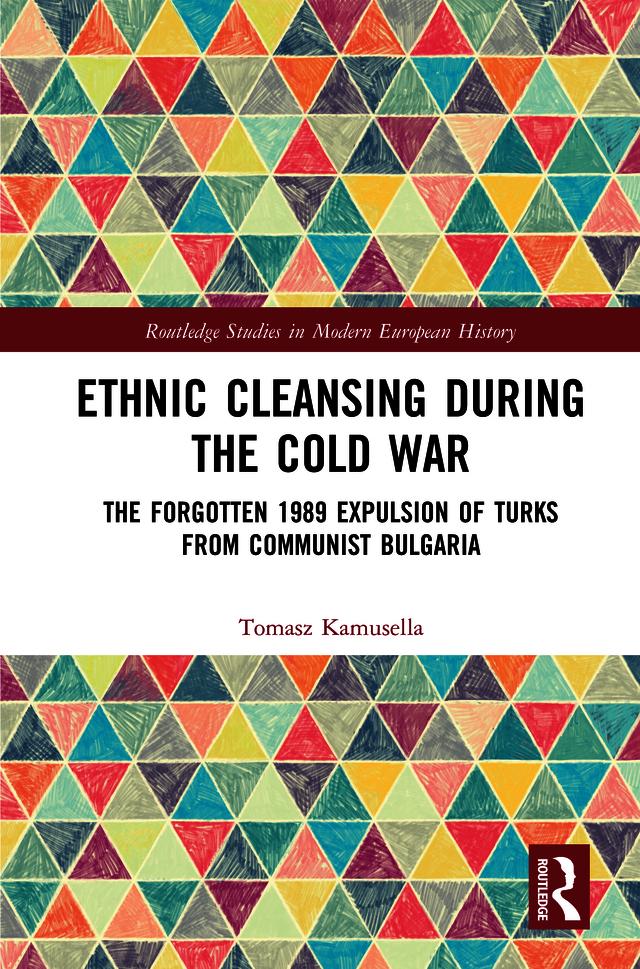
In mid-1989, the Bulgarian communist regime seeking to prop up its legitimacy played the ethnonational card by expelling 360,000 Turks and Muslims across the Iron Curtain to neighboring Turkey. It was the single largest ethnic cleansing during the Cold War in Europe after the wrapping up of the postwar expulsions (‘population transfers’) of ethnic Germans from Central Europe in the latter half of the 1940s. Furthermore, this expulsion of Turks and Muslims from Bulgaria was the sole unilateral act of ethnic cleansing that breached the Iron Curtain. The 1989 ethnic cleansing was followed by an unprecedented return of almost half of the expellees, after the collapse of the Bulgarian communist regime. The return, which partially reversed the effects of this ethnic cleansing, was the first-ever of its kind in history. Despite the unprecedented character of this 1989 expulsion and the subsequent return, not a single research article, let alone a monograph, has been devoted to these momentous developments yet. However, the tragic events shape today’s Bulgaria, while the persisting attempts to suppress the remembrance of the 1989 expulsion continue sharply dividing the country’s inhabitants. Without remembering about this ethnic cleansing it is impossible to explain the fall of the communist system in Bulgaria and the origins of ethnic cleansing during the Yugoslav wars. Faltering Yugoslavia’s future ethnic cleansers took a good note that neither Moscow nor Washington intervened in neighboring Bulgaria to stop the 1989 expulsion, which in light of international law was then still the legal instrument of ‘population transfer.’ The as yet unhealed wound of the 1989 ethnic cleansing negatively affects the Bulgaria’s relations with Turkey and the European Union. It seems that the only way out of this debilitating conundrum is establishing a truth and reconciliation commission that at long last would ensure transitional justice for all Bulgarians irrespective of language, religion or ethnicity.
Before Memmo my notes were scattered across PDFs. Now a workspace pulls everything into one place — I see exactly what's still left to study.
Memmo's summaries are gold before exams. I don't have to re-read 800 pages two weeks before — just the important parts.
The AI chat has saved me the night before an exam more than once. I just keep asking until I get it — no waiting on a study group to reply.
The quizzes hit exactly what I need to know. Memmo tracks what I get stuck on — so I only practice what's worth it.
Flashcards with spaced repetition are magic. Memmo knows when I'm about to forget something and brings it back.
The AI podcasts are my favorite. I listen on my way to school and get a recap without sitting at a computer.

Handbok i kvalitativa metoder
281 kr

Hållbar utveckling: en introduktion för ingenjörer och andra problemlösare
334 kr

Brymans Samhällsvetenskapliga metoder
390 kr

Projektledning
491 kr

Den orättvisa hälsan: om socioekonomiska skillnader i hälsa och livslängd
326 kr

Vetenskapsteori för nybörjare
196 kr

Organizational Leadership
429 kr

På väg mot läraryrket
172 kr

Det sociala livet i skolan: Socialpsykologiska perspektiv
253 kr

Betygsättningens didaktik
151 kr

Personality
402 kr

Studying Leadership
404 kr

Managing Innovation
477 kr

Introduktion till samhällsvetenskaplig metod
347 kr

The Psychology of Sex and Gender
698 kr

Evidens och kunskap för socialt arbete
207 kr

Introduction to Leadership
605 kr