
Before Memmo my notes were scattered across PDFs. Now a workspace pulls everything into one place — I see exactly what's still left to study.
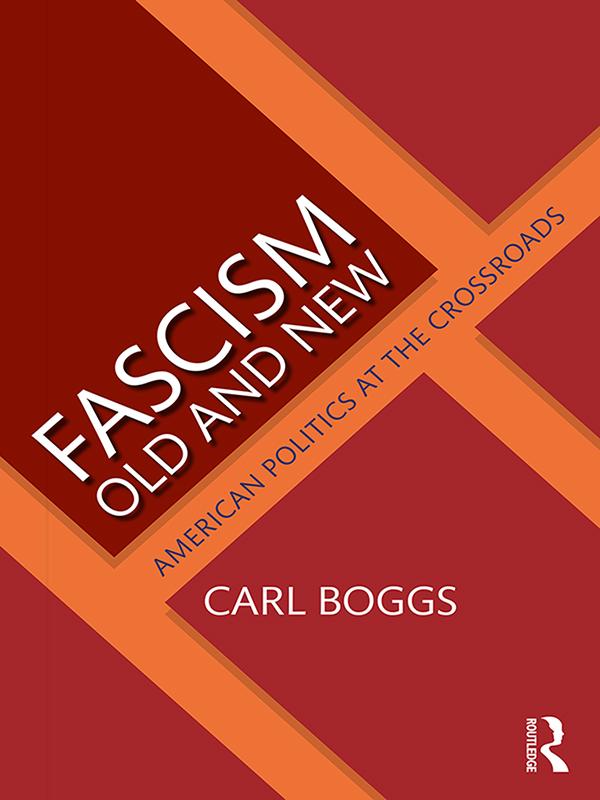
Deep historical trends suggest the United States could be moving toward a distinctly novel form of fascism, embracing elements of the historical phenomenon as it appeared in such countries as Italy, Germany, Japan, and Spain while departing in significant ways. A twenty-first century fascism would hardly be revolutionary or totalitarian, as it would involve no dramatic break with the past, following a logic of continuity and building on firmaments of entrenched power going back to World War II. This new type of fascist regime would be driven by a tightening confluence of sectoral interests in American society: corporate, state, military, and cultural – interests favoring oligarchy, authoritarianism, the warfare system, and surveillance order within an expanding globalized matrix of power. The dominant historical forces emphasized by such theorists as C. Wright Mills (The Power Elite) and Sheldon Wolin (Democracy, Inc.), an important foundation of this book, have grown stronger and more pervasive across the decades. An integrated power structure has been fueled by new advances in technology, a money-saturated political system, and neoliberal globalism bolstered by the spread of right wing populism that, among other things, has catapulted Donald Trump into the U.S. presidency.
In this book, Carl Boggs explores new political and ideological terrain in systematically considering the prospects for a gradual development of fascism in contemporary American society and, by extension, elsewhere across the advanced industrial world. He persuasively argues that modern fascistic trends, arguably most visible in the U.S., demonstrate a closer affinity with Mussolini’s Italy (corporate state) than with the more extreme Nazi German model of tyranny and genocide.
A very timely scholarly enterprise, this book will be of interest to students of contemporary radical politics, fascism more broadly, US political history, ideologies and party politics.
Before Memmo my notes were scattered across PDFs. Now a workspace pulls everything into one place — I see exactly what's still left to study.
Memmo's summaries are gold before exams. I don't have to re-read 800 pages two weeks before — just the important parts.
The AI chat has saved me the night before an exam more than once. I just keep asking until I get it — no waiting on a study group to reply.
The quizzes hit exactly what I need to know. Memmo tracks what I get stuck on — so I only practice what's worth it.
Flashcards with spaced repetition are magic. Memmo knows when I'm about to forget something and brings it back.
The AI podcasts are my favorite. I listen on my way to school and get a recap without sitting at a computer.

Handbok i kvalitativa metoder
281 kr

Hållbar utveckling: en introduktion för ingenjörer och andra problemlösare
334 kr

Brymans Samhällsvetenskapliga metoder
390 kr

Projektledning
491 kr

Den orättvisa hälsan: om socioekonomiska skillnader i hälsa och livslängd
326 kr

Vetenskapsteori för nybörjare
196 kr

Organizational Leadership
429 kr

På väg mot läraryrket
172 kr

Det sociala livet i skolan: Socialpsykologiska perspektiv
253 kr

Betygsättningens didaktik
151 kr

Personality
402 kr

Studying Leadership
404 kr

Managing Innovation
477 kr

Introduktion till samhällsvetenskaplig metod
347 kr

The Psychology of Sex and Gender
698 kr

Evidens och kunskap för socialt arbete
207 kr

Introduction to Leadership
605 kr