
Before Memmo my notes were scattered across PDFs. Now a workspace pulls everything into one place — I see exactly what's still left to study.
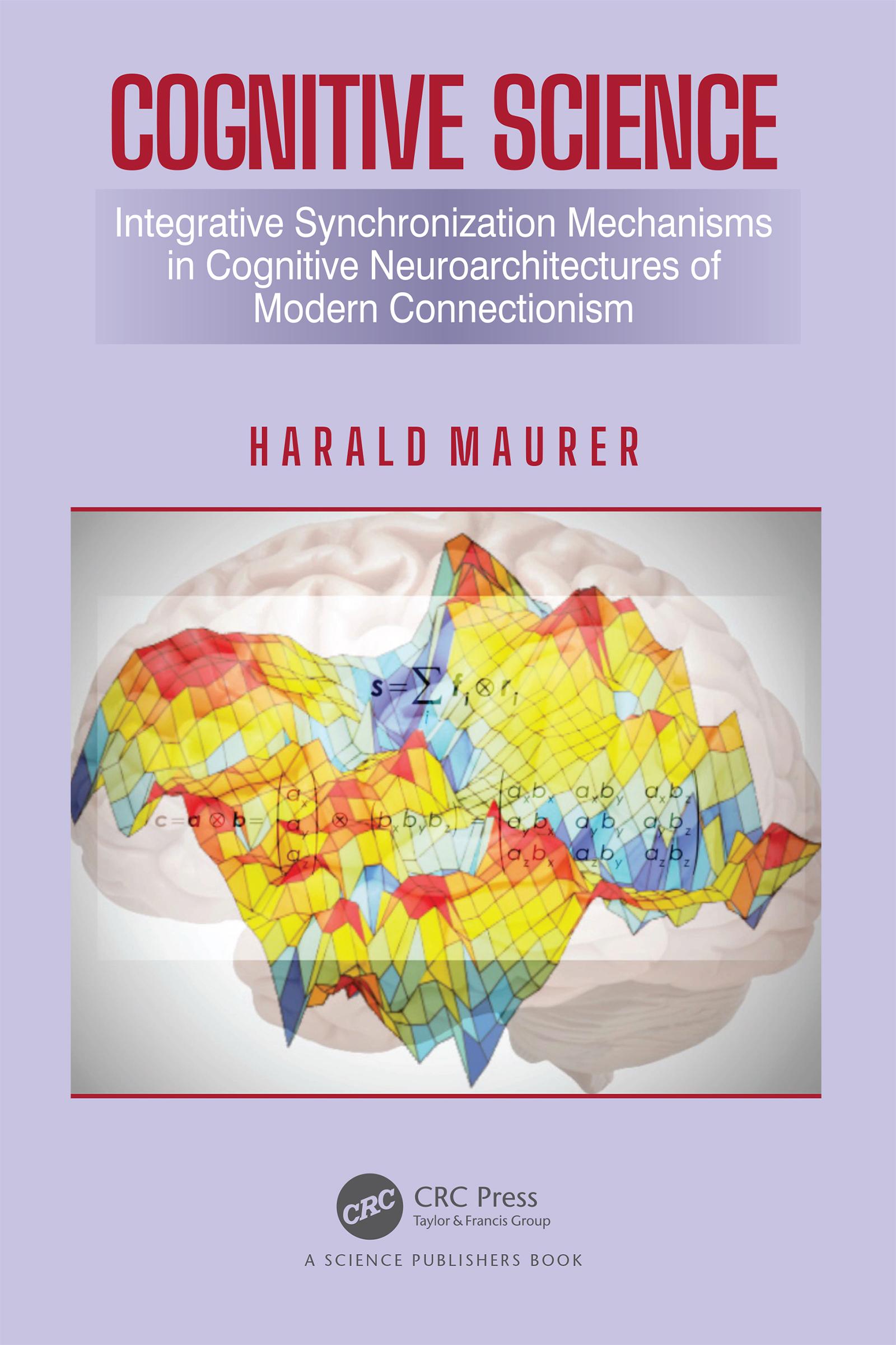
The Mind and Brain are usually considered as one and the same nonlinear, complex dynamical system, in which information processing can be described with vector and tensor transformations and with attractors in multidimensional state spaces. Thus, an internal neurocognitive representation concept consists of a dynamical process which filters out statistical prototypes from the sensorial information in terms of coherent and adaptive n-dimensional vector fields. These prototypes serve as a basis for dynamic, probabilistic predictions or probabilistic hypotheses on prospective new data (see the recently introduced approach of "predictive coding" in neurophilosophy). Furthermore, the phenomenon of sensory and language cognition would thus be based on a multitude of self-regulatory complex dynamics of synchronous self-organization mechanisms, in other words, an emergent "flux equilibrium process" ("steady state") of the total collective and coherent neural activity resulting from the oscillatory actions of neuronal assemblies. In perception it is shown how sensory object informations, like the object color or the object form, can be dynamically related together or can be integrated to a neurally based representation of this perceptual object by means of a synchronization mechanism ("feature binding"). In language processing it is shown how semantic concepts and syntactic roles can be dynamically related together or can be integrated to neurally based systematic and compositional connectionist representations by means of a synchronization mechanism ("variable binding") solving the Fodor-Pylyshyn-Challenge. Since the systemtheoretical connectionism has succeeded in modeling the sensory objects in perception as well as systematic and compositional representations in language processing with this vector- and oscillation-based representation format, a new, convincing theory of neurocognition has been developed, which bridges the neuronal and the cognitive analysis level.
The book describes how elementary neuronal information is combined in perception and language, so it becomes clear how the brain processes this information to enable basic cognitive performance of the humans.
Before Memmo my notes were scattered across PDFs. Now a workspace pulls everything into one place — I see exactly what's still left to study.
Memmo's summaries are gold before exams. I don't have to re-read 800 pages two weeks before — just the important parts.
The AI chat has saved me the night before an exam more than once. I just keep asking until I get it — no waiting on a study group to reply.
The quizzes hit exactly what I need to know. Memmo tracks what I get stuck on — so I only practice what's worth it.
Flashcards with spaced repetition are magic. Memmo knows when I'm about to forget something and brings it back.
The AI podcasts are my favorite. I listen on my way to school and get a recap without sitting at a computer.

Handbok i kvalitativa metoder
281 kr

Hållbar utveckling: en introduktion för ingenjörer och andra problemlösare
334 kr

Brymans Samhällsvetenskapliga metoder
390 kr

Projektledning
491 kr

Den orättvisa hälsan: om socioekonomiska skillnader i hälsa och livslängd
326 kr

Organizational Leadership
429 kr

Vetenskapsteori för nybörjare
196 kr

På väg mot läraryrket
172 kr

Det sociala livet i skolan: Socialpsykologiska perspektiv
253 kr

Betygsättningens didaktik
151 kr

Personality
402 kr

Studying Leadership
404 kr

Managing Innovation
477 kr

Introduktion till samhällsvetenskaplig metod
347 kr

The Psychology of Sex and Gender
698 kr

Evidens och kunskap för socialt arbete
207 kr

Introduction to Leadership
605 kr