
Before Memmo my notes were scattered across PDFs. Now a workspace pulls everything into one place — I see exactly what's still left to study.
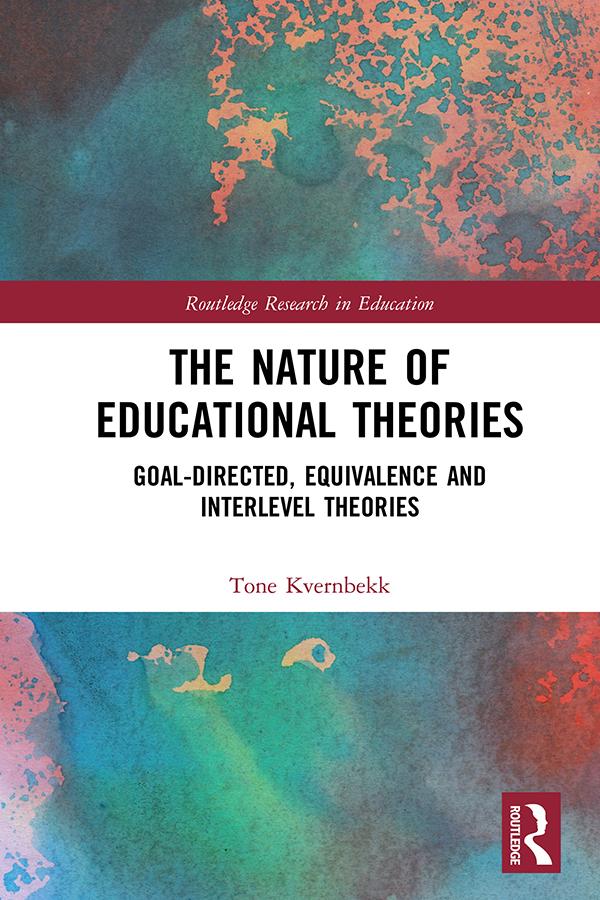
This important book offers a meta-theoretical account of educational theories and how they work. It offers a classification scheme of distinct types of educational theory in which the account developed can inform the work of educational theorists and practitioners.
Kvernbekk observes throughout how meta-theoretical knowledge of the structure of theory types will improve the understanding and representation of educational phenomena and enhance theorists’ and practitioners’ ability to change those phenomena for the better. She explains how philosophical accounts of scientific theories can help us understand the nature of educational theories by applying two influential but different theory conceptions – the Received View and the Semantic Conception – to the field of education. Kvernbekk argues that educational theories, like other scientific theories, are representational devices that allow us to understand, describe and explain phenomena, and, when desired, to change them. The classification scheme offered allows us to discriminate distinct types of educational theory: goal-directed, equivalence and interlevel theories. Examples of all three types are discussed, explaining their structure, what they say about the phenomena and how they say it. The book also offers a critical overview of different conceptions of practice and different understandings of the theory–practice relationship.
Encouraging a strong understanding of what theories say about the phenomena they represent, this book will be of interest to educational researchers and postgraduate students in the fields of philosophy of education, education theory and education policy, and to philosophers of science and philosophers working on ‘practical’ philosophical issues.
Before Memmo my notes were scattered across PDFs. Now a workspace pulls everything into one place — I see exactly what's still left to study.
Memmo's summaries are gold before exams. I don't have to re-read 800 pages two weeks before — just the important parts.
The AI chat has saved me the night before an exam more than once. I just keep asking until I get it — no waiting on a study group to reply.
The quizzes hit exactly what I need to know. Memmo tracks what I get stuck on — so I only practice what's worth it.
Flashcards with spaced repetition are magic. Memmo knows when I'm about to forget something and brings it back.
The AI podcasts are my favorite. I listen on my way to school and get a recap without sitting at a computer.

Handbok i kvalitativa metoder
281 kr

Hållbar utveckling: en introduktion för ingenjörer och andra problemlösare
334 kr

Brymans Samhällsvetenskapliga metoder
390 kr

Projektledning
491 kr

Den orättvisa hälsan: om socioekonomiska skillnader i hälsa och livslängd
326 kr

Vetenskapsteori för nybörjare
196 kr

Organizational Leadership
429 kr

På väg mot läraryrket
172 kr

Det sociala livet i skolan: Socialpsykologiska perspektiv
253 kr

Betygsättningens didaktik
151 kr

Personality
402 kr

Studying Leadership
404 kr

Managing Innovation
477 kr

Introduktion till samhällsvetenskaplig metod
347 kr

The Psychology of Sex and Gender
698 kr

Evidens och kunskap för socialt arbete
207 kr

Introduction to Leadership
605 kr