
Before Memmo my notes were scattered across PDFs. Now a workspace pulls everything into one place — I see exactly what's still left to study.
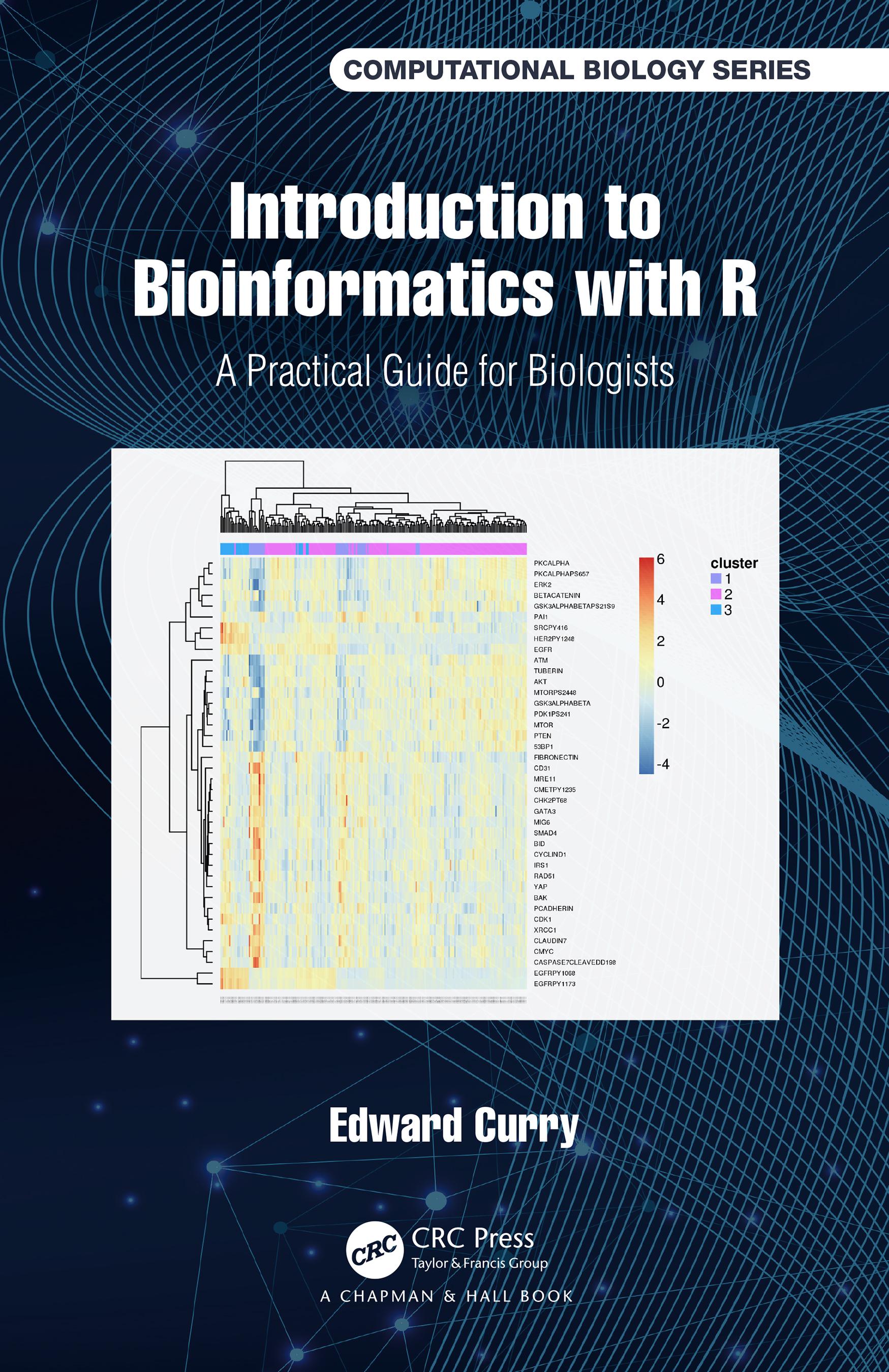
In biological research, the amount of data available to researchers has increased so much over recent years, it is becoming increasingly difficult to understand the current state of the art without some experience and understanding of data analytics and bioinformatics. An Introduction to Bioinformatics with R: A Practical Guide for Biologists leads the reader through the basics of computational analysis of data encountered in modern biological research. With no previous experience with statistics or programming required, readers will develop the ability to plan suitable analyses of biological datasets, and to use the R programming environment to perform these analyses. This is achieved through a series of case studies using R to answer research questions using molecular biology datasets. Broadly applicable statistical methods are explained, including linear and rank-based correlation, distance metrics and hierarchical clustering, hypothesis testing using linear regression, proportional hazards regression for survival data, and principal component analysis. These methods are then applied as appropriate throughout the case studies, illustrating how they can be used to answer research questions.
Key Features:
· Provides a practical course in computational data analysis suitable for students or researchers with no previous exposure to computer programming.
· Describes in detail the theoretical basis for statistical analysis techniques used throughout the textbook, from basic principles
· Presents walk-throughs of data analysis tasks using R and example datasets. All R commands are presented and explained in order to enable the reader to carry out these tasks themselves.
· Uses outputs from a large range of molecular biology platforms including DNA methylation and genotyping microarrays; RNA-seq, genome sequencing, ChIP-seq and bisulphite sequencing; and high-throughput phenotypic screens.
· Gives worked-out examples geared towards problems encountered in cancer research, which can also be applied across many areas of molecular biology and medical research.
This book has been developed over years of training biological scientists and clinicians to analyse the large datasets available in their cancer research projects. It is appropriate for use as a textbook or as a practical book for biological scientists looking to gain bioinformatics skills.
Before Memmo my notes were scattered across PDFs. Now a workspace pulls everything into one place — I see exactly what's still left to study.
Memmo's summaries are gold before exams. I don't have to re-read 800 pages two weeks before — just the important parts.
The AI chat has saved me the night before an exam more than once. I just keep asking until I get it — no waiting on a study group to reply.
The quizzes hit exactly what I need to know. Memmo tracks what I get stuck on — so I only practice what's worth it.
Flashcards with spaced repetition are magic. Memmo knows when I'm about to forget something and brings it back.
The AI podcasts are my favorite. I listen on my way to school and get a recap without sitting at a computer.

Handbok i kvalitativa metoder
281 kr

Hållbar utveckling: en introduktion för ingenjörer och andra problemlösare
334 kr

Brymans Samhällsvetenskapliga metoder
390 kr

Projektledning
491 kr

Den orättvisa hälsan: om socioekonomiska skillnader i hälsa och livslängd
326 kr

Vetenskapsteori för nybörjare
196 kr

Organizational Leadership
429 kr

På väg mot läraryrket
172 kr

Det sociala livet i skolan: Socialpsykologiska perspektiv
253 kr

Betygsättningens didaktik
151 kr

Personality
402 kr

Studying Leadership
404 kr

Managing Innovation
449 kr

Introduktion till samhällsvetenskaplig metod
347 kr

The Psychology of Sex and Gender
698 kr

Evidens och kunskap för socialt arbete
207 kr

Introduction to Leadership
605 kr