
Before Memmo my notes were scattered across PDFs. Now a workspace pulls everything into one place — I see exactly what's still left to study.
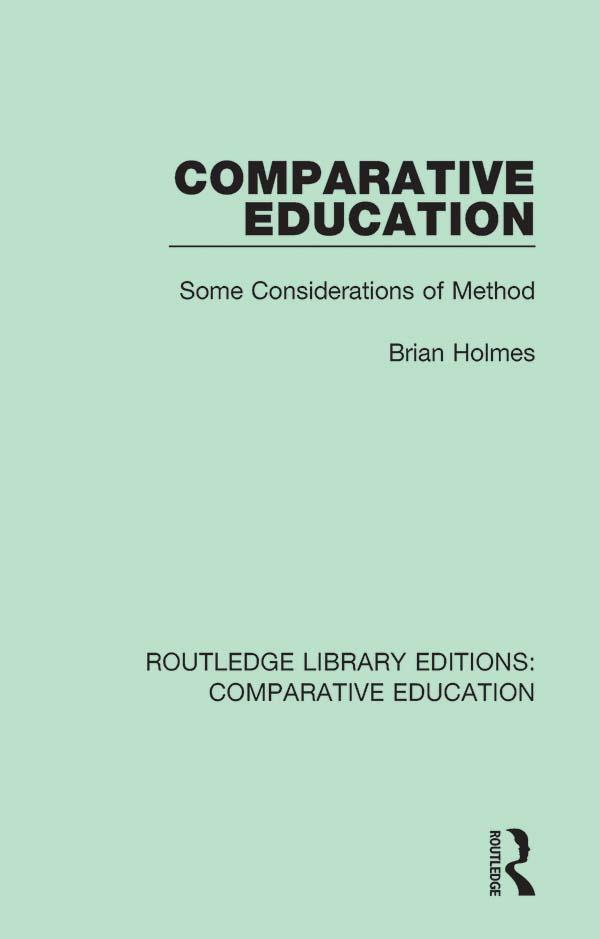
Originally published in 1981. Presented here is a coherent theory of Comparative Education research, based on the traditions and innovations established by such pioneers as Joseph Lauwerys and Nicholas Hans. From the author’s substantive studies emerges a taxonomy for education based on Popper’s critical dualism, and a way of analysing problems based on Dewey's reflective thinking and the social change theories of people such as Marx, Ogben and Pareto. Models of formal organisations drawn from Talcott Parsons show how systems analyses can be made in comparative perspective and how the processes of policy formulation, adoption and implementation can be studied.
The use of ideal typical normative models illustrates how comparative educationists can penetrate aspects of man's socially created worlds. These techniques are exemplified in succinct models against which debates about education in Western Europe (Plato), the USA (Dewey) and the USSR (Marx, Engels and Lenin) can be analysed. Against the crude use of comparative arguments and transplantation of foreign practices, Dr Holmes suggests that problems should be analysed and the outcomes of hypothetical solutions or policies should be tested under identified national circumstances. The distinctive feature of this book is that it takes account of the debate among social scientists, rejects both induction and ethnomethodology as adequate in themselves and brings together the problem-solving approach favoured by American research workers and the hypothetico-deductive method of enquiry advocated by natural scientists such as Sir Peter Medawar and Sir John Eccles.
Before Memmo my notes were scattered across PDFs. Now a workspace pulls everything into one place — I see exactly what's still left to study.
Memmo's summaries are gold before exams. I don't have to re-read 800 pages two weeks before — just the important parts.
The AI chat has saved me the night before an exam more than once. I just keep asking until I get it — no waiting on a study group to reply.
The quizzes hit exactly what I need to know. Memmo tracks what I get stuck on — so I only practice what's worth it.
Flashcards with spaced repetition are magic. Memmo knows when I'm about to forget something and brings it back.
The AI podcasts are my favorite. I listen on my way to school and get a recap without sitting at a computer.

Handbok i kvalitativa metoder
281 kr

Hållbar utveckling: en introduktion för ingenjörer och andra problemlösare
334 kr

Brymans Samhällsvetenskapliga metoder
390 kr

Projektledning
491 kr

Den orättvisa hälsan: om socioekonomiska skillnader i hälsa och livslängd
326 kr

Vetenskapsteori för nybörjare
196 kr

Organizational Leadership
429 kr

På väg mot läraryrket
172 kr

Det sociala livet i skolan: Socialpsykologiska perspektiv
253 kr

Betygsättningens didaktik
151 kr

Personality
402 kr

Studying Leadership
404 kr

Managing Innovation
477 kr

Introduktion till samhällsvetenskaplig metod
347 kr

The Psychology of Sex and Gender
698 kr

Evidens och kunskap för socialt arbete
207 kr

Introduction to Leadership
605 kr