
Before Memmo my notes were scattered across PDFs. Now a workspace pulls everything into one place — I see exactly what's still left to study.
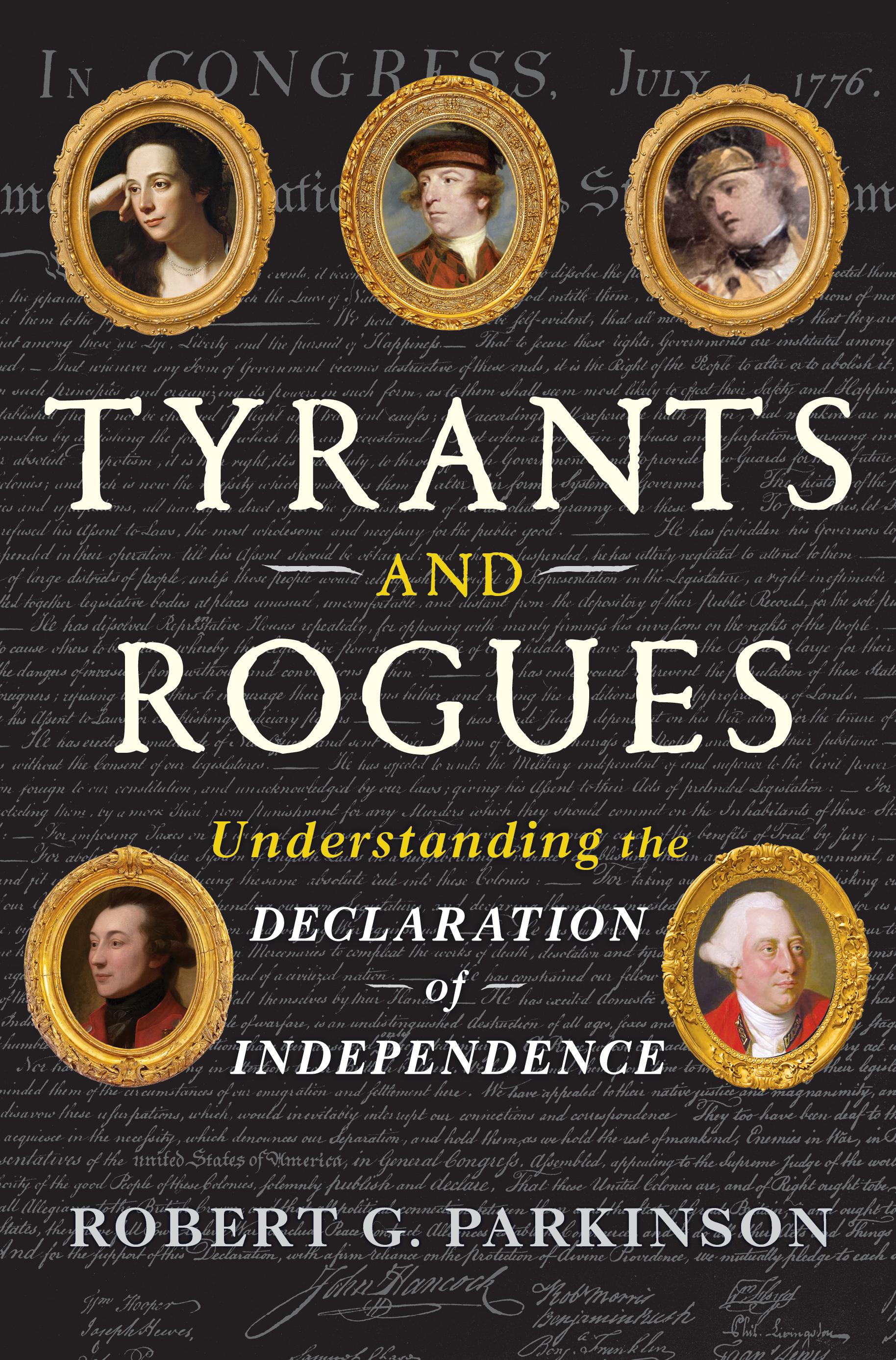
"A timely and highly useful book in this semiquincentennial year—and far beyond." —Kirkus Reviews, starred review
From an acclaimed historian, a revelatory account of the Declaration of Independence, centered not on the lofty preamble but on the specific grievances that make up the bulk of the document and that offer an entirely new view into the Revolutionary era.
We think of the Declaration of Independence as timeless. We know the sacred phrases: “all men are created equal,” “life, liberty, and the pursuit of happiness,” “self-evident truths,” “certain inalienable rights.” These are some of the most important words human beings have ever written. And they are all from the Declaration’s preamble, which has inspired people for centuries, including generations of revolutionaries all over the world.
But as historian Robert G. Parkinson points out, the Declaration was not written as a timeless statement of political philosophy. It was, rather, produced in the heat of a confusing, bloody, and desperate war. And in that moment, it wasn’t high ideals alone that drove the patriots forward. Parkinson’s great innovation is to allow us, 250 years on, to see the Declaration as its authors did. For them, the opening paragraphs were not the main event. It was the body of the Declaration—the twenty-seven grievances against King George—that formed the essential part. Even Thomas Jefferson would have been puzzled by history’s fixation on his opening sentences.
Parkinson takes us into the grievances, giving us stories of the Revolutionary era that are little known today but loomed large for the patriots. As the leaders of the Revolution saw it, they had been pushed to the breaking point by British officials who undermined colonial legislatures and courts, corrupted the judiciary, turned military power against civilians, inflamed slave revolts, forced colonists to fight one another—ultimately, waging war on their own people.
In his brilliantly original reading of the Declaration, Parkinson asks fundamental questions that have too often been overlooked: Why did the colonies declare independence when they did? What were their nonnegotiable demands? Who were the individuals whose actions made reconciliation impossible? By recovering the people and conflicts behind the Declaration’s grievances, Parkinson offers a strikingly new account of the American Revolution—and shows that the issues that most alarmed colonists in 1776 are urgent once again today.
Before Memmo my notes were scattered across PDFs. Now a workspace pulls everything into one place — I see exactly what's still left to study.
Memmo's summaries are gold before exams. I don't have to re-read 800 pages two weeks before — just the important parts.
The AI chat has saved me the night before an exam more than once. I just keep asking until I get it — no waiting on a study group to reply.
The quizzes hit exactly what I need to know. Memmo tracks what I get stuck on — so I only practice what's worth it.
Flashcards with spaced repetition are magic. Memmo knows when I'm about to forget something and brings it back.
The AI podcasts are my favorite. I listen on my way to school and get a recap without sitting at a computer.

Handbok i kvalitativa metoder
281 kr

Hållbar utveckling: en introduktion för ingenjörer och andra problemlösare
334 kr

Brymans Samhällsvetenskapliga metoder
390 kr

Projektledning
491 kr

Den orättvisa hälsan: om socioekonomiska skillnader i hälsa och livslängd
326 kr

Organizational Leadership
429 kr

Vetenskapsteori för nybörjare
196 kr

På väg mot läraryrket
172 kr

Det sociala livet i skolan: Socialpsykologiska perspektiv
253 kr

Betygsättningens didaktik
151 kr

Personality
402 kr

Studying Leadership
404 kr

Managing Innovation
477 kr

Introduktion till samhällsvetenskaplig metod
347 kr

The Psychology of Sex and Gender
698 kr

Evidens och kunskap för socialt arbete
207 kr

Introduction to Leadership
605 kr