
Before Memmo my notes were scattered across PDFs. Now a workspace pulls everything into one place — I see exactly what's still left to study.
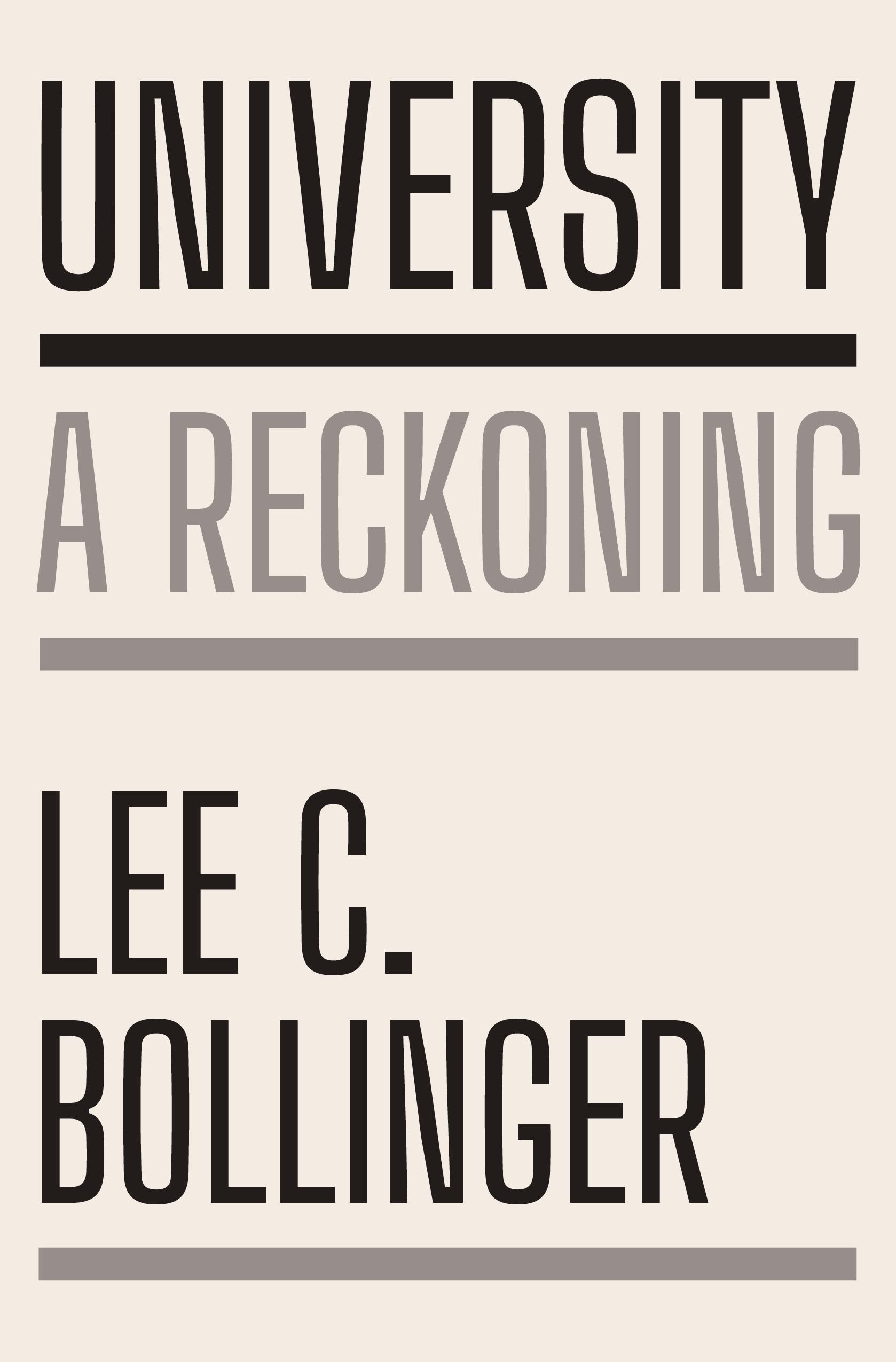
From perhaps the most important university leader of the twenty-first century, an account of the university in the age of authoritarianism and a new case for its place in the American system.
The American university—one of the most successful institutions in human history—is facing an unprecedented assault from the president of the United States. Experts on authoritarianism have drawn comparisons to Turkey and Hungary, where strongmen subdued universities as part of their power grabs. Yet as former Columbia president Lee C. Bollinger points out in his powerful account of the university’s significance, in such dire times one has no choice but to state clearly and forcefully what one stands for.
Defenses of the university usually emphasize the practical benefits it offers to society: highly skilled graduates who can thrive in an information-saturated world; scientific research that leads to important advances in health; technological breakthroughs that contribute to the American economy being the envy of the world. Bollinger offers a more original, and more sweeping, account. He reveals how the structure of the university contributes to the success of the American system—because it provides those who study and work within it a degree of creative freedom hard to find elsewhere—and why that structure is both impossible to re-create and vulnerable to outside attack. The fundamental mission of the university is to enhance knowledge, but this is not merely a high-minded idea. It is, as Bollinger demonstrates, a notion rooted deeply in the Constitution, specifically the First Amendment, the basis of our political and social life. The university helps realize the First Amendment; the First Amendment helps make the university.
Bollinger argues that, in a challenging era for the business of journalism, the university remains an essential source of truth-seeking for those who still believe in democracy. The stakes are self-evident: The university must be defended if the American experiment is to continue.
Before Memmo my notes were scattered across PDFs. Now a workspace pulls everything into one place — I see exactly what's still left to study.
Memmo's summaries are gold before exams. I don't have to re-read 800 pages two weeks before — just the important parts.
The AI chat has saved me the night before an exam more than once. I just keep asking until I get it — no waiting on a study group to reply.
The quizzes hit exactly what I need to know. Memmo tracks what I get stuck on — so I only practice what's worth it.
Flashcards with spaced repetition are magic. Memmo knows when I'm about to forget something and brings it back.
The AI podcasts are my favorite. I listen on my way to school and get a recap without sitting at a computer.

Handbok i kvalitativa metoder
281 kr

Hållbar utveckling: en introduktion för ingenjörer och andra problemlösare
334 kr

Brymans Samhällsvetenskapliga metoder
390 kr

Projektledning
491 kr

Den orättvisa hälsan: om socioekonomiska skillnader i hälsa och livslängd
326 kr

Organizational Leadership
429 kr

Vetenskapsteori för nybörjare
196 kr

På väg mot läraryrket
172 kr

Det sociala livet i skolan: Socialpsykologiska perspektiv
253 kr

Betygsättningens didaktik
151 kr

Personality
402 kr

Studying Leadership
404 kr

Managing Innovation
477 kr

Introduktion till samhällsvetenskaplig metod
347 kr

The Psychology of Sex and Gender
698 kr

Evidens och kunskap för socialt arbete
207 kr

Introduction to Leadership
605 kr