
Before Memmo my notes were scattered across PDFs. Now a workspace pulls everything into one place — I see exactly what's still left to study.
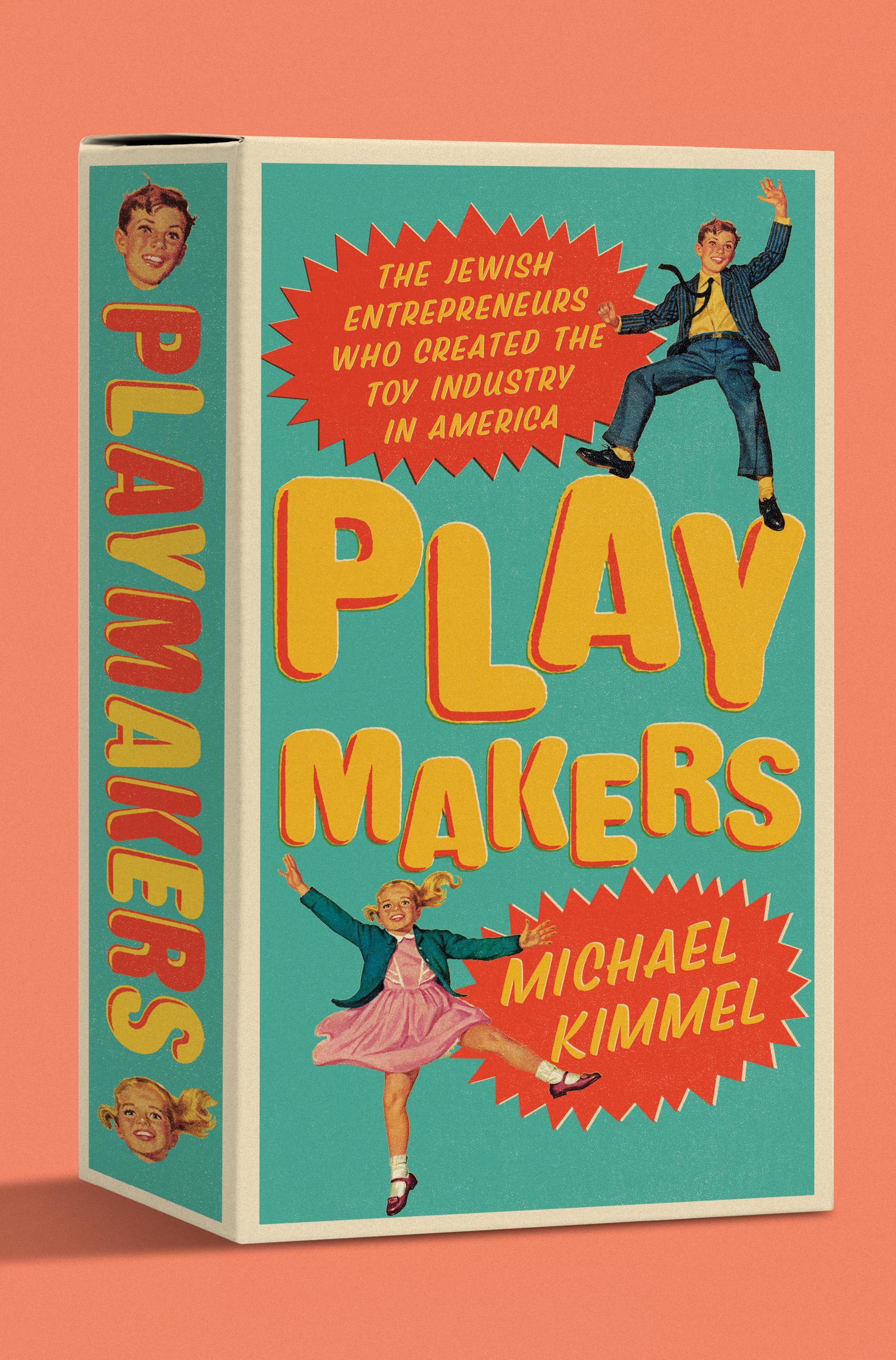
The untold story of the first-generation Jewish American toymakers who literally manufactured “the century of the child.”
In 1902, Morris and Rose Michtom invented the Teddy Bear—bound by clothing scraps, stuffed with sawdust, and given button eyes with a sad, longing expression—in the back room of their Brooklyn candy store. Together they launched the Ideal Toy Corporation, joining a set of other poor, first-generation Jewish toymakers: the Hassenfeld brothers of Hasbro, Ruth Moskowicz and Elliot Handler of Mattel, and Joshua Lionel Cowan of Lionel Trains.
From Barbie and G.I. Joe to Popeye, Superman, and Mr. Potato Head, Playmakers reveals how the toy industry created the idealized American childhood: an enchanted world, full of wild creatures and eternal struggles between good and evil, with endless realms of fantasy and beauty. For much of the twentieth century, every part of the American toy business was largely Jewish—the company founders, executives, and designers, as well as the factory workers, wholesale distributors, retail outlets, and armies of salesmen. A descendant of the founders of the Ideal Toy Corporation, Michael Kimmel shows how these poor, often Yiddish-speaking, tenement-dwelling children of immigrants invented a world they never experienced for themselves. Along with the toys and Jewish toymakers that climbed the ladder of success, Kimmel also portrays the rise of an entire culture focused on children, led by Jewish comic book creators, children’s authors, parenting experts, and child psychologists.
The first full-scale toy history of the United States, Kimmel’s story conjures the colorful, imaginative, restless spirits who followed the promise of the American Dream—and describes the ways in which the world they came from molded their beloved creations. Playmakers shows that the overlapping experiences of being a Jew, an immigrant, and a child in twentieth-century America—an outsider looking in, a person desperate to be accepted—created childhood as we know it today.
Before Memmo my notes were scattered across PDFs. Now a workspace pulls everything into one place — I see exactly what's still left to study.
Memmo's summaries are gold before exams. I don't have to re-read 800 pages two weeks before — just the important parts.
The AI chat has saved me the night before an exam more than once. I just keep asking until I get it — no waiting on a study group to reply.
The quizzes hit exactly what I need to know. Memmo tracks what I get stuck on — so I only practice what's worth it.
Flashcards with spaced repetition are magic. Memmo knows when I'm about to forget something and brings it back.
The AI podcasts are my favorite. I listen on my way to school and get a recap without sitting at a computer.

Handbok i kvalitativa metoder
281 kr

Hållbar utveckling: en introduktion för ingenjörer och andra problemlösare
334 kr

Brymans Samhällsvetenskapliga metoder
390 kr

Projektledning
491 kr

Den orättvisa hälsan: om socioekonomiska skillnader i hälsa och livslängd
326 kr

Organizational Leadership
429 kr

Vetenskapsteori för nybörjare
196 kr

På väg mot läraryrket
172 kr

Det sociala livet i skolan: Socialpsykologiska perspektiv
253 kr

Betygsättningens didaktik
151 kr

Personality
402 kr

Studying Leadership
404 kr

Managing Innovation
477 kr

Introduktion till samhällsvetenskaplig metod
347 kr

The Psychology of Sex and Gender
698 kr

Evidens och kunskap för socialt arbete
207 kr

Introduction to Leadership
605 kr