
Before Memmo my notes were scattered across PDFs. Now a workspace pulls everything into one place — I see exactly what's still left to study.
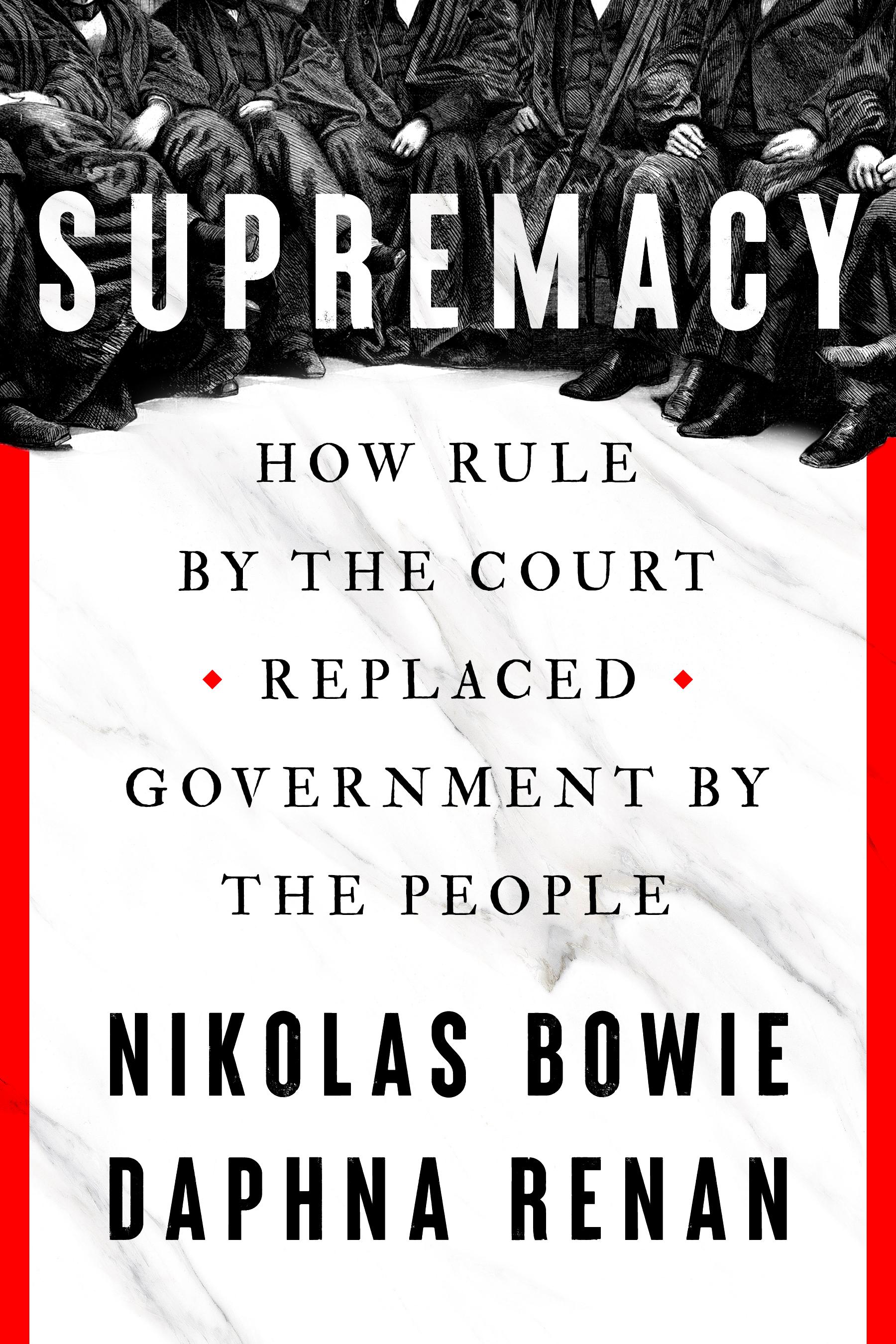
From two acclaimed legal scholars, a new history of the Supreme Court that overturns our most basic assumptions about its role in our democracy, showing how it seized the power it now wields.
Does the U.S. Constitution force us to live under the rule of nine robed lawyers? Many Americans assume that it does. It is commonly said that the Supreme Court has always had the power to decide what the Constitution means and to strike down any act of Congress that violates the justices’ dictates. Even as the Court has used this power to upend democracy—erasing federal laws that once prevented presidential autocracy and protected the right to vote—we are told there is nothing everyday Americans can do, as if our ability to govern ourselves requires the Court to answer our most fundamental questions for us.
But what if that isn’t accurate? What if the Court was not given the power it now wields, but rather seized it?
That is the revelation of Nikolas Bowie and Daphna Renan’s masterful new account of the Supreme Court. In a sweeping narrative of over 200 years of American history, they demonstrate that “judicial supremacy” was not written into the Constitution and has always been challenged as fundamentally at odds with it. Far from being an eternal principle, the power the Court claims to override Congress’s interpretation of the Constitution took hold in reaction to abolition and Reconstruction—not to protect democracy, but to weaken it.
Supremacy charts how the Court has repeatedly sabotaged the efforts of Congress to broaden democracy by enabling presidents, corporations, and the wealthy to ignore enacted law. It also challenges how even liberals understand the Court’s most celebrated rulings—including Brown v. Board of Education and Roe v. Wade—showing how the left has unwittingly subscribed to the very ideology that now threatens it.
At every step, Bowie and Renan recover a lost constitutional tradition, one forged by abolitionists, labor leaders, suffragists, and civil rights pioneers. These individuals presented another way forward, in which power is returned to where the Constitution put it—Congress—and everyday Americans have more of a say in the law that shapes our lives.
Before Memmo my notes were scattered across PDFs. Now a workspace pulls everything into one place — I see exactly what's still left to study.
Memmo's summaries are gold before exams. I don't have to re-read 800 pages two weeks before — just the important parts.
The AI chat has saved me the night before an exam more than once. I just keep asking until I get it — no waiting on a study group to reply.
The quizzes hit exactly what I need to know. Memmo tracks what I get stuck on — so I only practice what's worth it.
Flashcards with spaced repetition are magic. Memmo knows when I'm about to forget something and brings it back.
The AI podcasts are my favorite. I listen on my way to school and get a recap without sitting at a computer.

Handbok i kvalitativa metoder
281 kr

Hållbar utveckling: en introduktion för ingenjörer och andra problemlösare
334 kr

Brymans Samhällsvetenskapliga metoder
390 kr

Projektledning
491 kr

Den orättvisa hälsan: om socioekonomiska skillnader i hälsa och livslängd
326 kr

Organizational Leadership
429 kr

Vetenskapsteori för nybörjare
196 kr

På väg mot läraryrket
172 kr

Det sociala livet i skolan: Socialpsykologiska perspektiv
253 kr

Betygsättningens didaktik
151 kr

Personality
402 kr

Studying Leadership
404 kr

Managing Innovation
477 kr

Introduktion till samhällsvetenskaplig metod
347 kr

The Psychology of Sex and Gender
698 kr

Evidens och kunskap för socialt arbete
207 kr

Introduction to Leadership
605 kr