
Before Memmo my notes were scattered across PDFs. Now a workspace pulls everything into one place — I see exactly what's still left to study.
A USA TODAY BESTSELLER
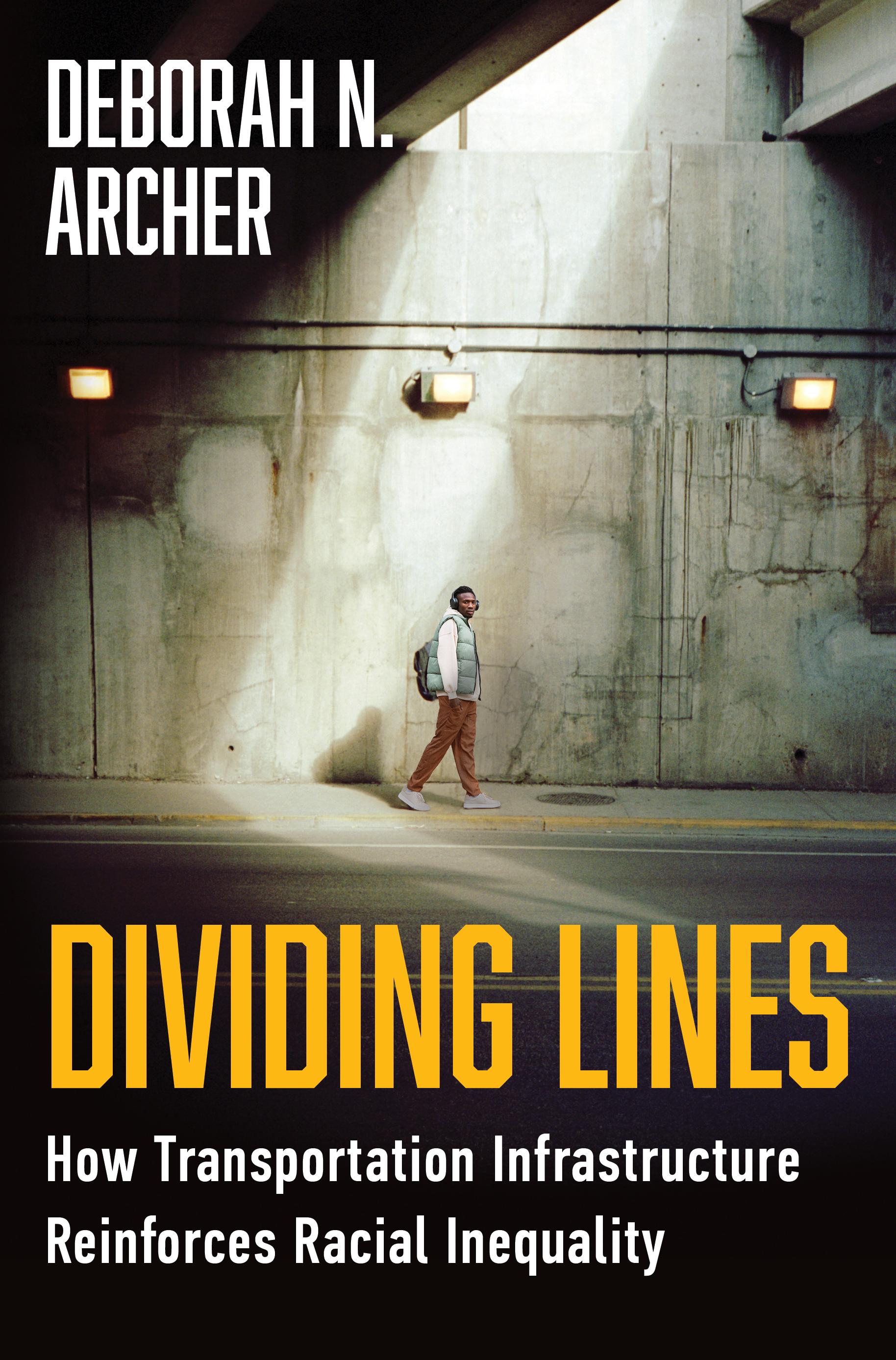
From an eminent legal scholar and the president of the ACLU, an essential account of how transportation infrastructure—from highways and roads to sidewalks and buses—became a means of protecting segregation and inequality after the fall of Jim Crow.
Our nation’s transportation system is crumbling: highways are collapsing, roads are pockmarked, and commuter trains are unreliable. But as acclaimed scholar and ACLU president Deborah Archer warns in Dividing Lines, before we can think about rebuilding and repairing, we must consider the role race has played in transportation infrastructure, from the early twentieth century and into the present day.
As Archer demonstrates, the success of the Civil Rights movement and the fall of Jim Crow in the 1960s did not mean the end of segregation. The status quo would not be so easily dismantled. With state-sanctioned racism no longer legal, officials across the country—not just in the South—turned to transportation infrastructure to keep Americans divided. A wealthy white neighborhood could no longer be "protected" by racial covenants and segregated shops, but a multilane road, with no pedestrian crossings, could be built along its border to make it difficult for people from a lower-income community to visit. Highways could not be routed through Black neighborhoods based on the race of their residents, but those neighborhoods’ lower property values—a legacy of racial exclusion—could justify their destruction. A new suburb could not be for "whites only," but planners could refuse to extend sidewalks from Black communities into white ones.
Drawing on a wealth of sources, including interviews with people who now live in the shadow of highways and other major infrastructure projects, Archer presents a sweeping, national account—from Atlanta and Houston to Indianapolis and New York City—of our persistent divisions. With immense authority, she examines the limits of current Civil Rights laws, which can be used against overtly racist officials but are less effective in addressing deeper, more enduring, structural challenges. But Archer remains hopeful, and in the final count describes what a just system would look like and how we can achieve it.
Before Memmo my notes were scattered across PDFs. Now a workspace pulls everything into one place — I see exactly what's still left to study.
Memmo's summaries are gold before exams. I don't have to re-read 800 pages two weeks before — just the important parts.
The AI chat has saved me the night before an exam more than once. I just keep asking until I get it — no waiting on a study group to reply.
The quizzes hit exactly what I need to know. Memmo tracks what I get stuck on — so I only practice what's worth it.
Flashcards with spaced repetition are magic. Memmo knows when I'm about to forget something and brings it back.
The AI podcasts are my favorite. I listen on my way to school and get a recap without sitting at a computer.

Handbok i kvalitativa metoder
281 kr

Hållbar utveckling: en introduktion för ingenjörer och andra problemlösare
334 kr

Brymans Samhällsvetenskapliga metoder
390 kr

Projektledning
491 kr

Den orättvisa hälsan: om socioekonomiska skillnader i hälsa och livslängd
326 kr

Organizational Leadership
429 kr

Vetenskapsteori för nybörjare
196 kr

På väg mot läraryrket
172 kr

Det sociala livet i skolan: Socialpsykologiska perspektiv
253 kr

Betygsättningens didaktik
151 kr

Personality
402 kr

Studying Leadership
404 kr

Managing Innovation
477 kr

Introduktion till samhällsvetenskaplig metod
347 kr

The Psychology of Sex and Gender
698 kr

Evidens och kunskap för socialt arbete
207 kr

Introduction to Leadership
605 kr