
Before Memmo my notes were scattered across PDFs. Now a workspace pulls everything into one place — I see exactly what's still left to study.
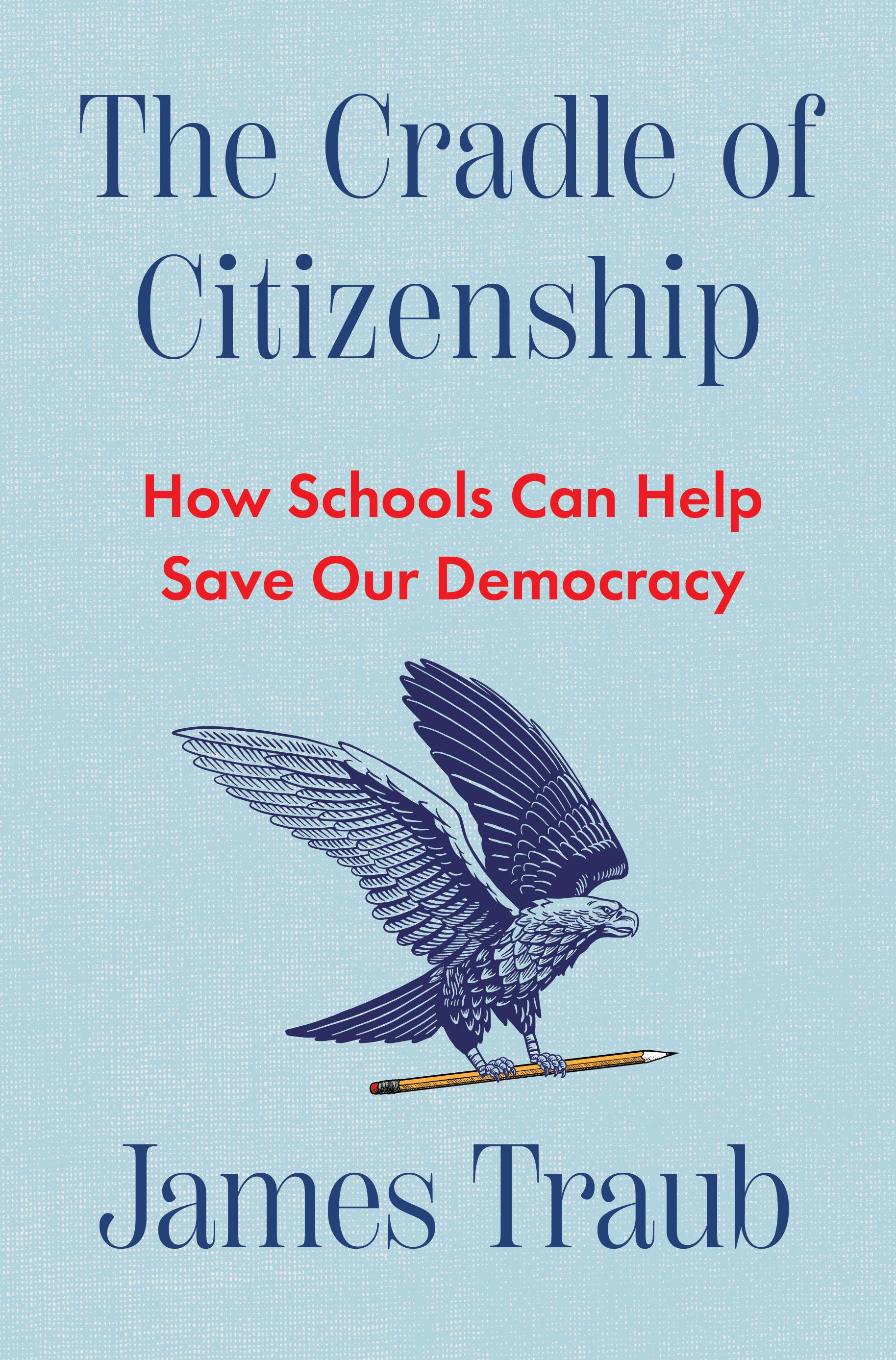
A devastating critique of our failure to prepare students for citizenship—and a roadmap to a better way.
America’s Founders placed great confidence in schools, which they believed would teach young people to understand our political system and to engage in reasoned political debate as adults. Yet today, when virtually all Americans graduate from high school, we remain stunningly ignorant of history and government. In 2022, the National Assessment of Educational Progress found that only 13 percent of students scored a “proficient” level in history. Adults do no better: only 40 percent can name the three branches of government.
In The Cradle of Citizenship, James Traub chronicles his year of observing public schools across the country, talking to teachers, scholars, and curriculum designers. He finds teachers in Florida who are afraid of discussing topics that might be seen as “woke”; a red-blue war incarnated in the 1619 Project and 1776 Report; a profound disagreement over what exactly civic education means; and, most dismayingly, ever-diminishing expectations of students with ever-dwindling attention spans.
Yet The Cradle of Citizenship also finds sources of hope. Traub learns that, despite endless right-wing critiques, virtually all social studies teachers keep their personal views to themselves and encourage students to develop views of their own. He describes the extraordinary collaboration between liberal and conservative scholars that led to the creation of “Educating for American Democracy,” a roadmap for the teaching of civics. Finally, Traub describes the “classical school,” a traditional model based on the study of great books and the conscious molding of character, which is derided as reactionary in progressive circles yet prompts students to discuss books and ideas with depth. Shedding light on one of the most divisive issues of our time, The Cradle of Citizenship upholds a vision of civics education as it could be.
Before Memmo my notes were scattered across PDFs. Now a workspace pulls everything into one place — I see exactly what's still left to study.
Memmo's summaries are gold before exams. I don't have to re-read 800 pages two weeks before — just the important parts.
The AI chat has saved me the night before an exam more than once. I just keep asking until I get it — no waiting on a study group to reply.
The quizzes hit exactly what I need to know. Memmo tracks what I get stuck on — so I only practice what's worth it.
Flashcards with spaced repetition are magic. Memmo knows when I'm about to forget something and brings it back.
The AI podcasts are my favorite. I listen on my way to school and get a recap without sitting at a computer.

Handbok i kvalitativa metoder
281 kr

Hållbar utveckling: en introduktion för ingenjörer och andra problemlösare
334 kr

Brymans Samhällsvetenskapliga metoder
390 kr

Projektledning
491 kr

Den orättvisa hälsan: om socioekonomiska skillnader i hälsa och livslängd
326 kr

Organizational Leadership
429 kr

Vetenskapsteori för nybörjare
196 kr

På väg mot läraryrket
172 kr

Det sociala livet i skolan: Socialpsykologiska perspektiv
253 kr

Betygsättningens didaktik
151 kr

Personality
402 kr

Studying Leadership
404 kr

Managing Innovation
477 kr

Introduktion till samhällsvetenskaplig metod
347 kr

The Psychology of Sex and Gender
698 kr

Evidens och kunskap för socialt arbete
207 kr

Introduction to Leadership
605 kr