
Before Memmo my notes were scattered across PDFs. Now a workspace pulls everything into one place — I see exactly what's still left to study.
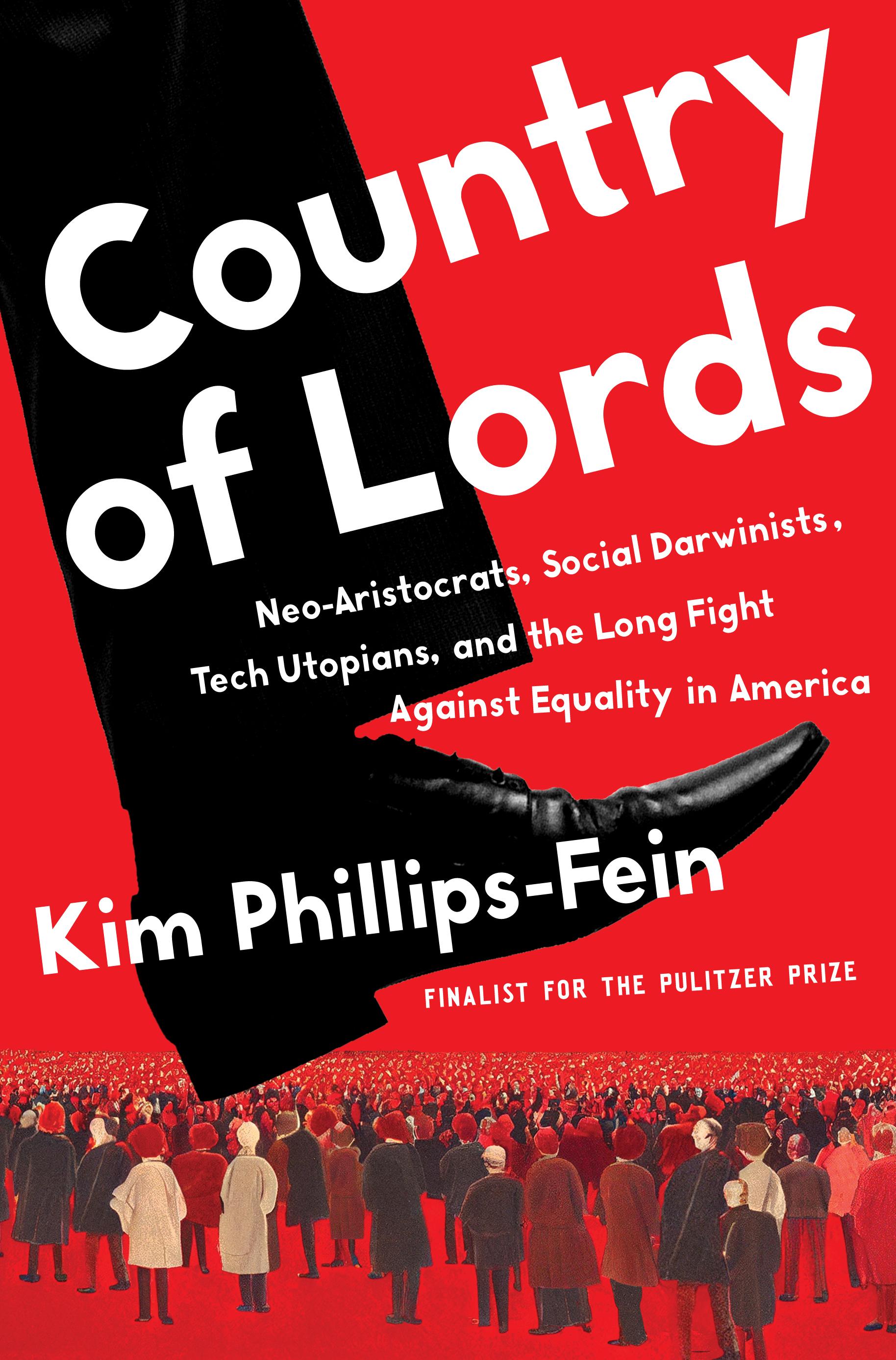
A Pulitzer-finalist historian charts a 250-year-old intellectual and political tradition—the conviction that all Americans are NOT created equal.
The story of American history is often told as a hard-won march toward the promise of equality, derived from Thomas Jefferson’s famous proclamation that “all men are created equal.”
But this inspiring story obscures a parallel tradition: an enduring and organized argument against equality itself. Again and again, influential Americans have asserted a fundamental inequality among human beings, arguing that the social, economic, and racial hierarchies in which some groups of people rule over others are not only natural but good.
In Country of Lords acclaimed historian Kim Phillips-Fein traces this argument for inequality through six vivid archetypes. She discusses the natural aristocrats, such as John Adams, who feared the tumult of too much democracy; the social Darwinists, led by Yale professor William Graham Sumner, who blamed the poor for their own miseries; those who preached a gospel of production, including Henry Ford, who wanted an industrial hierarchy in which the “best” people ruled over compliant inferiors; utilitarian racists who advocated for eugenics and a racial hierarchy; meritocrats like Harvard psychologist Richard Hernstein who described an economic caste system based on “intelligence” in his co-authored book, The Bell Curve; and most recently, technocrats who seem to see themselves as superior because they are closest to the machines destined to outstrip and supplant fallible flesh-and-blood humanity.
The anti-egalitarian lineage Phillips-Fein traces is both clear and deeply unsettling. It challenges readers to think about the fragility of the ideal of equality and to reckon with the disturbing arguments of those who have campaigned against it over the past two and a half centuries. Country of Lords is essential reading for anyone trying to make sense of the widening gap between the nation we claim to be and the nation we are becoming.
Before Memmo my notes were scattered across PDFs. Now a workspace pulls everything into one place — I see exactly what's still left to study.
Memmo's summaries are gold before exams. I don't have to re-read 800 pages two weeks before — just the important parts.
The AI chat has saved me the night before an exam more than once. I just keep asking until I get it — no waiting on a study group to reply.
The quizzes hit exactly what I need to know. Memmo tracks what I get stuck on — so I only practice what's worth it.
Flashcards with spaced repetition are magic. Memmo knows when I'm about to forget something and brings it back.
The AI podcasts are my favorite. I listen on my way to school and get a recap without sitting at a computer.

Handbok i kvalitativa metoder
281 kr

Hållbar utveckling: en introduktion för ingenjörer och andra problemlösare
334 kr

Brymans Samhällsvetenskapliga metoder
390 kr

Projektledning
491 kr

Den orättvisa hälsan: om socioekonomiska skillnader i hälsa och livslängd
326 kr

Vetenskapsteori för nybörjare
196 kr

Organizational Leadership
429 kr

På väg mot läraryrket
172 kr

Det sociala livet i skolan: Socialpsykologiska perspektiv
253 kr

Betygsättningens didaktik
151 kr

Personality
402 kr

Studying Leadership
404 kr

Managing Innovation
477 kr

Introduktion till samhällsvetenskaplig metod
347 kr

The Psychology of Sex and Gender
698 kr

Evidens och kunskap för socialt arbete
207 kr

Introduction to Leadership
605 kr