
Before Memmo my notes were scattered across PDFs. Now a workspace pulls everything into one place — I see exactly what's still left to study.
A New Yorker Best Book of 2024
A New York Times Book Review Editors' Choice
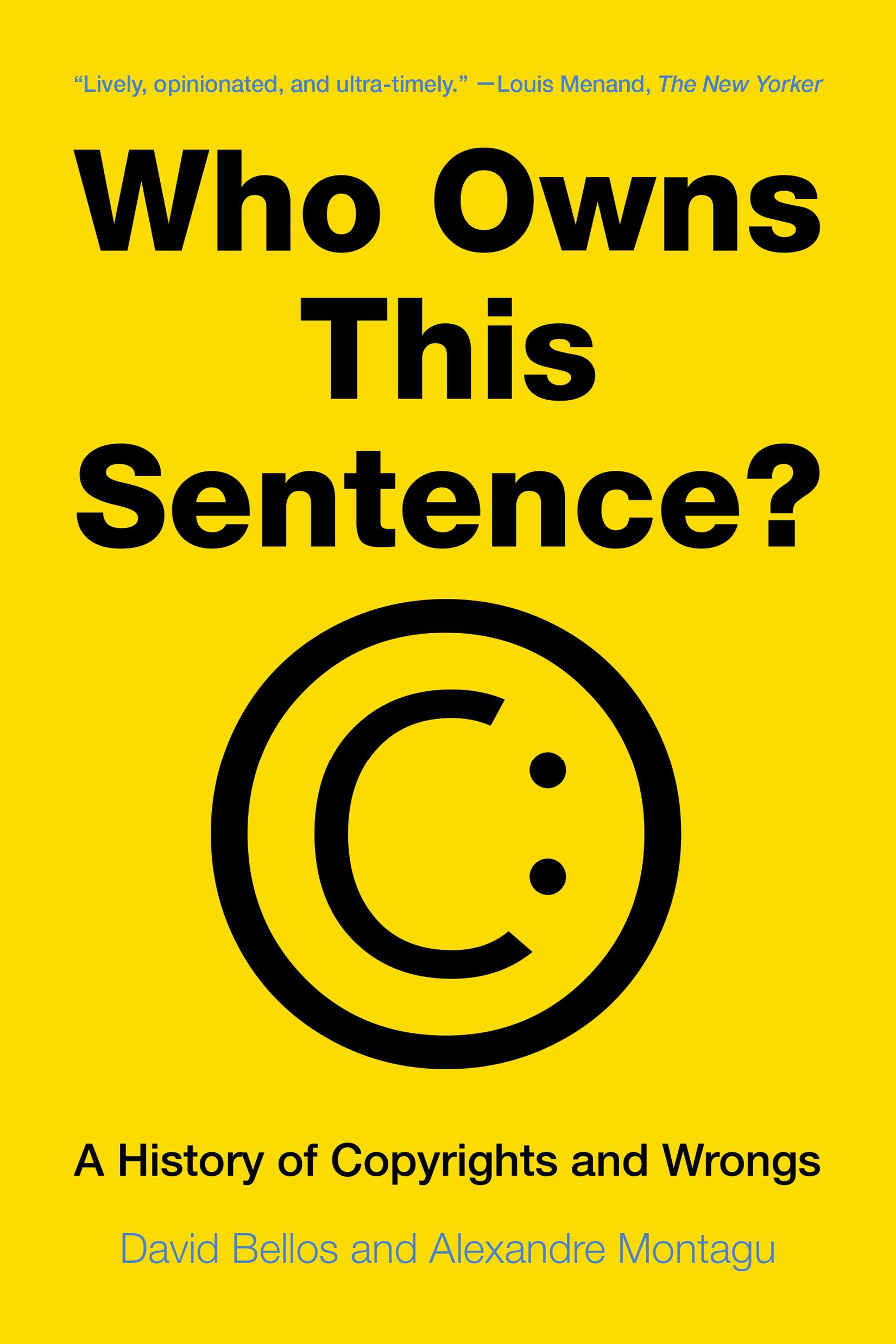
"Lively, opinionated, and ultra-timely." —Louis Menand, The New Yorker
A fascinating and original history of an idea that now controls and monetizes almost everything we do.
Copyright is everywhere. Your smartphone incorporates thousands of items of intellectual property. Someone owns the reproduction rights to photographs of your dining table. At this very moment, battles are raging over copyright in the output of artificial intelligence programs. Not only books but wallpaper, computer programs, pop songs, cartoon characters, snapshots, and cuddly toys are now deemed to be intellectual properties—making copyright a labyrinthine construction of laws with colorful and often baffling rationales covering almost all products of human creativity.
It wasn’t always so. Copyright has its roots in eighteenth-century London, where it was first established to limit printers’ control of books. But a handful of little-noticed changes in the late twentieth century brought about a new enclosure of the cultural commons, concentrating ownership of immaterial goods in very few hands. Copyright’s metastasis can’t be understood without knowing its backstory, a long tangle of high ideals, low greed, opportunism, and word-mangling that allowed poems and novels (and now, even ringtones and databases) to be treated as if they were no different from farms and houses. Principled arguments against copyright arose from the start and nearly abolished it in the nineteenth century. Nonetheless, countless revisions have made copyright ever stronger.
Who Owns This Sentence? is an often-humorous and always-enlightening cultural, legal, and global history of the idea that intangible things can be owned, and makes a persuasive case for seeing copyright as an engine of inequality in the twenty-first century.
Before Memmo my notes were scattered across PDFs. Now a workspace pulls everything into one place — I see exactly what's still left to study.
Memmo's summaries are gold before exams. I don't have to re-read 800 pages two weeks before — just the important parts.
The AI chat has saved me the night before an exam more than once. I just keep asking until I get it — no waiting on a study group to reply.
The quizzes hit exactly what I need to know. Memmo tracks what I get stuck on — so I only practice what's worth it.
Flashcards with spaced repetition are magic. Memmo knows when I'm about to forget something and brings it back.
The AI podcasts are my favorite. I listen on my way to school and get a recap without sitting at a computer.

Handbok i kvalitativa metoder
281 kr

Hållbar utveckling: en introduktion för ingenjörer och andra problemlösare
334 kr

Brymans Samhällsvetenskapliga metoder
390 kr

Projektledning
491 kr

Den orättvisa hälsan: om socioekonomiska skillnader i hälsa och livslängd
326 kr

Organizational Leadership
429 kr

Vetenskapsteori för nybörjare
196 kr

På väg mot läraryrket
172 kr

Det sociala livet i skolan: Socialpsykologiska perspektiv
253 kr

Betygsättningens didaktik
151 kr

Personality
402 kr

Studying Leadership
404 kr

Managing Innovation
477 kr

Introduktion till samhällsvetenskaplig metod
347 kr

The Psychology of Sex and Gender
698 kr

Evidens och kunskap för socialt arbete
207 kr

Introduction to Leadership
605 kr