
Before Memmo my notes were scattered across PDFs. Now a workspace pulls everything into one place — I see exactly what's still left to study.
A Kirkus Reviews Best Book of 2025
One of The New Yorker's Best Books of the Year
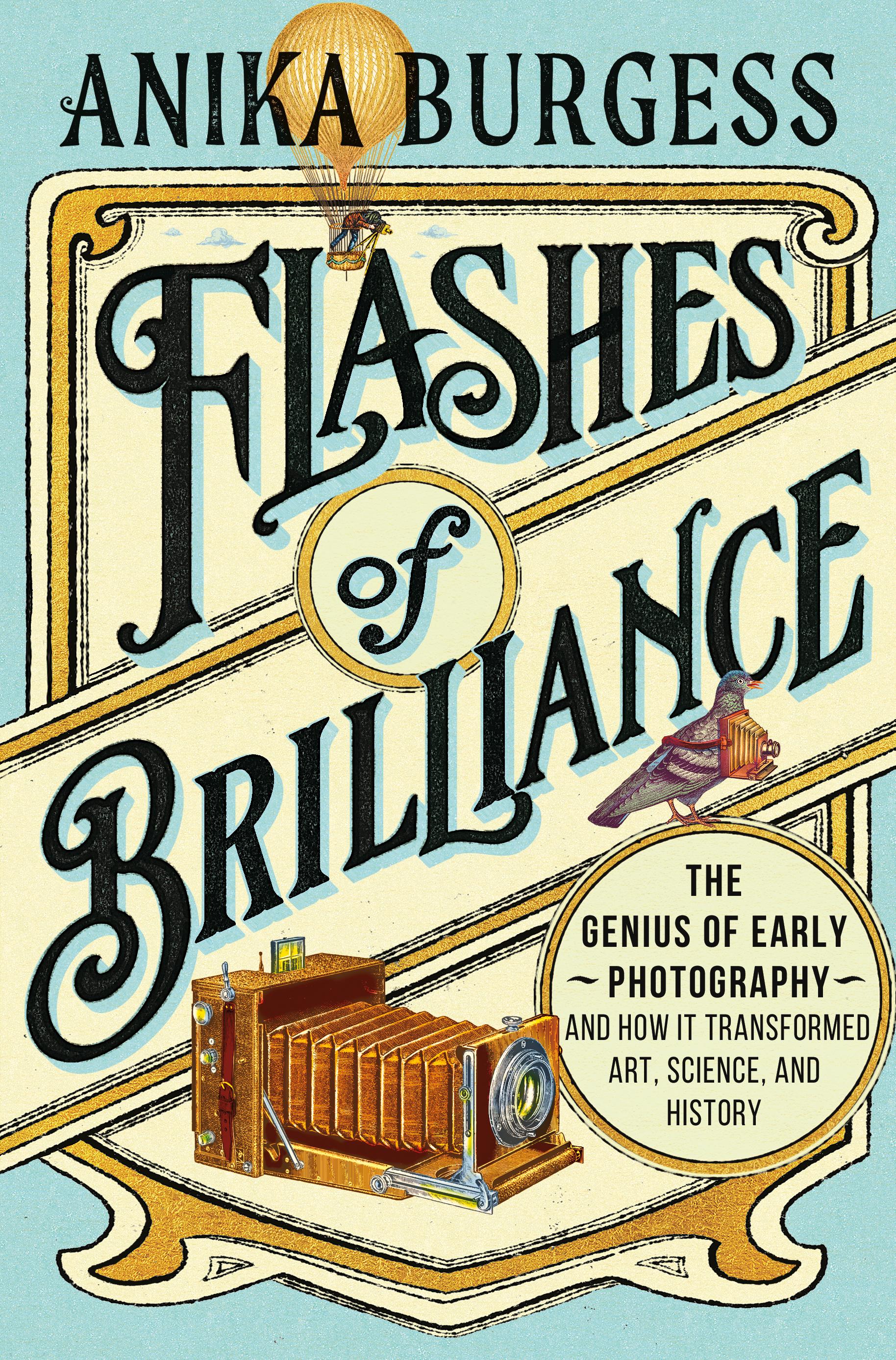
The story of the wildest experiments in early photography and the wild people who undertook them.
Today it’s routine to take photos from an airplane window, use a camera underwater, watch a movie, or view an X-ray. But the photographic innovations more than a century ago that made such things possible were experimental, revelatory, and sometimes dangerous—and many of the innovators, entrepreneurs, and inventors behind them were memorable eccentrics. In Flashes of Brilliance, writer and photo editor Anika Burgess engagingly blends art, science, and social history to reveal the most dramatic developments in photography from its birth in the 1830s to the early twentieth century.
Writing with verve and an eye for compelling detail, Burgess explores how photographers uncovered new vistas, including catacombs, cities at night, the depths of the ocean, and the surface of the moon. She describes how photographers captured the world as never seen before, showing for the first time the bones of humans, the motion of animals, the cells of plants, and the structure of snowflakes. She takes us on a tour of astonishing innovations, including botanist Anna Atkins and her extraordinary blue-hued cyanotypes and the world’s first photobook; Eadweard Muybridge and Étienne-Jules Marey’s famed experiments in capturing motion and their long legacy; large format photography and photographs so small as to be invisible to the naked eye; and aerial photography using balloons, kites, pigeons, and rockets. Burgess also delves into the early connections between photography and society that are still with us today: how photo manipulation—the art of “fake images”—was an issue right from the start; how the police used the telephoto lens to surveil suffragists; and how leading Black figures like Sojourner Truth and Frederick Douglass adapted self-portraits to assert their identity and autonomy.
Richly illustrated and filled with fascinating tales, Flashes of Brilliance shows how the rise of a new art form transformed culture and our view of the world.
Before Memmo my notes were scattered across PDFs. Now a workspace pulls everything into one place — I see exactly what's still left to study.
Memmo's summaries are gold before exams. I don't have to re-read 800 pages two weeks before — just the important parts.
The AI chat has saved me the night before an exam more than once. I just keep asking until I get it — no waiting on a study group to reply.
The quizzes hit exactly what I need to know. Memmo tracks what I get stuck on — so I only practice what's worth it.
Flashcards with spaced repetition are magic. Memmo knows when I'm about to forget something and brings it back.
The AI podcasts are my favorite. I listen on my way to school and get a recap without sitting at a computer.

Handbok i kvalitativa metoder
281 kr

Hållbar utveckling: en introduktion för ingenjörer och andra problemlösare
334 kr

Brymans Samhällsvetenskapliga metoder
390 kr

Projektledning
491 kr

Den orättvisa hälsan: om socioekonomiska skillnader i hälsa och livslängd
326 kr

Vetenskapsteori för nybörjare
196 kr

Organizational Leadership
429 kr

På väg mot läraryrket
172 kr

Det sociala livet i skolan: Socialpsykologiska perspektiv
253 kr

Betygsättningens didaktik
151 kr

Personality
402 kr

Studying Leadership
404 kr

Managing Innovation
477 kr

Introduktion till samhällsvetenskaplig metod
347 kr

The Psychology of Sex and Gender
698 kr

Evidens och kunskap för socialt arbete
207 kr

Introduction to Leadership
605 kr