
Before Memmo my notes were scattered across PDFs. Now a workspace pulls everything into one place — I see exactly what's still left to study.
An Economist Best Book of the Year
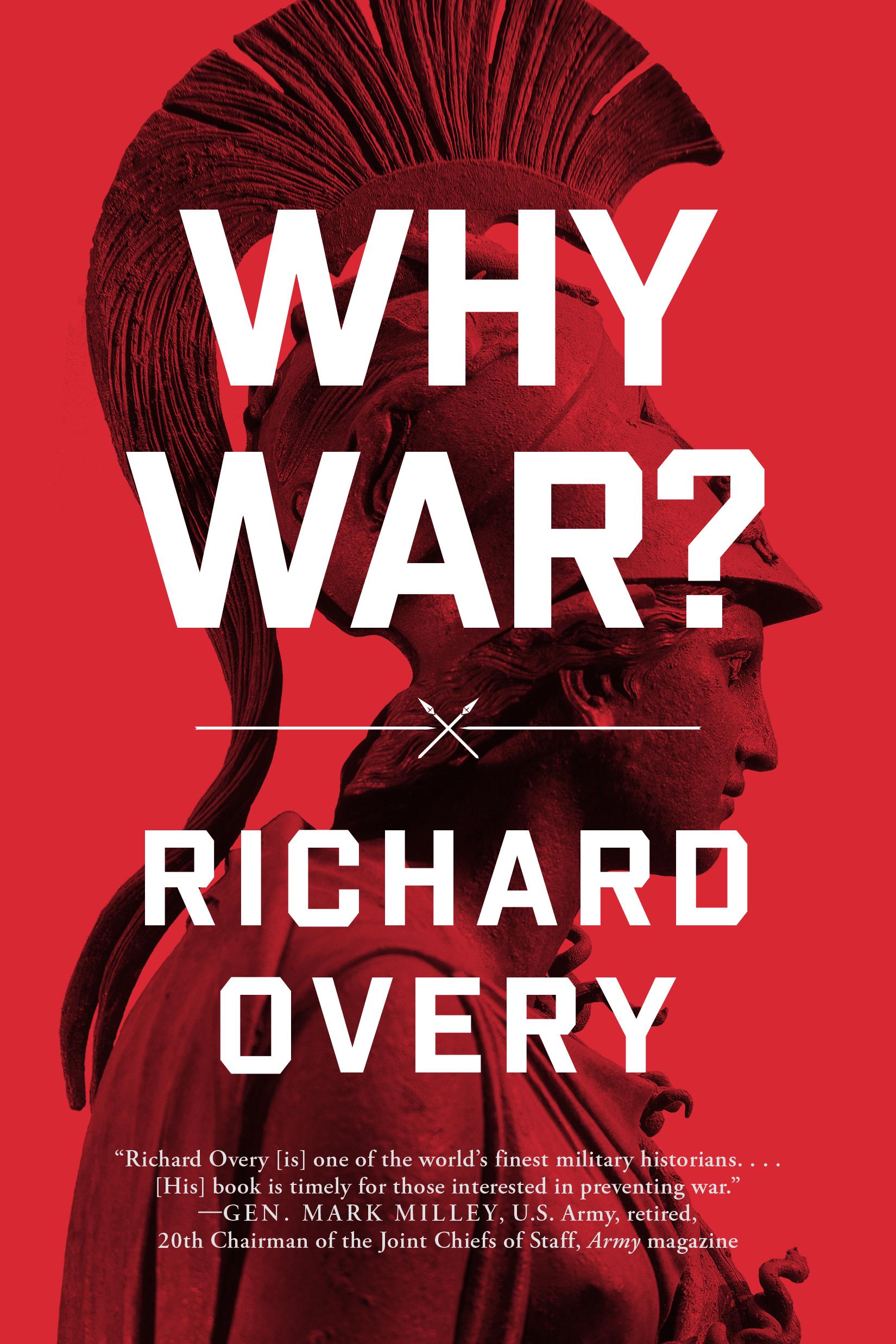
“Richard Overy [is] one of the world’s finest military historians.… [His] book is timely for those interested in preventing war.” —Gen. Mark Milley, U.S. Army, retired, 20th Chairman of the Joint Chiefs of Staff, Army magazine
Why has war been such a consistent presence throughout the human past? A leading historian explains, drawing on rich examples and keen insight.
Richard Overy is not the first scholar to take up the title question. In 1931, at the request of the League of Nations, Albert Einstein asked Sigmund Freud to collaborate on a short work examining whether there was “a way of delivering mankind from the menace of war.” Published the next year as a pamphlet entitled Why War?, it conveyed Freud’s conclusion that the “death drive” made any deliverance impossible—the psychological impulse to destruction was universal in the animal kingdom. The global wars of the later 1930s and 1940s seemed ample evidence of the dismal conclusion.
A preeminent historian of those wars, Overy brings vast knowledge to the title question and years of experience unraveling the knotted motivations of war. His approach is to separate the major drivers and motivations, and consider the ways each has contributed to organized conflict. They range from the impulses embedded in human biology and psychology, to the incentives to conflict developed through cultural evolution, to competition for resources—conflicts stirred by the passions of belief, the effects of ecological stresses, the drive for power in leaders and nations, and the search for security. The discussions show remarkable range, delving deep into the Neolithic past, through the twentieth-century world wars, and up to the current conflict in Ukraine. The examples are absorbing, from the Roman Empire’s voracious appetite for resources to the impulse to power evident in Alexander the Great, Napoleon, and Hitler. The conclusion is not hopeful, but Overy’s book is a gift to readers: a compact, judicious, engrossing examination of a fundamental question.
Before Memmo my notes were scattered across PDFs. Now a workspace pulls everything into one place — I see exactly what's still left to study.
Memmo's summaries are gold before exams. I don't have to re-read 800 pages two weeks before — just the important parts.
The AI chat has saved me the night before an exam more than once. I just keep asking until I get it — no waiting on a study group to reply.
The quizzes hit exactly what I need to know. Memmo tracks what I get stuck on — so I only practice what's worth it.
Flashcards with spaced repetition are magic. Memmo knows when I'm about to forget something and brings it back.
The AI podcasts are my favorite. I listen on my way to school and get a recap without sitting at a computer.

Handbok i kvalitativa metoder
281 kr

Hållbar utveckling: en introduktion för ingenjörer och andra problemlösare
334 kr

Brymans Samhällsvetenskapliga metoder
390 kr

Projektledning
491 kr

Den orättvisa hälsan: om socioekonomiska skillnader i hälsa och livslängd
326 kr

Vetenskapsteori för nybörjare
196 kr

Organizational Leadership
429 kr

På väg mot läraryrket
172 kr

Det sociala livet i skolan: Socialpsykologiska perspektiv
253 kr

Betygsättningens didaktik
151 kr

Personality
402 kr

Studying Leadership
404 kr

Managing Innovation
477 kr

Introduktion till samhällsvetenskaplig metod
347 kr

The Psychology of Sex and Gender
698 kr

Evidens och kunskap för socialt arbete
207 kr

Introduction to Leadership
605 kr